
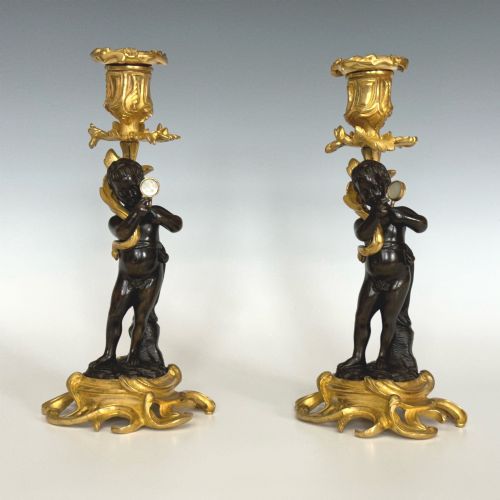



Cherub Candle Holders
Cherub candle holders combine figural bronze or porcelain putti with functional lighting, bringing classical French and Victorian ornament into a room.
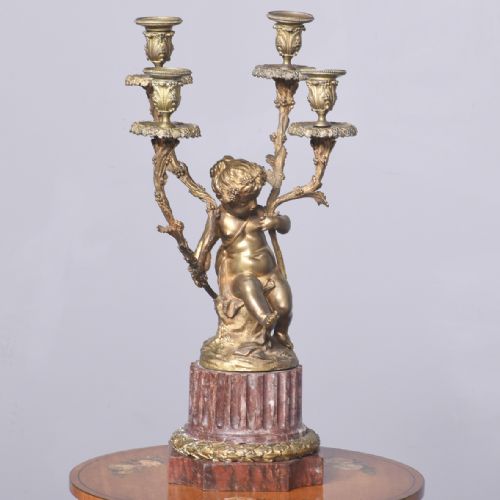
Cherub Candle Holders
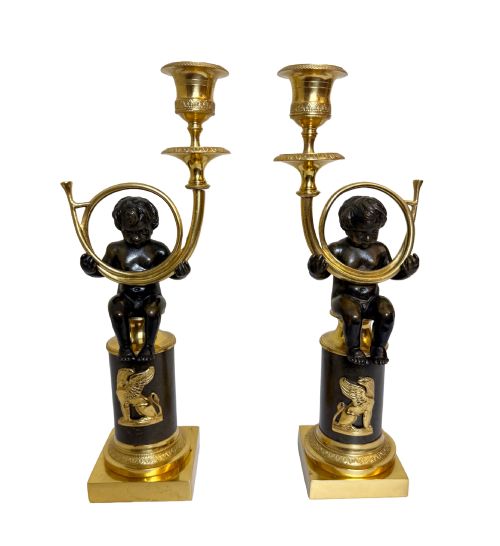
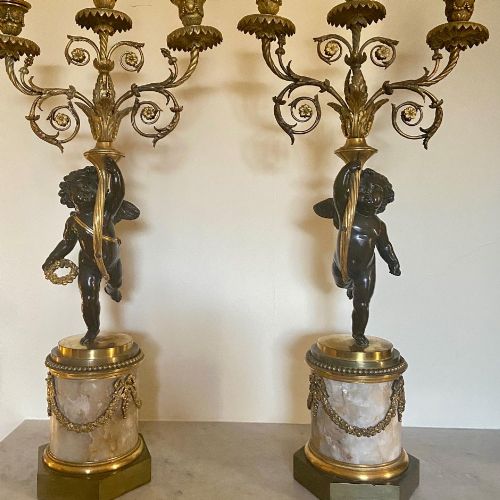
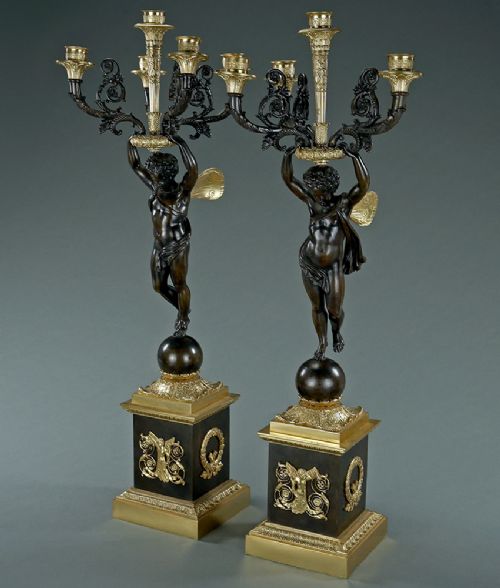
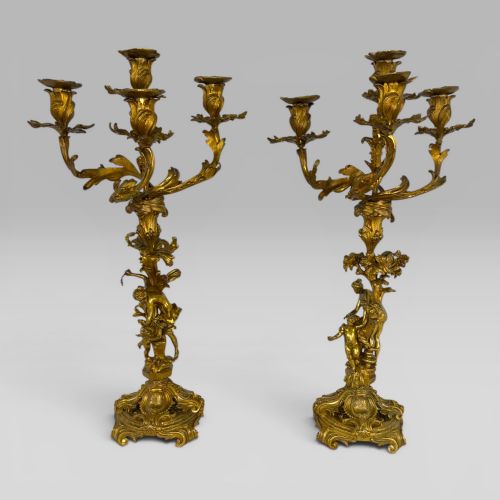
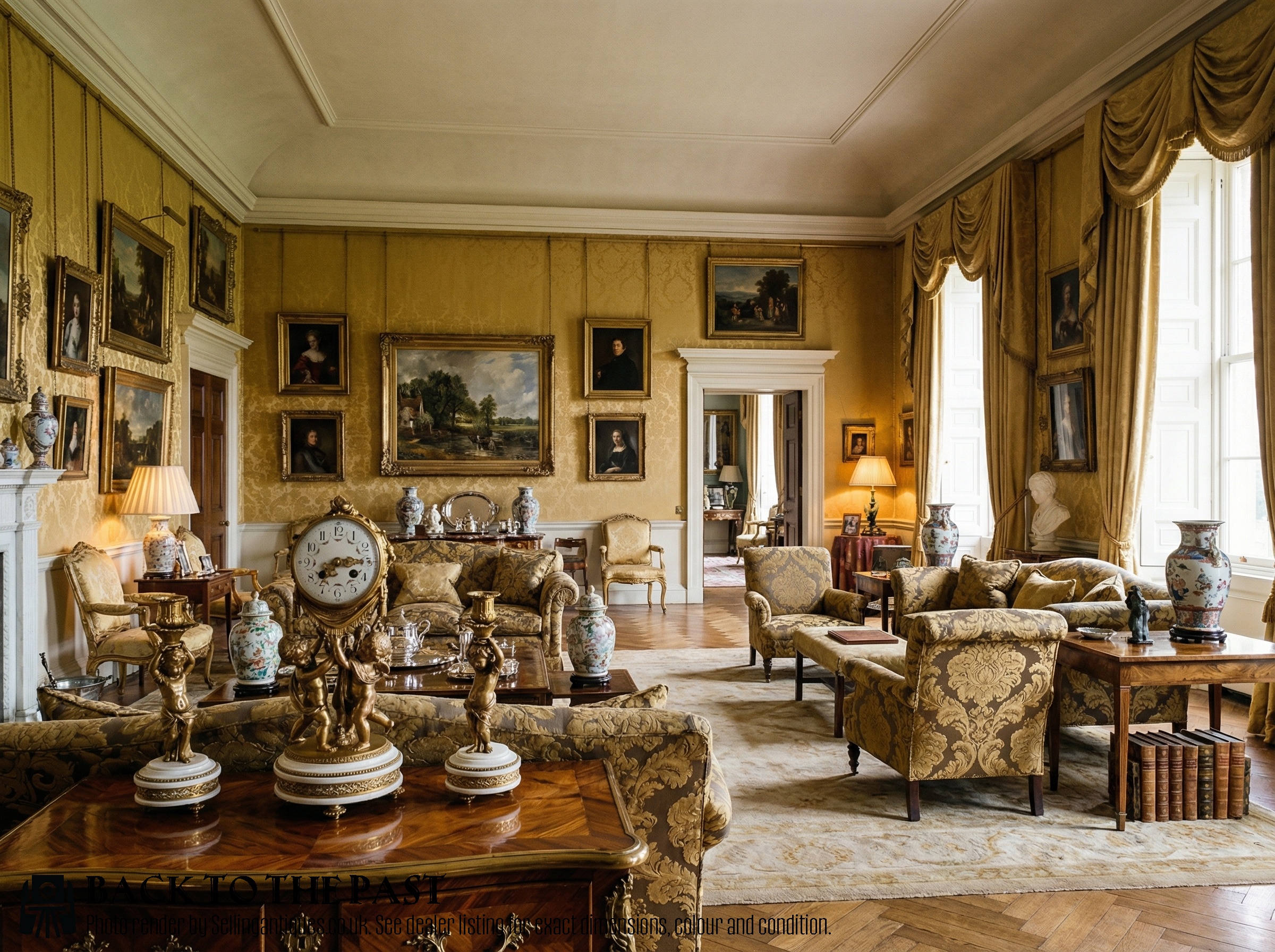
When searching for cherub candle holders, you are looking at figural lighting pieces that incorporate winged putti into the design of candlesticks, multi-branch candelabra, and clock garnitures. The majority of examples found here originate from nineteenth-century French workshops, spanning styles from French Empire and Louis XVI to Rococo Revival.
The physical forms range from single desktop candlesticks to large multi-light candelabra and mantel clock sets. Figures of putti are typically cast in bronze or moulded in porcelain, often shown supporting candle nozzles or standing upon marble bases.
Materials and Technique
The construction of these pieces relies heavily on metalworking, specifically bronze casting and ormolu fire-gilding, alongside patinated bronze finishes. Many examples pair these cast metals with carved or turned marble bases, while others utilise silver plating, brass, or bronzed spelter.
Ceramic examples employ porcelain bodies, including blanc de chine and enamel finishes, shaped in moulds by factories such as Minton and Sitzendorf. Assembly often involves mechanical fixings that join the figural putti components to the marble plinths and candle arms.
Cherub Candle Holders Retail Price Guide 2026
Typical asking prices for cherub candle holders among the pieces listed under this phrase on Sellingantiques today, from the lower quarter to the upper quarter. They describe what is for sale here now, not the wider market.
Materials recorded across the inventory include gilt bronze, patinated bronze, ormolu, marble, porcelain, silver plate, and carved bone.
Quality and Execution
The standard of a piece depends primarily on the crispness of the chasing in the bronze and the depth of the original ormolu gilding. Finer castings exhibit expressive detailing in the faces, hair, and wings of the putti, whereas lesser examples show softer contours and simpler surface finishing.
Materials also dictate the tier of a piece, with heavy marbles and substantial fire-gilt bronze mounts marking superior nineteenth-century production compared to lighter spelter or plated alternatives.
Francois Redmond·Claude Clodion·Triebner ENS and Eckert Volkstedt·Sitzendorf·Elkington
The Cherub Candle Holders Glossary
- Ormolu
- Gilt bronze produced by applying a mixture of gold and mercury to a bronze base and heating it. This technique creates a durable golden finish characteristic of French decorative arts.
- Putto
- A plump, naked male child figure frequently depicted in classical art and architectural ornament. These figures serve as the central figural element in cherub candle holders.
- Candelabra
- A branched lighting fixture holding multiple candles. Many pieces in this category feature two, three, or five lights supported by figural arms.
- Clock Garniture
- A set comprising a mantel clock flanked by matching decorative objects such as candelabra or vases. These matched groups share identical bronze mounts and marble bases.
- Blanc de Chine
- White porcelain produced in China and later emulated by European factories like Sitzendorf. It provides a smooth, unpainted surface that emphasises the modelled form of the putto.
Cherub Candle Holders: Frequently Asked Questions
How do I identify a nineteenth-century French piece?
Nineteenth-century French pieces typically exhibit the heavy use of fire-gilded ormolu combined with patinated bronze and turned marble plinths. The styling draws directly on Louis XVI or Rococo Revival design vocabularies, featuring naturalistic foliage and dynamic putti figures.
Construction methods from this era involve precise bronze casting followed by hand-chasing of the metal surface. Look for balanced proportions and foundry marks or signatures associated with Parisian makers of the period.
Where were these pieces used historically?
These decorative objects were primarily placed on mantelpieces, often as part of matching clock garnitures that framed the central clock face. Their polished bronze and marble surfaces reflected the flickering light of candles in formal nineteenth-century reception rooms.
Smaller single sticks were utilised on writing desks or boudoirs for task lighting. Their dual role as sculptural art and functional hardware made them staples of affluent domestic interiors.
How should I clean and care for ormolu and bronze?
Maintenance requires only gentle dusting with a soft, dry cloth to remove surface particles. Avoid chemical polishes, abrasives, or water, as these can strip the fragile ormolu gilding and alter the original bronze patination.
Keep the items away from direct sunlight and damp environments to protect any underlying marble bases and metal joins. If wax accumulates from candles, let it harden completely before gently lifting it away without scraping the metal.