


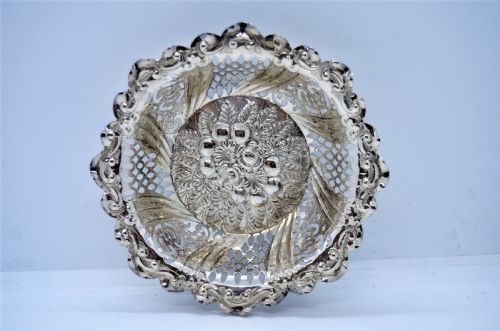

Chased Silver Fruit Dish
A chased silver fruit dish brings heavy relief work and gleaming metal to the dining table, offering a decorative centrepiece for serving fruit.
Chased Silver Fruit Dish
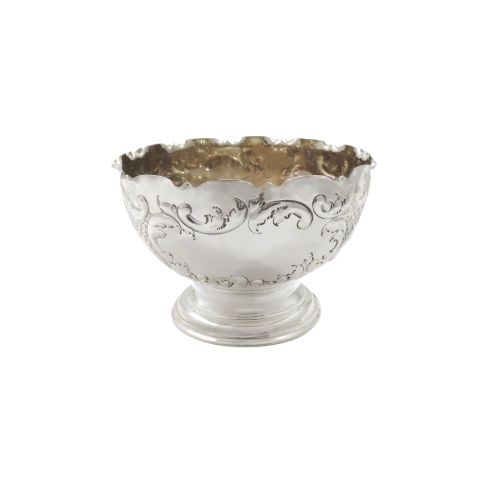
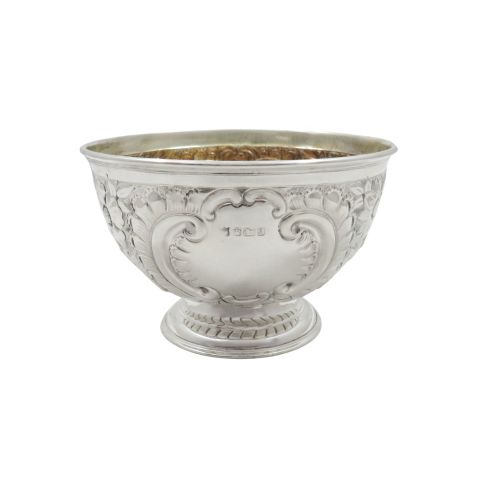
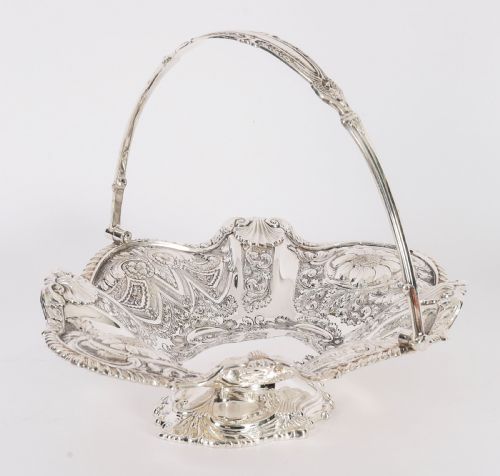
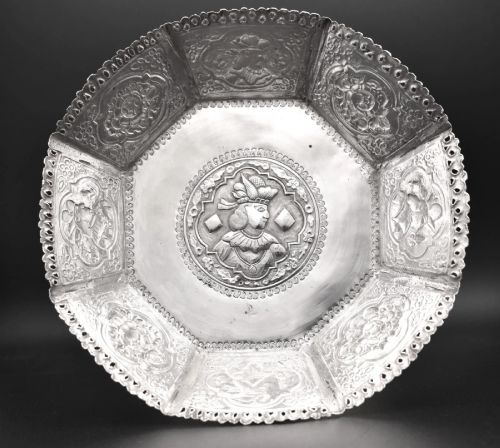
A chased silver fruit dish takes the form of footed bowls, comports, tazzas, and deep baskets designed for the dining table. These pieces emerge in styles ranging from Victorian Rococo Revival to Anglo-Indian, Chinese Export, and Thai designs.
The buyer meets sterling silver, solid silver, and silver plate across periods spanning the nineteenth century up to nineteen twenty. Victorian examples dominate the selection alongside regional overseas export silver.
Forms include pedestal footed bowls, handled baskets, and flat decorative dishes featuring chased and embossed ornamentation. Each item serves as both a functional vessel for fruit and a display object.
How they were made
Silversmiths shaped sterling silver, solid silver, and base metals through hammering, casting, and raising techniques to form the basic bowl or basket structure. Handles and pedestal feet were soldered or cast separately before final assembly.
Makers applied chasing and repoussé methods to push and punch the metal from both sides, creating intricate surface patterns and embossed detailing. Silver plating and electroplated nickel silver provided an alternative finish over base metal cores.
Some nineteenth-century baskets are so heavily embossed with fruit motifs that the real fruit inside has to compete with silver pears.
What varies in quality
The depth and crispness of the chased and embossed detail dictate the visual impact of the dish. Deeper, hand-worked repoussé provides sharper relief than shallow stamping.
Weight and structural stability separate substantial sterling items from lighter plated wares. Maker marks and clear hallmarks also contribute to the distinction between standard production and workshop pieces.
George W. Scott & Sons Ltd·James Deakin & Sons·Elkington & Co
The Chased Silver Fruit Dish Glossary
- Chased
- Metalwork decorated by hammering punches into the front surface to push the metal and form low relief designs. This technique moves the metal without removing it.
- Repoussé
- Metalworking technique where the artisan hammers the reverse side of a sheet to create raised designs on the front. It is often combined with chasing for finer detail.
- Comport
- A shallow decorative bowl raised on a stem and foot, used for serving fruit or sweets at the table. These pieces often feature pierced rims and chased borders.
- Tazza
- A small pedestal bowl or saucer-like dish used for display or serving. The form sits on a single central foot.
- Electroplated Nickel Silver
- A base metal alloy of copper, nickel, and zinc coated with a thin layer of pure silver through electrolysis. This process provided an affordable alternative to solid silver during the nineteenth century.
Chased Silver Fruit Dish: Frequently Asked Questions
What is a chased silver fruit dish?
A chased silver fruit dish is a decorative metal vessel featuring surface decoration hammered into the metal. These pieces take the form of bowls, baskets, and comports.
They were produced in sterling silver, solid silver, and silver plate during the nineteenth and early twentieth centuries. Artisans used chasing and repoussé techniques to create floral and patterned relief designs.
How were these dishes used originally?
These dishes held fresh fruit, bread, or cakes on dining tables and sideboards during formal meals. They functioned as both serving vessels and decorative centrepieces.
Heavier footed bowls and handled baskets allowed servants to pass fruit around the table. Lighter decorative dishes remained stationary as part of the table display.
How do I care for silver fruit dishes?
Silver requires periodic cleaning with a soft cloth and appropriate silver polish to maintain its finish and remove tarnish. Avoid abrasive cleaners that can wear down thin plating or fine chasing.
Storing pieces in dry environments away from direct sunlight helps prevent rapid oxidation. Hand washing with mild soap is recommended for older pieces.
How do I tell sterling silver from silver plate?
Sterling silver pieces typically carry hallmarks indicating the metal purity, maker, and assay office. These stamps provide evidence of solid silver content throughout the object.
Silver plated items and electroplated nickel silver lack these specific sterling hallmarks and may show base metal beneath worn areas. The weight and feel of the metal also offer clues to its composition.