


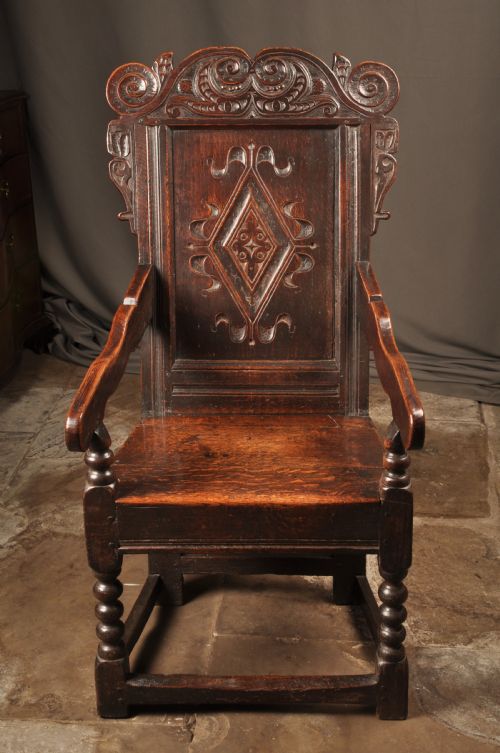


Charles II Armchair
These heavy, timber-framed seats bring seventeenth-century presence into a room, offering high relief carving and turned supports.
Charles II Armchair
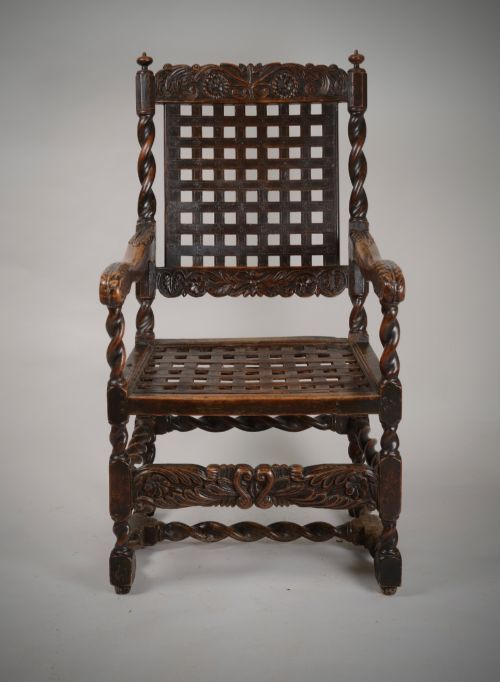
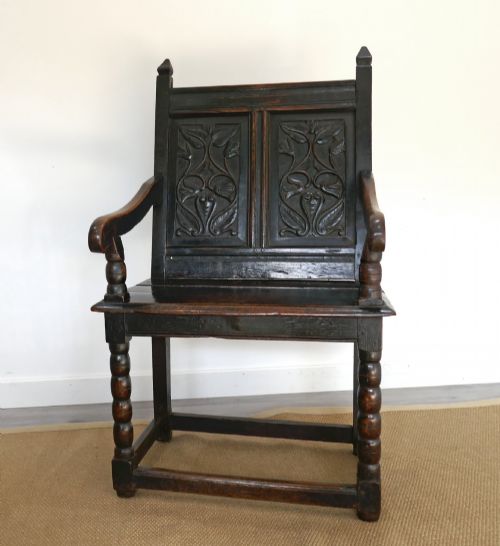
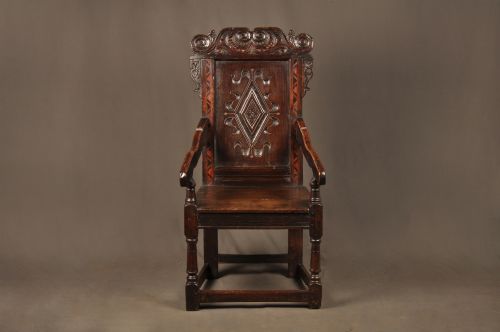
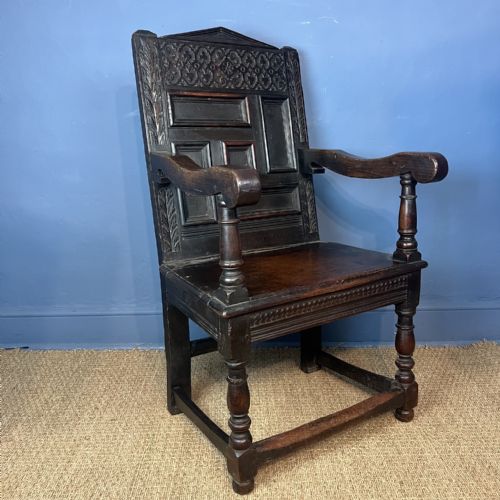
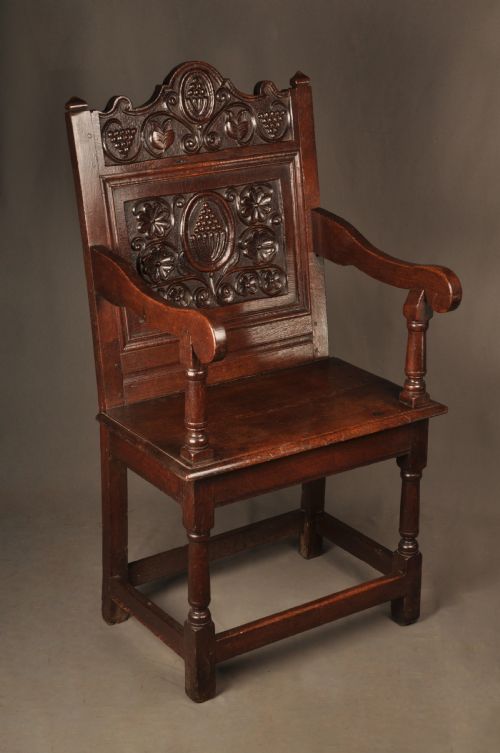
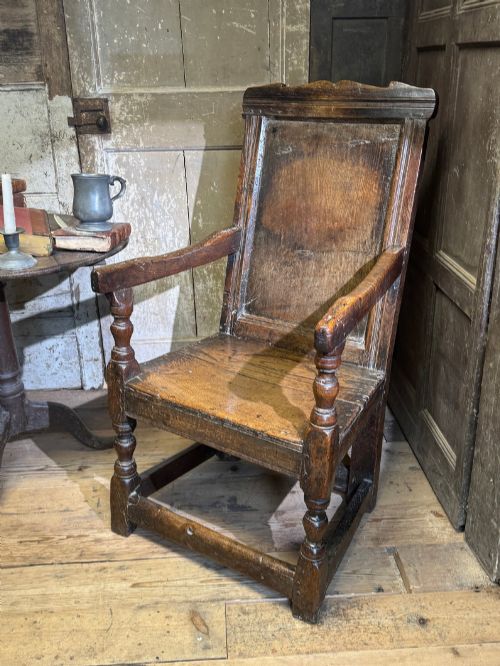
A charles ii armchair represents seventeenth-century seating, taking the form of sturdy wainscot armchairs or tall walnut elbow chairs. The listings show regional English examples from Yorkshire, Wales, and the West Country.
Makers built these pieces in solid timber with substantial upright posts, broad armrests, and panelled or open backs. Surviving pieces span from the mid seventeenth century through to later revival periods.
Materials and construction
Joiners built these armchairs primarily using native timbers such as oak, walnut, and laburnum. Artisans shaped structural joints with traditional mortise and tenon construction, secured by wooden pegs.
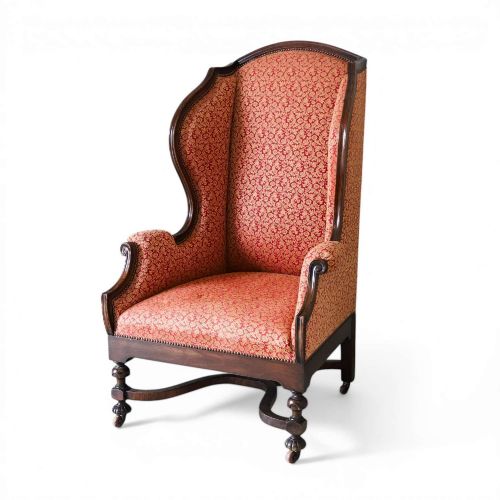
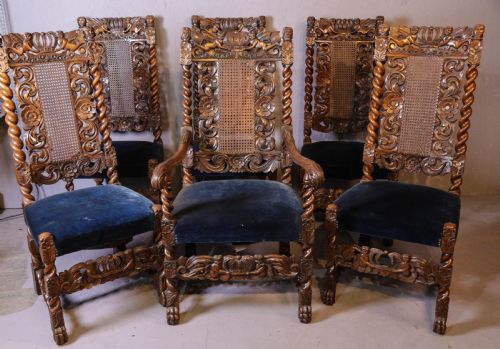
Carvers applied intricate floral and scroll motifs directly to the timber frames. Workshops integrated cane panels, brass embellishments, and upholstered inserts of damask fabric and velvet into the backs and seats.
Charles II Armchair Retail Price Guide 2026
Typical asking prices for charles ii armchair among the pieces listed under this phrase on Sellingantiques today, from the lower quarter to the upper quarter. They describe what is for sale here now, not the wider market.
Judging quality and craftsmanship
Quality rests on the crispness of the hand-carved detail and the selection of figured timber grains in the walnut or oak. Superior examples retain their original framing proportions without heavy timber replacement.
The integrity of the structural joinery dictates the longevity of the piece. Finer seating displays balanced carving across the crest rails and arm terminals rather than repetitive machine-cut uniformity.
The Charles II Armchair Glossary
- Wainscot
- A heavy wooden armchair with a panelled back and solid seat, typical of seventeenth-century domestic interiors. These seats rely on frame-and-panel construction rather than upholstery.
- Carolean
- A style descriptor relating to the reign of King Charles II, synonymous with ornate woodcarving and turned supports. This period follows the plainer Jacobean aesthetic.
- Elbow chair
- An alternative term for an armchair, commonly used in historical inventories for seating with low, substantial arm rests. Such chairs stood at the head of a table or desk.
- Cane
- Split rattan woven into an open mesh pattern for chair backs and seats. This technique appeared widely on late seventeenth-century walnut seating to lighten the heavy wooden frames.
Charles II Armchair: Frequently Asked Questions
What is a wainscot armchair?
A wainscot armchair is a heavy wooden seat constructed with panelled backs, solid wooden seats, and sturdy armrests. These pieces formed durable seating in seventeenth-century households before upholstered frames gained popularity.
Joiners built these chairs entirely from native timber, relying on pegged joints and carved crest rails for decoration.
How do I identify a Charles II armchair?
These armchairs feature seventeenth-century characteristics such as turned wooden legs, carved crest rails, and upright framing in oak or walnut. Regional variations from Yorkshire or Wales often display distinct panel carving.
Later revival pieces mimic these seventeenth-century forms but use different construction methods and timber preparation techniques.
What woods were used for these chairs?
Cabinet makers utilised native hardwoods including oak, walnut, and occasionally laburnum for these seventeenth-century frames. Oak appeared in early regional wainscot chairs, while walnut became popular for more ornate carved elbow chairs.
Timber selection dictated the weight and carving depth achievable by the workshop.
How do I care for antique timber chairs?
Keep these wooden chairs away from direct heat sources and dramatic humidity fluctuations to prevent timber splitting. Regular gentle dusting preserves the natural finish of the old oak or walnut surfaces.
Avoid applying modern silicone polishes, which can build up on the antique wood and obscure the carved details.