





Charles I Wainscot Chair
A charles i wainscot chair brings solid seventeenth-century craft and wooden panelled authority to a room.
Charles I Wainscot Chair
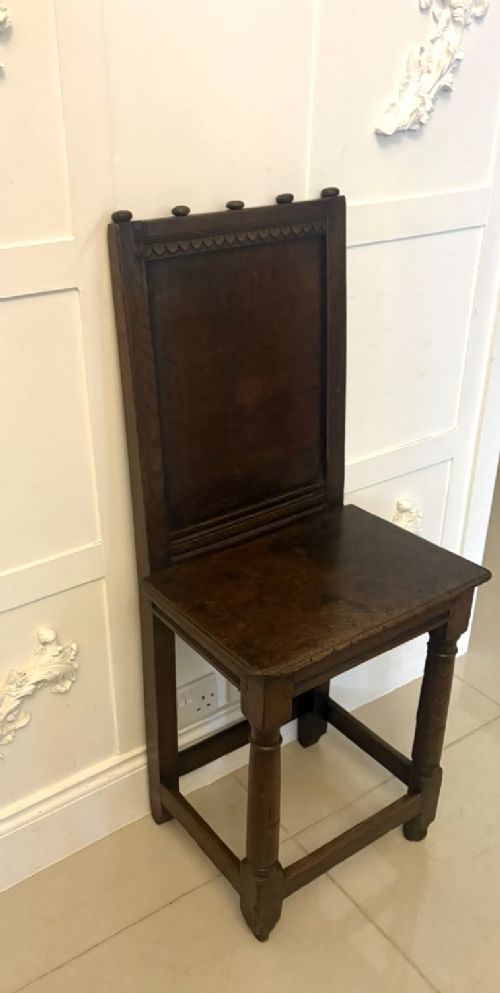
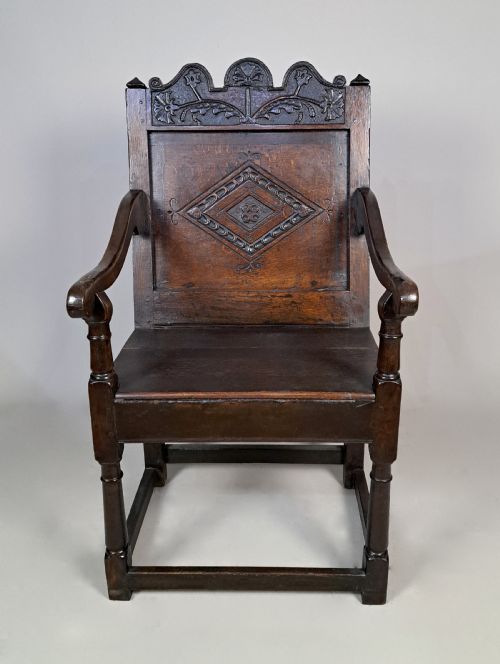
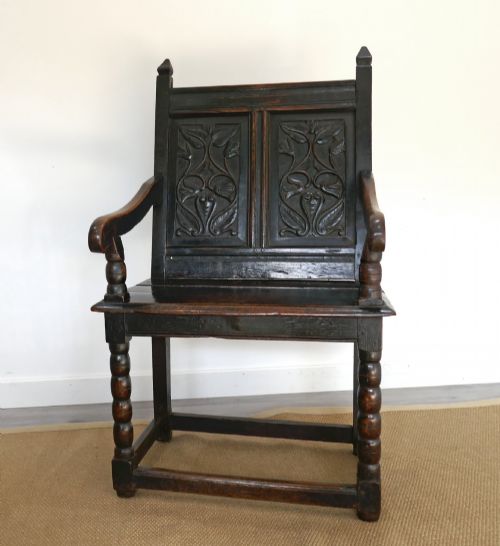
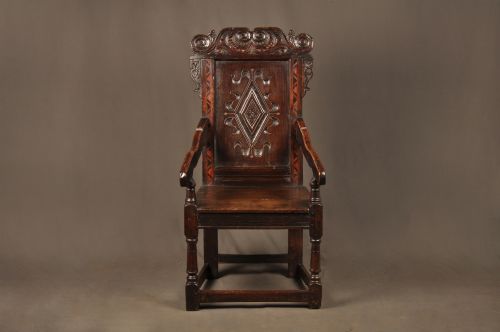
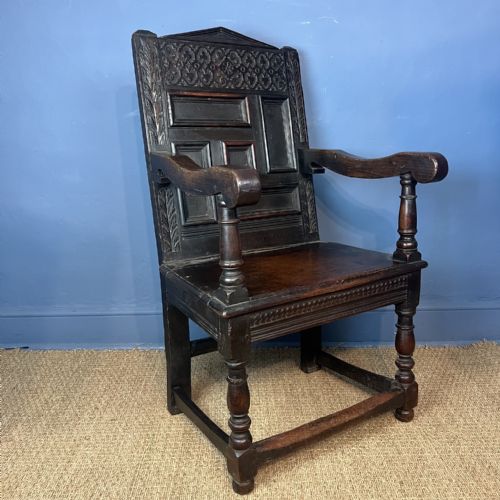
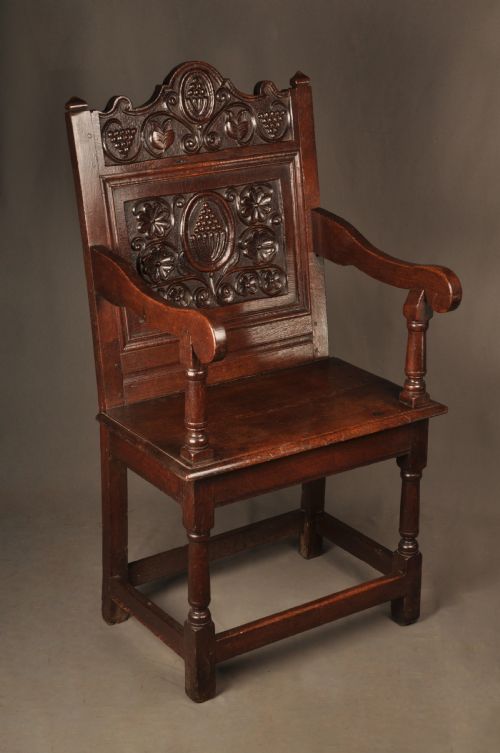
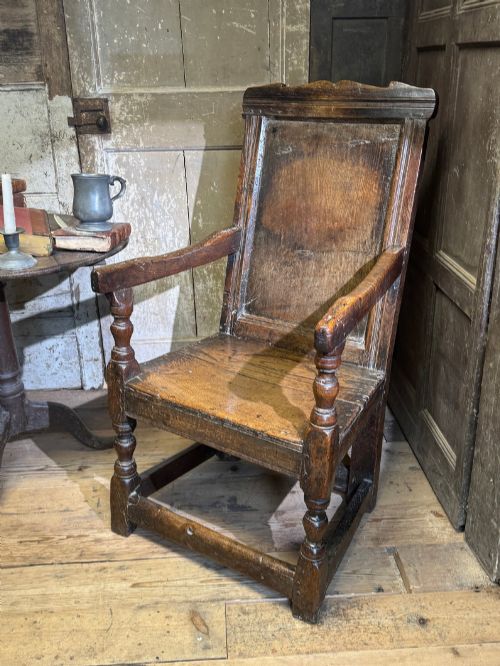
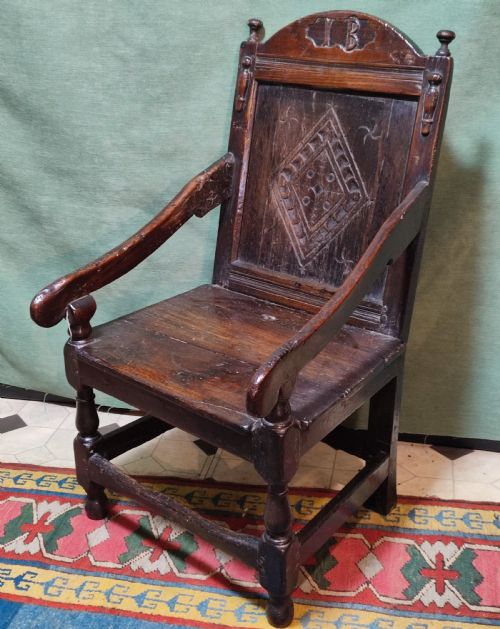
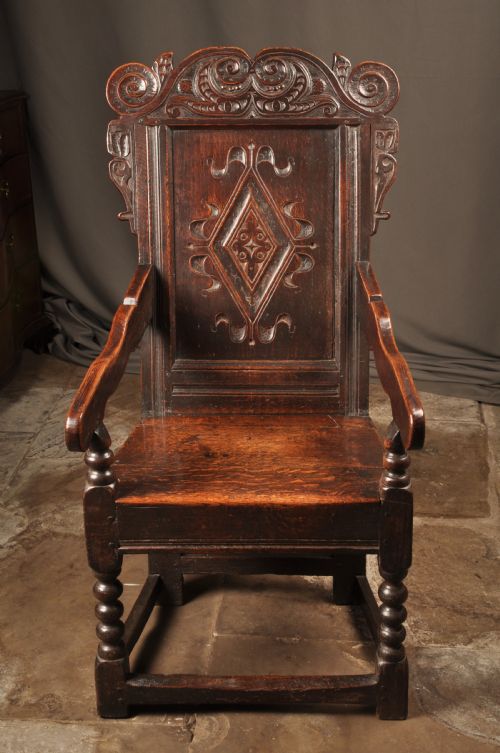
A charles i wainscot chair represents heavy seventeenth-century seating constructed primarily from timber with solid panelled backs. These sturdy armchairs and side chairs originate from regional English workshops, with particular examples hailing from Yorkshire, Lancashire, Cheshire, and Wales.
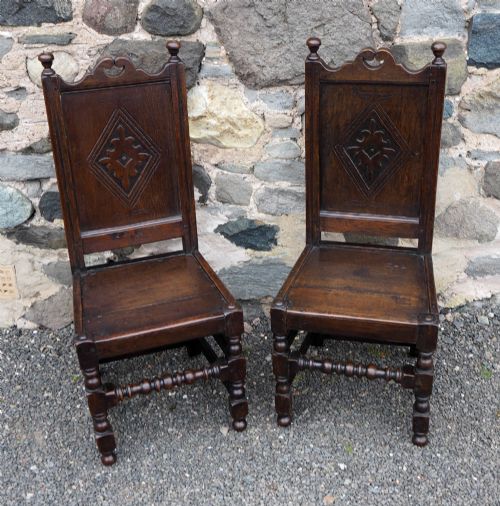
Buyers browsing this selection encounter robust pieces spanning the seventeenth century up to 1700. The inventory includes armchairs, side chairs, hall chairs, and smaller variants often described as backstools or ladies and children seats.
How they were made
Craftsmen built these chairs using solid oak as the principal material, sometimes incorporating yew-wood for specific panels. Joinery techniques relied on pegged mortise and tenon joints to create rigid frames without metal nails.
Surfaces frequently display hand-carved ornamentation across the back panels and rails. Selected pieces also integrate textile elements such as velvet padding for additional comfort.
The listings show regional variations originating from Yorkshire, Lancashire, Cheshire, the West Country, and North Wales.
What varies in quality
Quality differences stem from the depth and crispness of the original carved details on the timber panels. Regional distinctiveness also plays a role, with specific geographic schools displaying bolder proportions and more confident joinery.
The integrity of the structural timber and the retention of early surfaces dictate the overall standing of an example. Chairs retaining their original patination and uncompromised joints hold greater archaeological and visual weight.
The Charles I Wainscot Chair Glossary
- Wainscot chair
- A heavy wooden armchair constructed with panelled backboards rather than open spindles. This form dates predominantly to the sixteenth and seventeenth centuries.
- Backstool
- An early term for a upholstered or wooden chair built without arms. These pieces function similarly to modern side chairs.
- Joined chair
- Furniture constructed using interlocking wood joints secured by wooden pegs rather than glue or metal fasteners. This method defines seventeenth-century cabinet making.
- Jacobean
- The stylistic period covering the reign of King James I from 1603 to 1625, often applied broadly to seventeenth-century English oak furniture. The style emphasises geometric panelling and strapwork carving.
- Panelling
- Thin sheets of timber fitted within a grooved frame to form the backrest of the chair. This technique accommodates seasonal wood movement.
Charles I Wainscot Chair: Frequently Asked Questions
How do I date a wainscot chair?
Dating relies on examining the construction methods, joint types, and regional carving styles visible on the oak frame. Seventeenth-century examples utilise pegged mortise and tenon joinery rather than modern fasteners.
Stylistic cues such as strapwork motifs, cresting rails, and vernacular regional traits help narrow the period of origin. Comparing the timber patination and tool marks further clarifies the age of the piece.
Were these chairs used at dining tables?
These heavy wooden seats served primarily as positions of status in the seventeenth-century household. Heads of households or honoured guests used the armchairs while others sat on simpler forms.
Over subsequent centuries, survivors migrated to halls, parlours, and studies as decorative or functional seating. Their rigid wooden backs encourage upright posture rather than relaxed lounging.
How do I care for seventeenth-century oak?
Maintain a stable indoor environment away from direct heat sources and extreme humidity fluctuations to prevent timber splitting. Natural beeswax applied sparingly helps nourish the dry oak surface.
Avoid modern chemical polishes that can degrade the historic finish and accumulated patination. Gentle dusting with a dry cloth keeps the carved details clear.