





Charles I Oak Chair
When you handle a charles i oak chair, you touch the heavy timber and rigid joinery of seventeenth-century domestic life.
Charles I Oak Chair
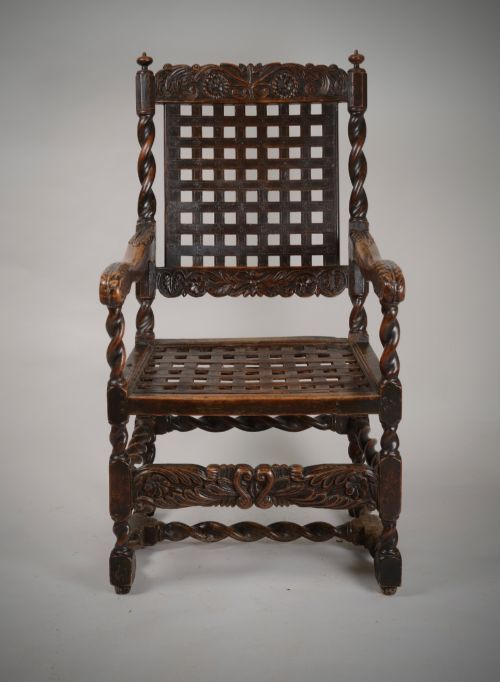
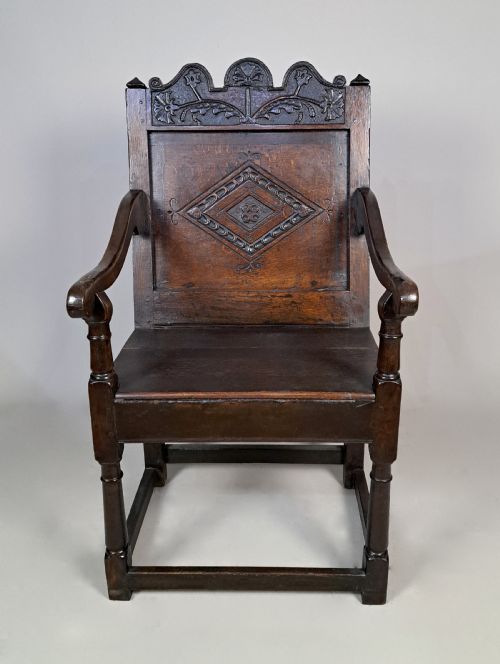
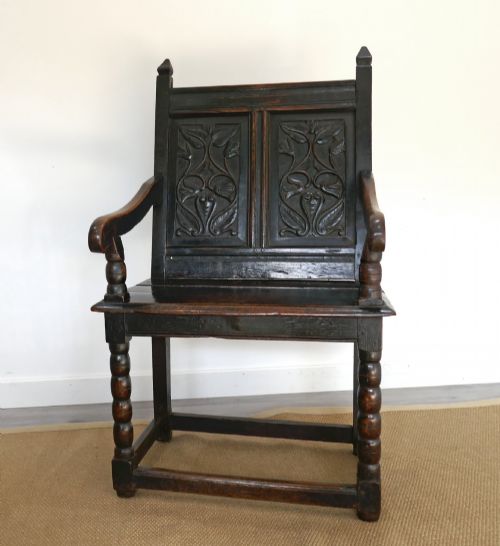
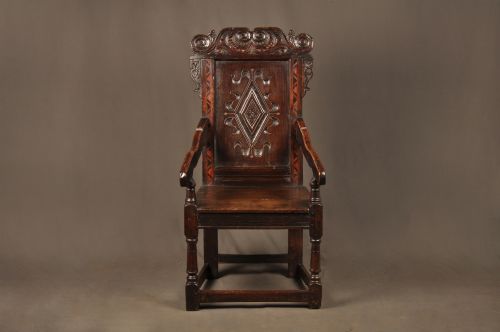
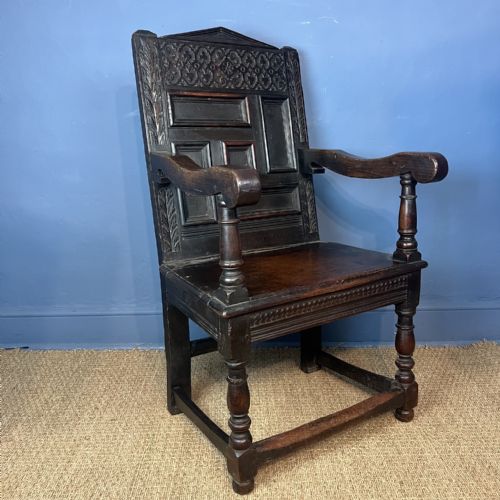
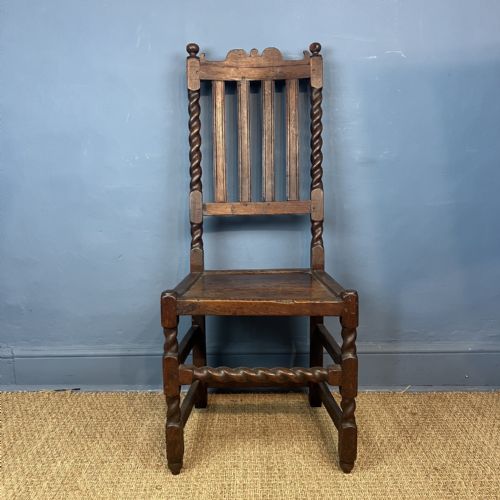
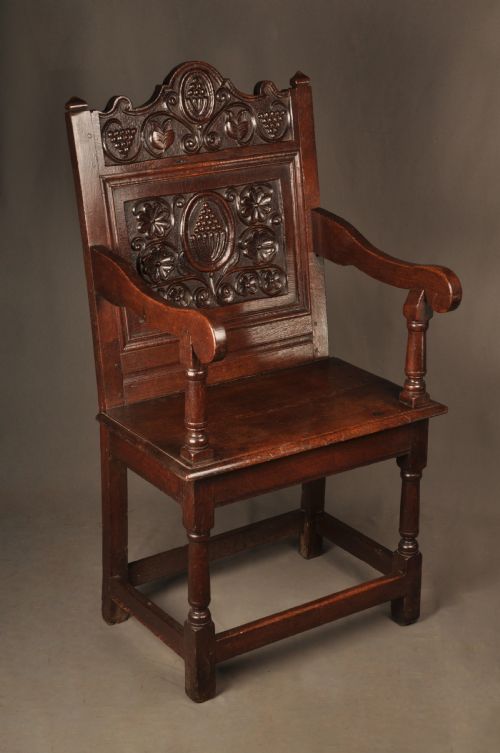
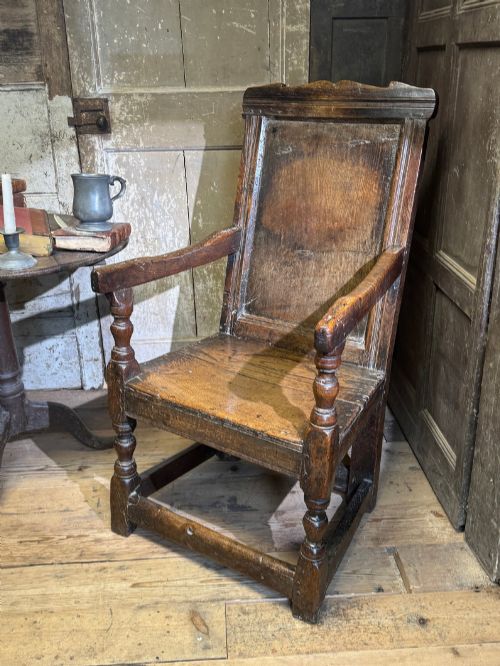
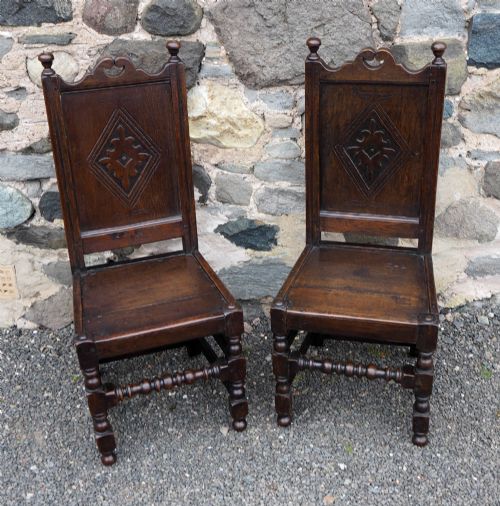
A charles i oak chair encompasses sturdy wainscot armchairs, high-backed stools, and boarded seating made during the early seventeenth century and associated periods. These items display solid wooden panels, turned legs, and peg joinery designed for permanence in substantial households.
Most examples found here hail from seventeenth-century English regional workshops, particularly Yorkshire, Lancashire, Cheshire, and the West Country. Regional traits appear in carved back panels, crestings, and the specific shaping of arm supports.
Buyers also encounter later nineteenth-century revival pieces modelled on these early forms, reflecting Victorian and Arts and Crafts interest in seventeenth-century vernacular design.
How they were made
Joiners built these seats using solid oak planks held together with mortise and tenon joints secured by wooden pegs rather than metal nails. Panels were slotted into grooved frames, allowing the timber to expand and contract naturally with changes in humidity.
Carving was executed directly onto the solid wood using gouges and chisels, producing geometric strapwork, fluting, and heraldic motifs on the backrests. Surfaces finished up waxed and polished through handling, developing a deep, dark patina over centuries of use.
Charles I Oak Chair Retail Price Guide 2026
Typical asking prices for charles i oak chair among the pieces listed under this phrase on Sellingantiques today, from the lower quarter to the upper quarter. They describe what is for sale here now, not the wider market.
Some seventeenth-century examples included close stools fitted beneath the seat for domestic convenience.
What varies in quality
The distinction between ordinary and exceptional pieces lies in the crispness of the hand-carved decoration and the proportion of original timber remaining in the frame. Early wainscot examples with deeply carved crest rails and intact panel assemblies command greater interest than plain or heavily restored versions.
Regional character also dictates desirability, with distinct regional carving styles from Yorkshire, Derbyshire, or the West Country showing higher sculptural ambition. The survival of an original dark surface colour without extensive modern stripping marks the better-preserved specimens.
Liberty and Co·Charles Bevan·James Lamb of Manchester
The Charles I Oak Chair Glossary
- Wainscot chair
- A heavy wooden armchair constructed with panelled backrests and solid wooden seats, popular in the sixteenth and seventeenth centuries. These chairs represent status and permanence before upholstered seating became common.
- Backstool
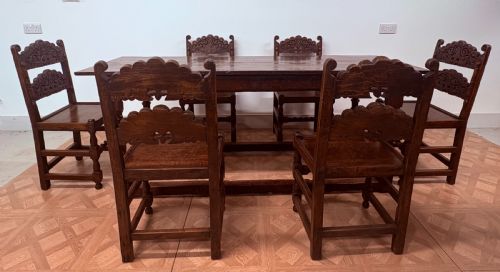
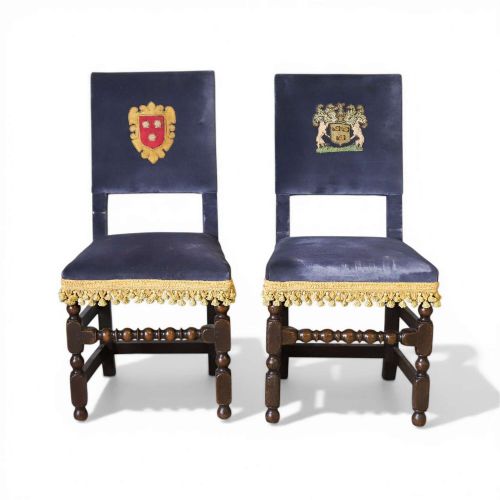
- An early term for a side chair without arms, featuring a padded or panelled back. They were often made in sets for dining use around a refectory table.
- Peg joint
- A method of securing mortise and tenon joints by driving a small wooden dowel through the interlocking pieces. This avoids metal fixings and allows the structure to flex.
- Strapwork
- Carved flat bands interlaced in geometric patterns found along the friezes and back panels of seventeenth-century oak furniture. This decorative motif derives from Renaissance pattern books.
- Cresting
- The carved wooden top rail decorating the upper edge of a chair back, frequently shaped with scrolls, arches, or heraldic crests.
Charles I Oak Chair: Frequently Asked Questions
How do I date an early oak chair?
Dating relies on construction methods, timber species, and carved motifs characteristic of seventeenth-century vernacular design. Peg joinery and panelled construction point towards the early period.
Changes in regional carving styles and the wear patterns on the seat boards help narrow down the decade of manufacture.
Were these chairs used at dining tables?
Armchairs and backstools were placed around long refectory tables in great halls during the seventeenth century. Only the head of the household typically sat in the armchair.
Side chairs and backstools served other family members and guests during formal meals.
How should I care for old oak?
Keep wooden furniture away from direct heat sources and sudden humidity changes to prevent the oak panels from splitting. Apply traditional beeswax occasionally to nourish the dry timber.
Buff the surface gently with a soft cloth to maintain the natural finish without using modern liquid polishes.
What is a wainscot chair?
A wainscot chair is a heavy, solid-wood armchair constructed using oak panelling for the backrest and box-like framing beneath the seat. The term originally referred to fine imported oak boards used for panelling rooms.
Over time, the name became attached to these sturdy seated items found in seventeenth-century homes.