


Carved Oak Wainscot Chair
A carved oak wainscot chair brings heavy timber structure and panelled dignity to an interior.
Understanding the carved oak wainscot chair
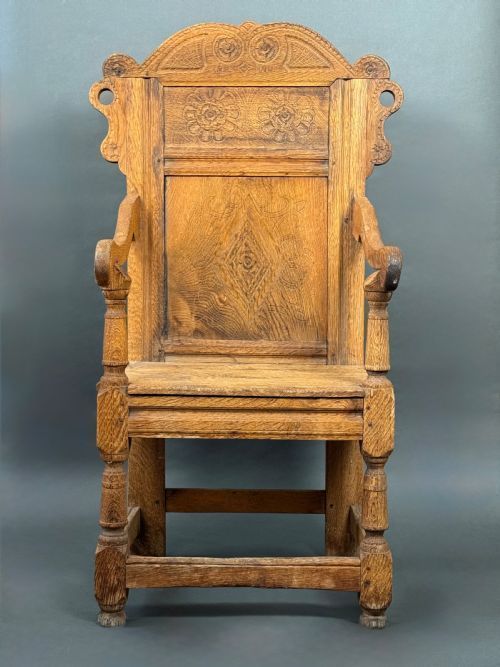
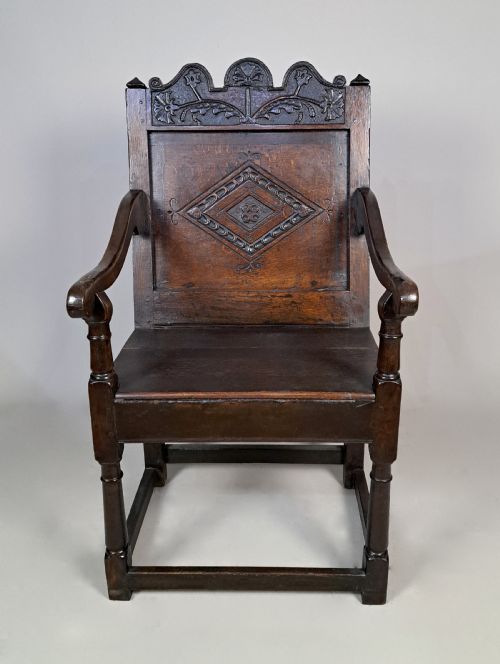
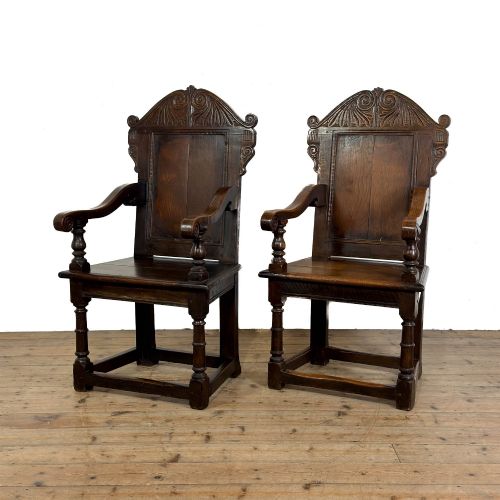
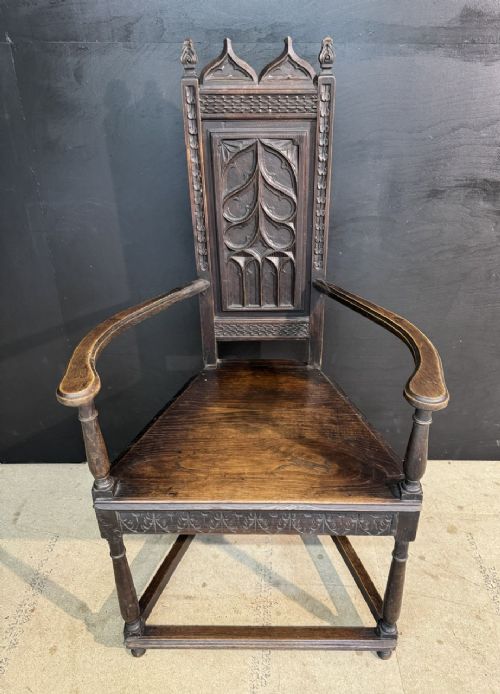
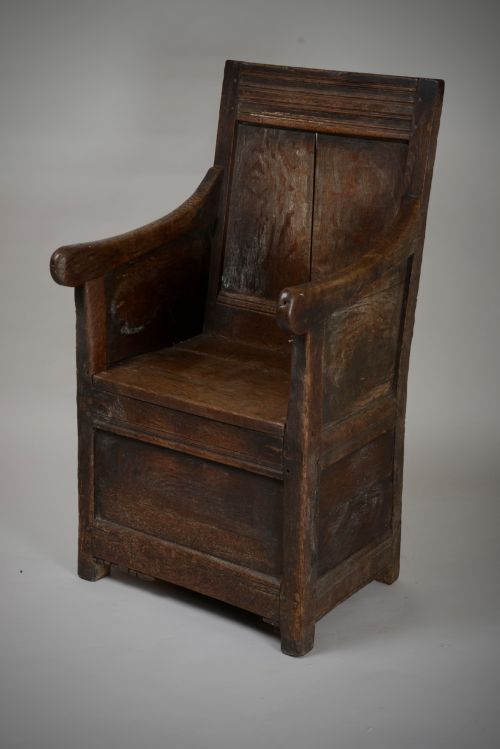
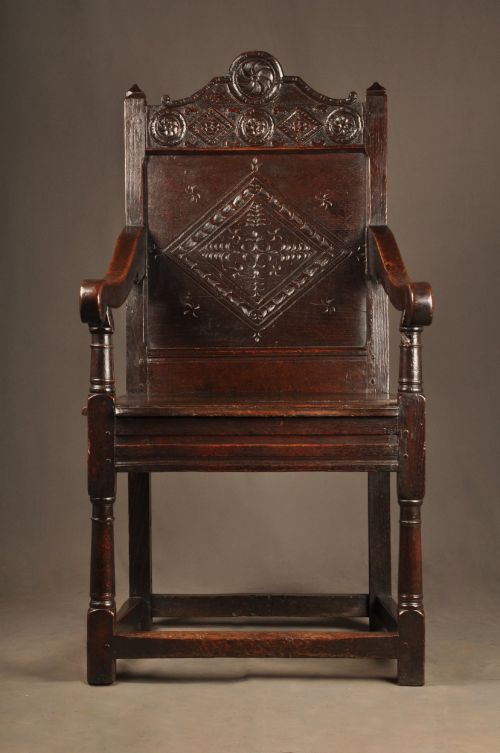
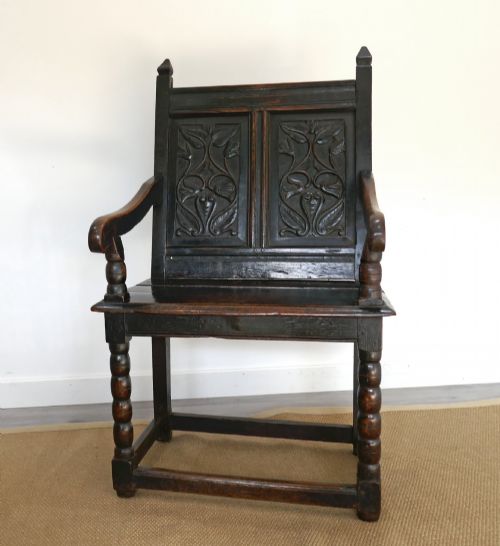
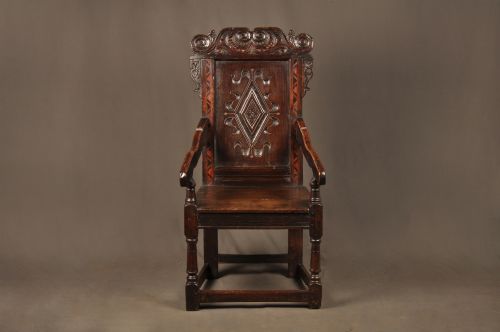
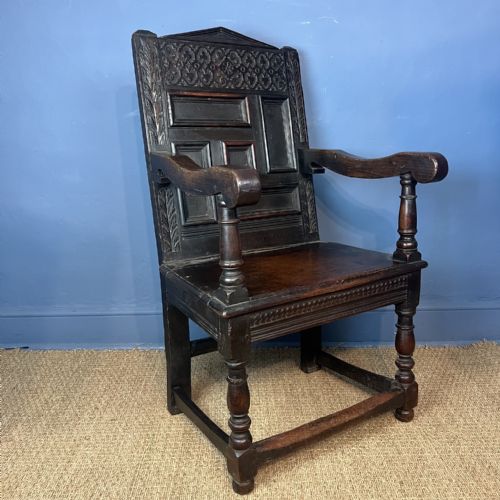
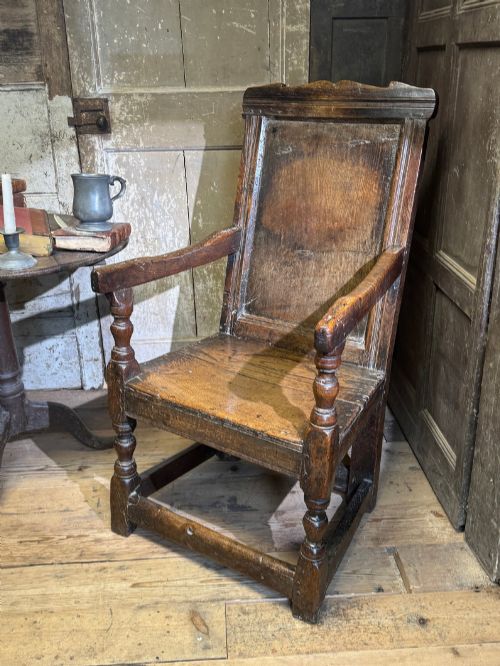
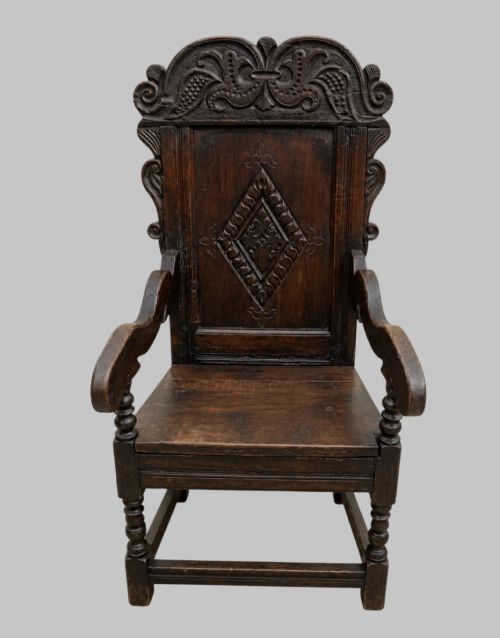
A carved oak wainscot chair is a solid wood armchair featuring a panelled back and heavy timber construction. Most pieces encountered belong to the seventeenth century, alongside eighteenth and nineteenth century examples that continue the heavy panelled tradition.
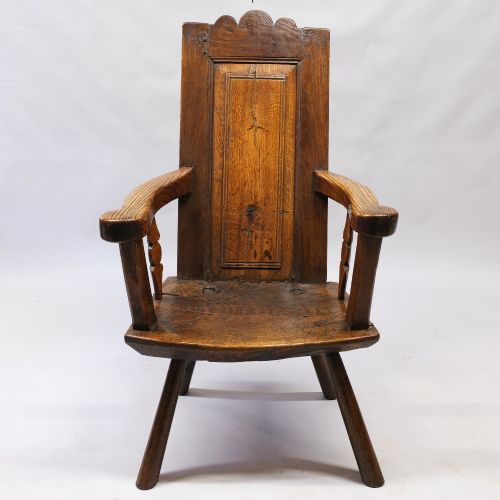
Regional variations appear across Britain, including Scottish, Yorkshire, and Lancashire or Cheshire origins. Forms range from full-size masters armchairs and hall chairs down to diminutive ladies, child or miniature versions.
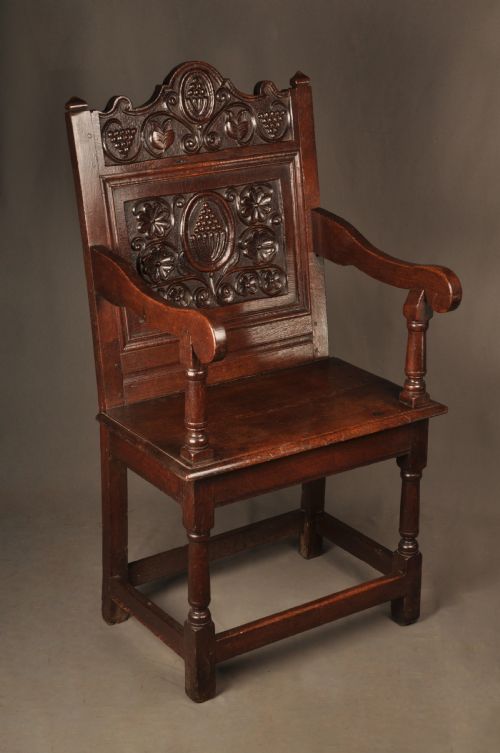
The phrase encompasses both period originals and later nineteenth century interpretations built in seventeenth century style. Buyers encounter matched pairs as well as single throne chairs bearing deep relief carved decoration.
Materials and construction methods
Construction relies entirely on solid oak, utilising frame and panel techniques to build the rigid box-like seats and high panelled backs. Timber is joined using traditional pegged mortise and tenon joints.
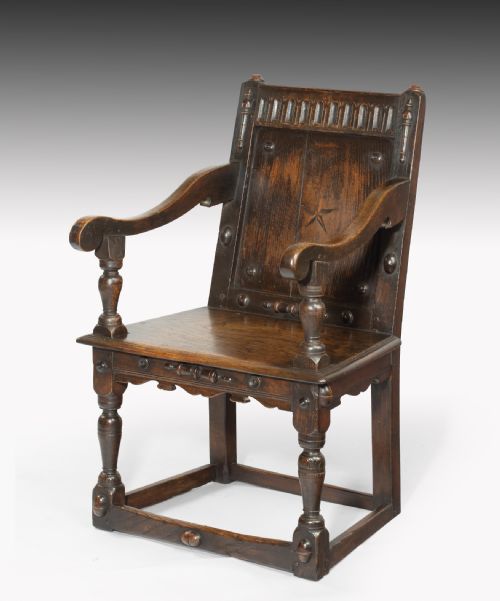
Decoration is achieved through chisel carving directly into the dense wood, creating strapwork, scrolling foliage, and figural motifs. Certain examples incorporate wood inlay to enhance the panel surfaces.
Retail Price Guide 2026
Typical UK retail prices for carved oak wainscot chair, calculated from the Sellingantiques database of over a million retail prices indexed since 2003. This retail price guide relies exclusively on Sellingantiques data; no external sources or auction records are used, so the figures do not describe the wider market.
Listings demonstrate a span from sixteenth century pieces through to twentieth century miniatures, executed entirely in solid oak.
Judging quality and period integrity
Quality rests in the crispness of the timber carving and the proportion of the frame. Period originals display the natural patination of centuries of handling, whereas later copies vary in the depth and vigour of their carved details.
The integrity of the timber influences worth, distinguishing pieces retaining their original components from those incorporating later repairs or alterations. The presence of specialised regional carving styles marks out distinct craftsmanship.
The Carved Oak Wainscot Chair Glossary
- Wainscot
- A heavy wooden panelled chair originating when oak was the primary material for domestic seating. These pieces were costly status items before upholstered furniture became common.
- Mortise and tenon
- A traditional woodworking joint where a projecting tongue fits snugly into a matching hole, secured by wooden pegs. This method holds the rigid oak frame together without metal nails.
- Strapwork
- A decorative carving motif resembling interlaced bands or folded leather straps. It frequently adorns the top rails and panels of seventeenth century furniture.
- Patina
- The surface sheen and mellow colour developed by old oak through decades of wax polishing and human touch. It serves as an indicator of genuine age.
- Frame and panel
- A method of construction allowing solid timber to expand and contract with humidity changes without splitting. The central panel floats freely within the grooved outer frame.
Frequently Asked Questions
How do I spot a 17th century original?
Look for deep hand-cut joinery marks, peg construction that shows irregular shaping, and an authentic dry patina across the oak surfaces.
Examine the wear patterns on the arms and seat where generations of hands and cloth have polished the grain naturally.
Where were these chairs used in a house?
Historically, a wainscot armchair sat at the head of the dining table for the master of the house, signifying status and authority.
Today, they function well in hallways, studies, or living rooms as statement seating that anchors a traditional interior.
Why do some chairs have inlaid wood?
Inlay work added decorative contrast to the dark oak panels using lighter woods or geometric patterns, elevating the visual richness of the piece.
Such enrichment often points to Scottish or high-status workshops aiming for a more elaborate aesthetic.
Are 19th century copies worth collecting?
Nineteenth century interpretations offer robust construction and traditional styling while remaining accessible for domestic use.
Many makers in the Victorian era applied exceptional carving skill to replicate seventeenth century forms with great fidelity.