
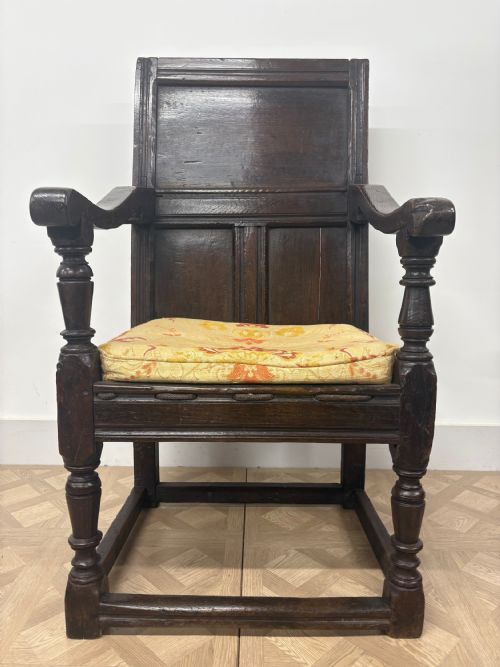
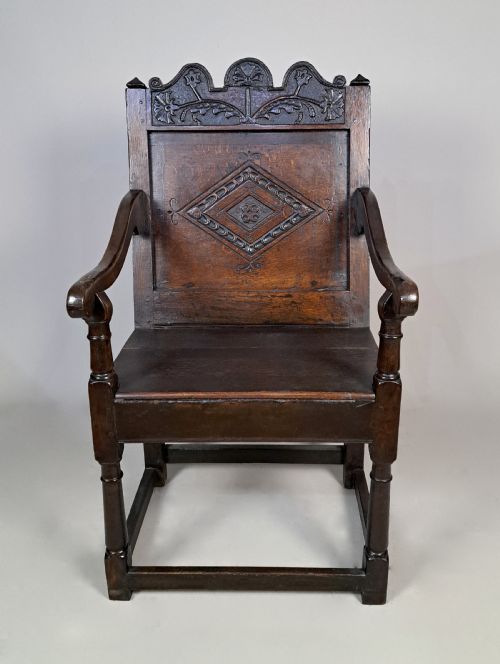
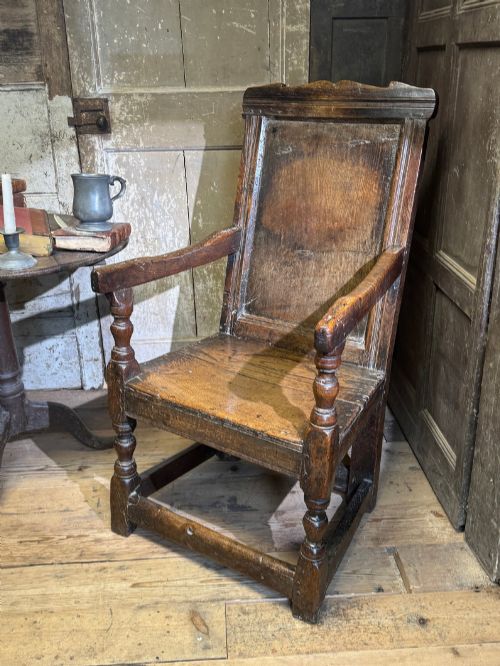

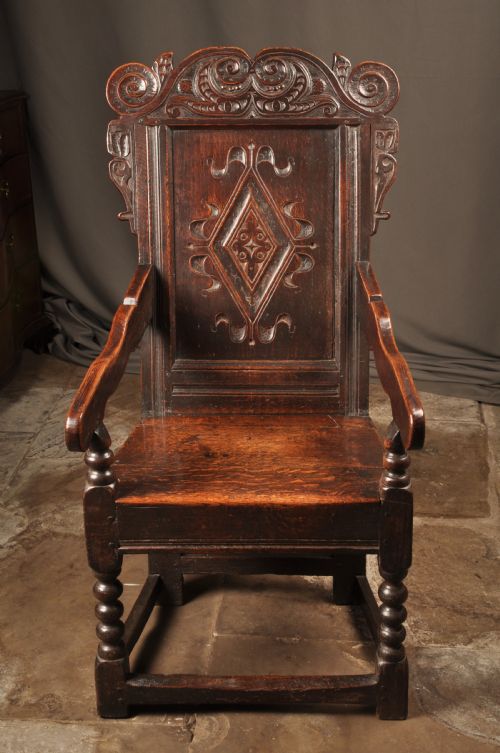


Joined Oak Armchair
These joined oak armchairs are sturdy timber seats built by frame makers, offering buyers a genuine piece of seventeenth-century domestic history.
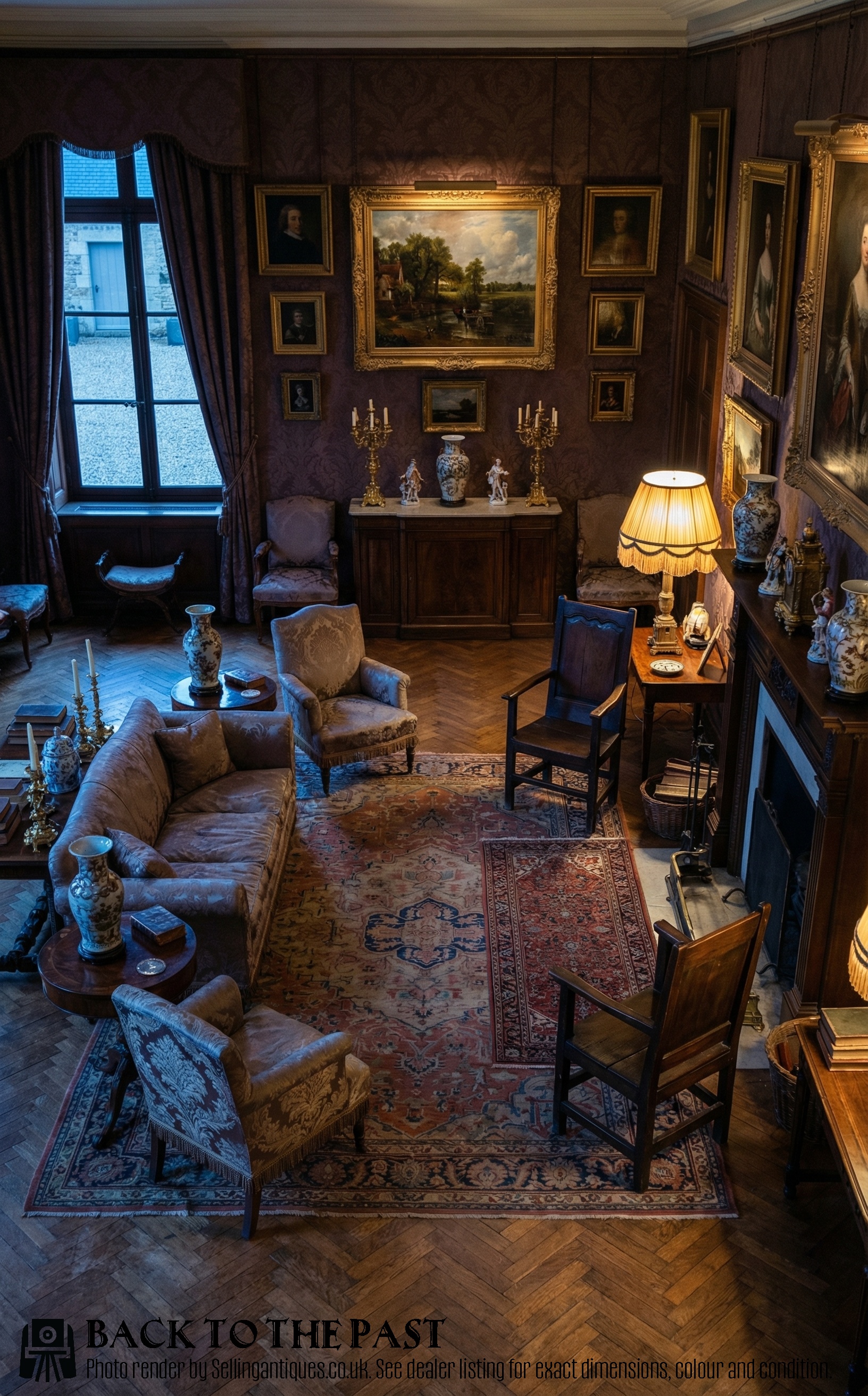
What joined oak armchairs are
A joined oak armchair is a heavy wooden seat constructed using traditional frame and panel techniques rather than simple board construction. These pieces most commonly appear as wainscot armchairs originating from the seventeenth century and the early eighteenth century.
Regional variations emerge across England and Wales, with examples attributed to northern counties such as Yorkshire, Lancashire, and Cheshire alongside Welsh country workshops. The form relies on rigid vertical posts and horizontal rails joined securely together to support a solid panelled back.
While the core of the inventory dates from the seventeen hundreds and earlier, later nineteenth-century interpretations also surface. Buyers encounter both plain functional seating and more decorative regional styles displaying carved details.

How they were made
These armchairs are built from solid oak, utilising heavy timber frames held together with pegged joints rather than metal fixings. Makers shaped the wood by hand using adzes, saws, and chisels to form the structural uprights, arms, and seats.
The backs typically feature flat or carved wooden panels fitted into grooved framing members, a method known as wainscot construction. Pegs secure the mortise and tenon joints, allowing the dense timber framework to withstand centuries of daily use.
Retail Price Guide 2026
Typical UK retail prices for joined oak armchair, calculated from the Sellingantiques database of over a million retail prices indexed since 2003. This retail price guide relies exclusively on Sellingantiques data; no external sources or auction records are used, so the figures do not describe the wider market.
Materials across the collection consist entirely of solid oak, constructed using traditional peg joints and wainscot panel techniques.
What varies in quality
Quality in these armchairs rests upon the proportion of original timber remaining in the frame and the crispness of any surviving carved decoration. Pieces that retain their early peg construction and untouched surface colour sit at the top of the range.
Structural integrity also dictates value, as heavy daily use often requires repairs to the lower legs and arm supports over hundreds of years. Finer regional examples display deliberate proportion and balanced carving, whereas utilitarian pieces remain plain and heavy.
The Joined Oak Armchair Glossary
- Joined
- Built using tight woodworking joints like mortise and tenon secured with wooden pegs. This method creates rigid furniture without relying on modern metal screws or nails.
- Wainscot
- A type of wooden panelling used primarily for the backrests of early armchairs. The term originally described fine oak panelling applied to interior walls.
- Peg joined
- Assembled using cylindrical wooden dowels driven through pre-bored holes in the joints. This traditional technique accommodates natural wood movement as timber ages.
Frequently Asked Questions
What is a joined oak armchair?
A joined oak armchair is a rigid wooden seat built with mortise and tenon joints rather than simple boards. These chairs feature sturdy frames and solid panel backs.
Most surviving examples date from the seventeenth and early eighteenth centuries, reflecting domestic life in English and Welsh country houses.
How were wainscot armchairs used?
These heavy chairs served as principal seats of authority within early households, often reserved for the head of the family. Their solid panel backs protected occupants from draughts in unheated rooms.
Over time, they moved from formal halls into general domestic spaces as furniture production increased.
How do I date a joined oak armchair?
Dating relies on examining the construction methods, tool marks, and stylistic clues left by the original maker. Seventeenth-century examples often display pegged mortise and tenon joints alongside flat panel backs.
Later regional pieces from the eighteenth century introduce subtle shifts in proportion and decorative carving styles.
How do I care for antique oak?
Antique oak benefits from stable indoor humidity and protection from direct sunlight and heat sources. Regular dusting with a dry cloth keeps the surface clean without moisture damage.
Applying a traditional beeswax polish occasionally helps nourish the dense timber and maintain its natural lustre.