



Ceramic Female Figure Sculpture
These ceramic female figure sculpture pieces bring classical grace and expressive period style into interior spaces.
Ceramic Female Figure Sculpture
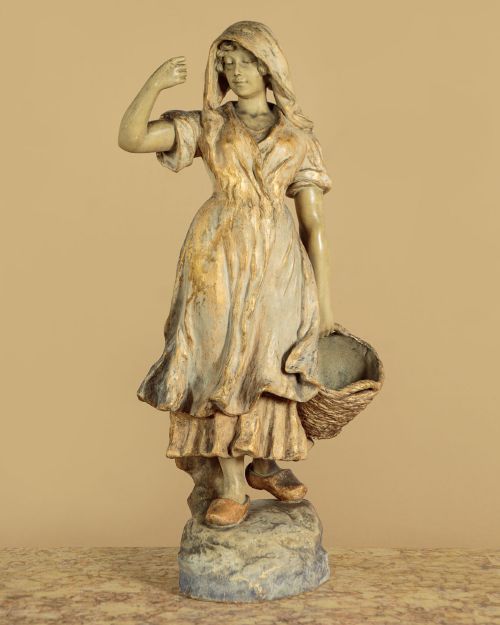
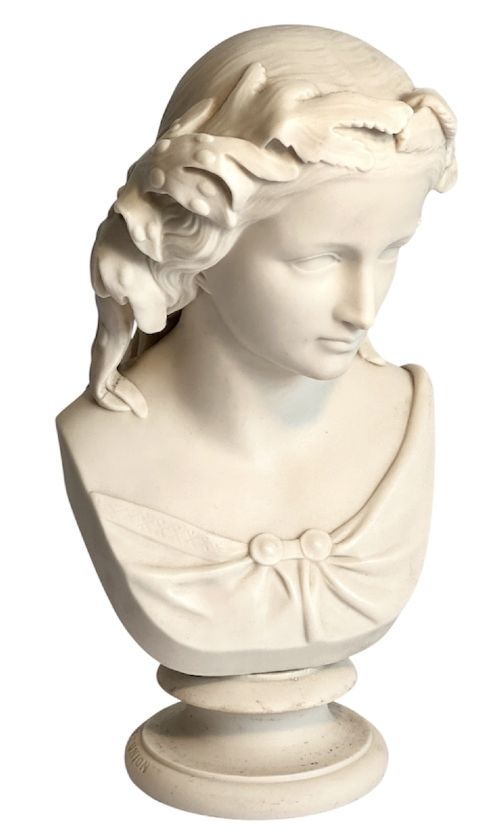
A ceramic female figure sculpture encompasses a broad array of decorative objects, from Victorian parian ware busts to flowing Art Nouveau maidens and geometric Art Deco dancers. These figures depict classical heroines, allegorical representations, and everyday rural women rendered in three dimensions.
The versions most commonly met on this page date from the nineteenth century through to the nineteen-thirties, reflecting dominant tastes in European ceramics. British factories such as Royal Worcester and Copeland sit alongside continental manufacturers like Royal Dux, Goldscheider, and Ernst Wahliss, offering both biscuit porcelain and glazed earthenware.
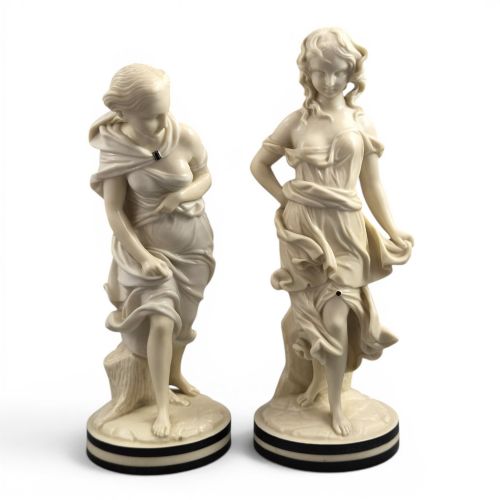
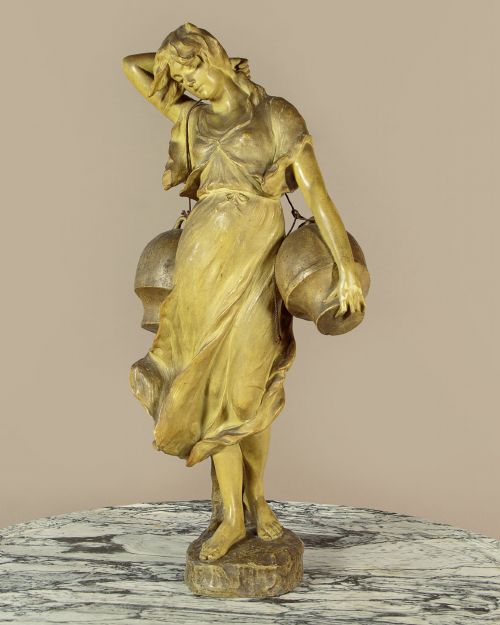
Forms range from intimate cabinet statuettes and elaborate table centrepieces to monumental standing figures and portrait busts. Collectors encounter subjects ranging from mythological figures like Daphne and Miranda to water carriers, dancers, and allegories of the seasons.
Materials and techniques
Makers utilised porcelain, earthenware, and terracotta as the primary clay bodies, shaping them through slip-casting and intricate hand-modelling. Parian porcelain, developed in the nineteenth century, gained favour for its close resemblance to carved marble, requiring careful firing to maintain fine detail.
Surface treatments vary widely across periods, incorporating glossy and matte glazes, shot enamel, gilt accents, and polychrome paint. Terracotta pieces often received metallic finishes or cold-painted colours to simulate bronze or natural skin tones.
Modelled works frequently bore the signatures or marks of notable sculptors and modellers, whose plaster originals were translated into ceramic editions by factory artisans.
Several ladies share space with unexpected companions, including a pet lizard, a heavy wooden hoop, and an assortment of musical instruments.
Judging quality
The sophistication of the glaze or painted surface separates standard production pieces from masterworks. Controlled application of enamels and subtle shading elevate figures such as those by Royal Worcester and Goldscheider, whereas heavy or flat colouring flattens the sculptural form.
Scale and ambition also dictate standing; monumental figures and complex multi-figure groups demand exceptional technical skill in firing to prevent distortion or sagging in the kiln.
Goldscheider·Royal Worcester·Royal Dux Bohemia·Copeland·Ernst Wahliss·Volkstedt·Achille Mollica·Bernard Bloch
The Ceramic Female Figure Sculpture Glossary
- Parian porcelain
- A fine-grained, unglazed porcelain developed in Victorian Britain to imitate carved marble. It fires to a smooth, creamy finish that highlights sculptural detail without distracting glaze reflections.
- Terracotta
- A porous, brownish-red earthenware fired at lower temperatures. It serves as a durable medium for expressive figurative sculpture and accepts cold-painted finishes readily.
- Bisque porcelain
- Unvitrified white porcelain that has undergone a single firing without glaze. It presents a matte texture valued for its tactile qualities in neoclassical and Victorian figures.
- Shot enamel
- A specialised surface treatment on porcelain that shifts in colour depending on the angle of light. It appears on select late-nineteenth and early-twentieth-century figures.
- Allegorical figure
- A sculptural representation of an abstract concept, virtue, or season embodied in human form. Common examples include personifications of autumn, art, or classical virtues.
Ceramic Female Figure Sculpture: Frequently Asked Questions
What is parian ware?
Parian ware is a type of fine, unglazed white porcelain developed in Victorian England to imitate carved marble. It became the material of choice for classical statuary and literary busts due to its smooth texture and ability to render fine anatomical details.
Factories like Copeland and Royal Worcester produced extensive lines of parian figures, often depicting classical maidens and allegorical subjects. The material allowed middle-class homes to display affordable approximations of classical sculpture.
How do I date these figures?
Dating relies primarily on factory ceramic marks stamped or impressed on the underside, alongside stylistic indicators. Victorian pieces often feature registration diamonds or specific crown and crescent stamps.
Art Nouveau and Art Deco pieces display distinct stylistic lines, curves, or geometric forms characteristic of the early twentieth century. Comparing model numbers and artist signatures against known production records provides more precise chronological placement.
Where were these sculptures displayed?
In period interiors, ceramic female figures occupied prominent positions on mantelpieces, credenzas, and dedicated pedestal tables. Large examples served as architectural table centrepieces for formal dining rooms.
Smaller cabinet figures sat within glazed display cabinets alongside porcelain tableware and glassware. Their primary function was aesthetic enrichment, demonstrating the owner's cultural taste and refinement.
How do I clean ceramic figures?
Cleaning requires a soft, dry brush to remove dust from crevices and delicate extremities. Unglazed parian and terracotta absorb moisture and oils easily, meaning water and chemical cleaners should be avoided.
Glazed porcelain figures tolerate gentle wiping with a barely damp cloth when necessary. Handle pieces strictly by their heaviest structural bases rather than protruding limbs, fingers, or drapery.