
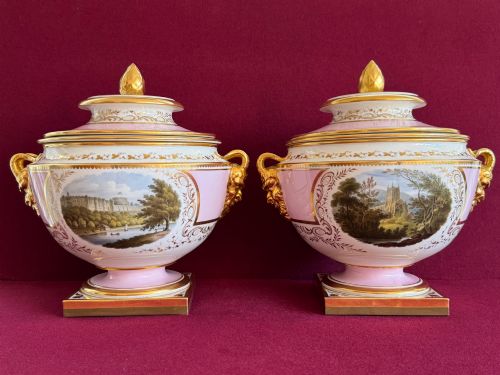


Pink Porcelain Table Centrepiece
A pink porcelain table centrepiece is a striking decorative vessel designed to anchor a dining table, bringing dramatic height and colour to a room.
Pink Porcelain Table Centrepiece
A pink porcelain table centrepiece takes many forms across the inventory, spanning sweetmeat stands, figural candelabra, and sculptural vessels. Buyers searching for a pink porcelain table centrepiece will encounter nineteenth-century German works alongside eighteenth-century English soft-paste examples, each offering a distinct decorative presence.
The selection includes elaborate figural arrangements featuring cherubs and bathers seated upon shell bowls, as well as towering four-arm candelabra and chariot vases. These sculptural objects dominate the table surface, combining functional vessel design with modelled ceramic art from periods such as Rococo Revival, Art Nouveau, and Georgian.
How they were made
Maker's workshops utilised hard-paste and soft-paste porcelain, shaping the ceramic body through intricate moulding and hand-modelling techniques to create elaborate figural groups and shell basins. Enamel paint and enamel decoration were applied by hand to achieve the characteristic pink tones across the surfaces of these table arrangements.
Many examples incorporate delicate applications of gold leaf and gilt work to highlight moulded scrollwork, borders, and figural details. Biscuit porcelain also appears, offering an unglazed, matte finish that accentuates the sculptural definition of the figures and cherubs.
Several pieces feature chubby cherubs forever trapped in mid-climb across giant Rococo seashells, refusing to acknowledge the passing of centuries.
What varies in quality
The complexity of the composition dictates the standing of a piece within its period, with multi-figure candelabra and large figural centrepieces demanding greater technical skill from the potter. The integrity of the porcelain body and the subtlety of the glaze application further distinguish workshop output across different decades.
Royal Dux·Sitzendorf·German Saxony Porcelain·German Dresden
The Pink Porcelain Table Centrepiece Glossary
- Soft-paste porcelain
- A ceramic composition fired at lower temperatures than hard-paste porcelain, possessing a warm, slightly softer glaze characteristic of earlier English factories. This material allows for subtle absorption of enamel colours.
- Biscuit porcelain
- Fired unglazed ceramic that presents a matte, marble-like finish well-suited to detailed figural work and delicate sculptural forms. It reveals the pure texture of the fired clay.
- Sweetmeat stand
- A specialised vessel designed for serving small confectionery, sweets, or nuts during formal dining. These stands often take the form of shell-shaped basins elevated on decorative pedestals.
- Enamel paint
- Vitreous pigments fused to the porcelain surface through subsequent firings, providing permanent colouration. This technique achieves the rich pink hues seen across the pieces.
- Candelabra
- A branched candlestick designed to hold multiple tapers, frequently integrated into larger sculptural table centrepieces. They provide both illumination and vertical display height.
Pink Porcelain Table Centrepiece: Frequently Asked Questions
What is a pink porcelain table centrepiece?
A pink porcelain table centrepiece is a large decorative ceramic object created to sit in the middle of a dining table or sideboard. These pieces combine sculptural figures, shell basins, or candelabra branches, finished in pink enamel and gilt.
They serve as focal points for interior decoration, reflecting the aesthetic tastes of the nineteenth and eighteenth centuries. The form ranges from simple sweetmeat stands to elaborate figural groups involving cherubs and bathers.
How were pink porcelain centrepieces used?
Historically, these centrepieces occupied the middle of the dining table during formal meals, often holding sweetmeats, fruit, or lighted candles. They functioned as grand conversation pieces that demonstrated the host's taste and wealth.
In modern settings, they remain decorative table ornaments or display objects on sideboards and mantelpieces. Their scale and sculptural detail allow them to command attention in a room without needing to hold food or tapers.
How do I identify a Rococo Revival centrepiece?
Rococo Revival pieces feature asymmetric scrollwork, C-scrolls, shell motifs, and naturalistic floral elements reminiscent of eighteenth-century French design. The forms feel organic and fluid, often avoiding strict symmetry in favour of dynamic movement.
Makers working in this style during the nineteenth century embraced exaggerated curves and playful figural arrangements, such as cherubs clambering over shell vessels. The pink enamelwork on these pieces typically highlights the swelling contours of the scroll bases.
What is the difference between hard and soft porcelain?
Hard-paste porcelain uses true kaolin clay and petuntse, fired at very high temperatures to create a dense, vitrified body that resists scratching. Soft-paste porcelain contains glass frit and white clay, fired at lower temperatures, resulting in a slightly warmer glaze texture.
Earlier English manufactories often utilised soft-paste recipes, while continental European factories frequently produced hard-paste bodies. Both materials support detailed enamel painting and gilt enrichment.
How do I care for antique porcelain?
Antique porcelain requires gentle handling, ideally kept away from high-traffic areas where accidental knocks might occur. Dusting should be performed with a soft, dry brush to protect delicate gilt and protruding figural elements.
Water and harsh cleaning agents should be avoided, particularly on pieces with enamel paint or gold leaf applied over the glaze. Displaying them on stable, level surfaces ensures the long-term safety of these heavy ceramic centrepieces.