
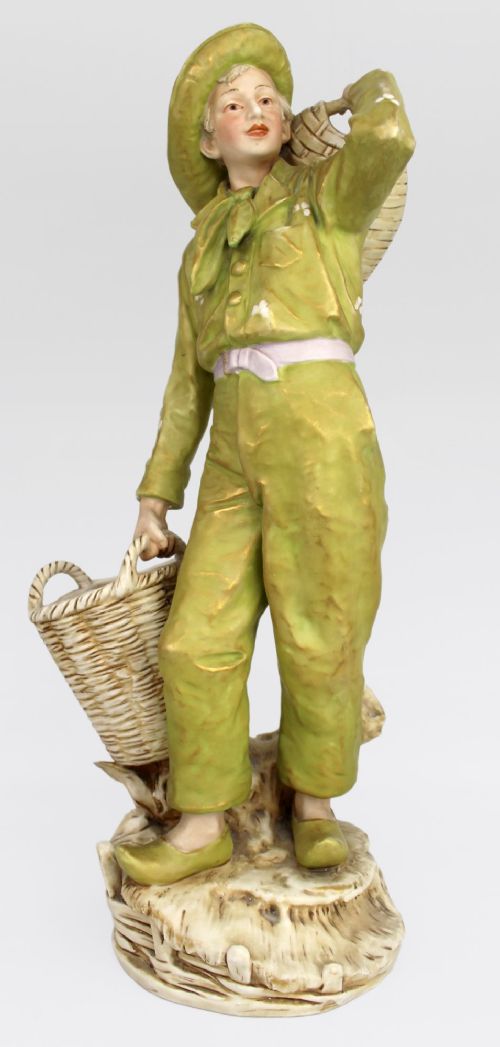


Art Nouveau Porcelain Figurine
An art nouveau porcelain figurine captures the flowing lines and natural forms characteristic of the turn of the twentieth century.
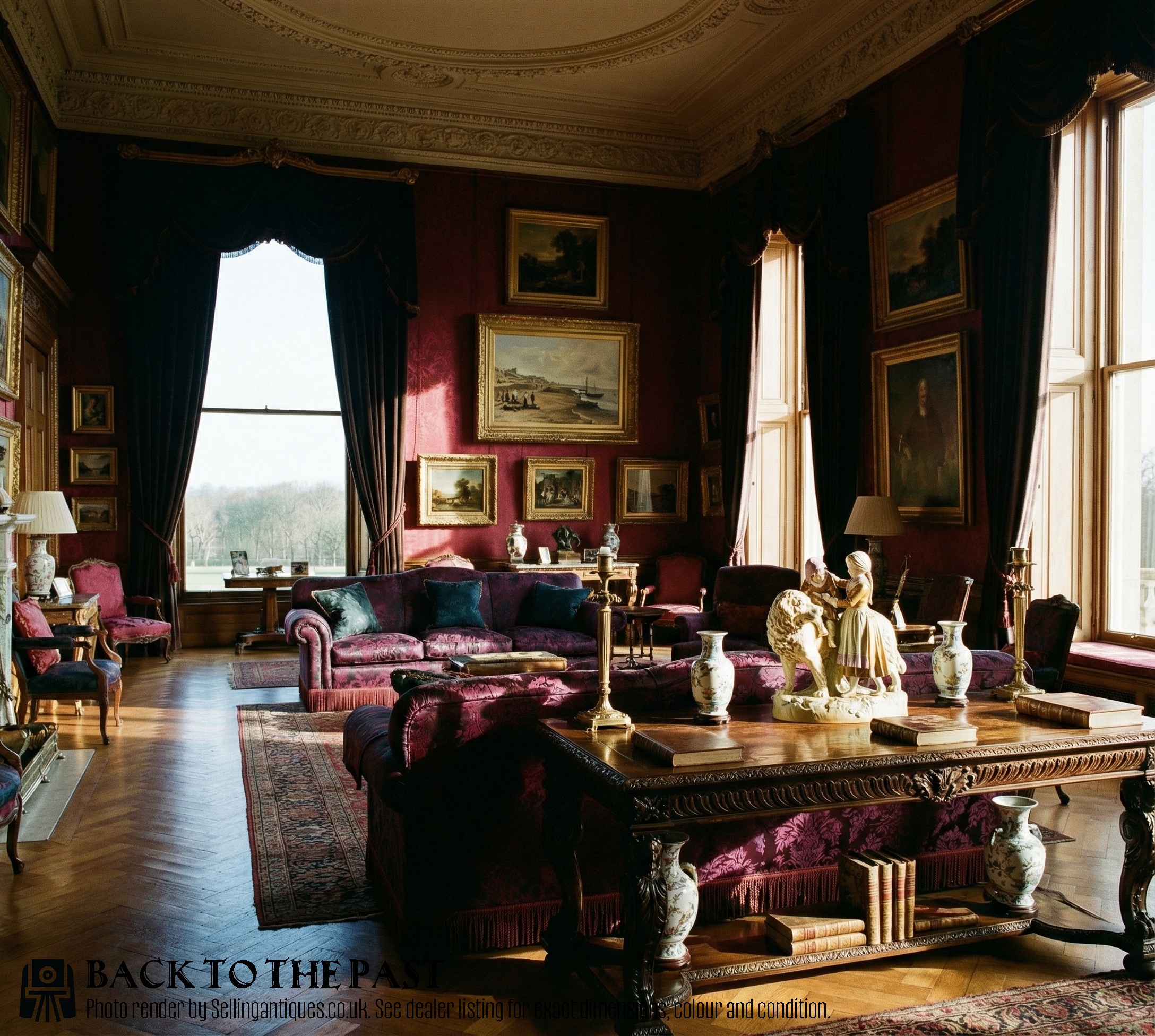
Art Nouveau Porcelain Figurine
An art nouveau porcelain figurine represents graceful maidens, water nymphs, benders of reeds, and pastoral figures shaped during the late nineteenth and early twentieth centuries. These sculptures embody the sinuous curves and organic motifs of the period, often serving as centrepieces, vide poche, or decorative vessels.
The pieces appearing most frequently originate from factories such as Royal Dux Bohemia and Ernst Wahliss, spanning the Edwardian era back into the nineteenth century. Common forms include single female figures leaning on shells, pairs carrying domestic animals, and allegorical representations.
Makers utilised sculptural techniques to merge utilitarian objects, such as spill vases and vide poche, directly into figural compositions. This integration of everyday function with fluid artistic design defines the category.
Judging quality in sculpture
Quality rests in the crispness of the modelling and the sensitivity of the hand-painting, separating workshop-standard output from master-designed pieces. The fluidity of the figural posture and the subtlety of the glaze application dictate the visual success of each sculpture.
Scale also influences distinction, with monumental figures and elaborate group compositions showing greater ambition in ceramic engineering than smaller standalone models. The clarity of impressed factory numbers and artist signatures further anchors a piece within a maker's hierarchy.
Art Nouveau Porcelain Figurine Retail Price Guide 2026
Typical asking prices for art nouveau porcelain figurine among the pieces listed under this phrase on Sellingantiques today, from the lower quarter to the upper quarter. They describe what is for sale here now, not the wider market.
Listings feature porcelain, earthenware, and biscuit porcelain, embellished with gilt, glaze, and hand-painted enamel across Edwardian and nineteenth-century periods.
Royal Dux Bohemia·Ernst Wahliss·Luca Madrassi·Alois Hampel·Theodore Schoop·Bernard Bloch
The Art Nouveau Porcelain Figurine Glossary
- Biscuit Porcelain
- Unglazed porcelain fired once to create a matte, porous finish resembling marble. This surface absorbs light differently than glazed ceramic.
- Centrepiece
- A large decorative object designed to sit in the middle of a table or sideboard. These often take the form of shell bowls supported by figures.
- Vide Poche
- A small tray or shallow dish intended for emptying pockets. In art nouveau ceramics, these often feature a maiden leaning over the basin.
- Spill Vase
- A small container designed to hold wooden spills used for lighting fires or pipes. They are frequently incorporated into the base of figural compositions.
- Gilding
- The application of gold leaf or powdered gold paint to ceramic surfaces. It accentuates borders, hair ornaments, and garment edges.
Art Nouveau Porcelain Figurine: Frequently Asked Questions
What subjects do these figures show?
The pieces predominantly depict graceful maidens, water nymphs, benders of reeds, and pastoral youths engaged in daily tasks. Allegorical figures representing concepts like geography also appear.
Animals feature regularly, including setters, puppies, kittens, and birds accompanying shepherds or children.
How do I identify a Royal Dux piece?
Look for the characteristic pink triangle stamp embedded in the porcelain paste underneath the base, alongside impressed model numbers. Many figures also bear raised signatures or distinct factory stamps from Bohemia.
The modelling style typically leans toward flowing hair, classical drapery, and naturalistic settings such as ponds or shells.
Were these figures meant to be useful?
Many sculptures served a dual purpose beyond mere decoration on a sideboard or mantelpiece. They were constructed as vide poche dishes, spill vases, or large centrepiece bowls.
Figures leaning over shell basins held items or acted as centrepieces for dining tables during the Edwardian period.
How should I clean antique porcelain?
Dust the surface gently with a soft, dry brush to prevent dirt settling into unglazed biscuit porcelain pores. Avoid submerging painted or gilt pieces in water.
Harsh chemical cleaners will strip hand-painted enamel and delicate metallic gilding from the ceramic body.