


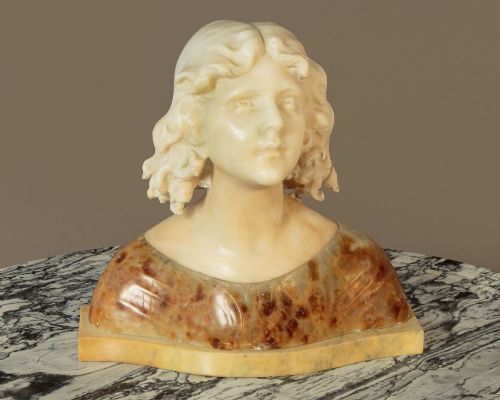


Art Nouveau Maiden Statue
An art nouveau maiden statue captures fluid lines and naturalistic grace, bringing organic curves and classical elegance into domestic spaces.
Art Nouveau Maiden Statue
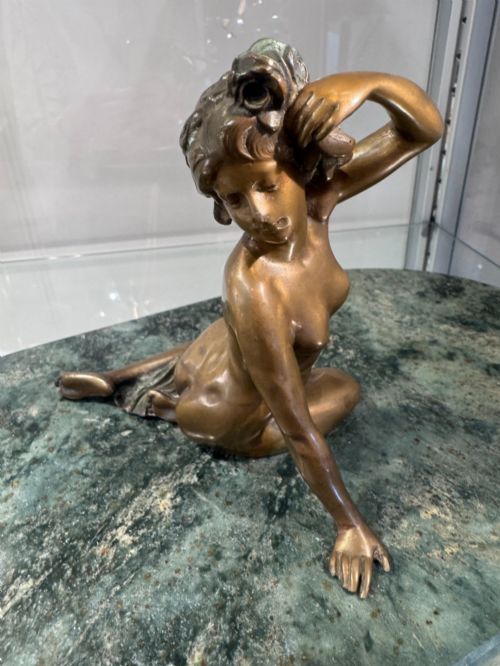
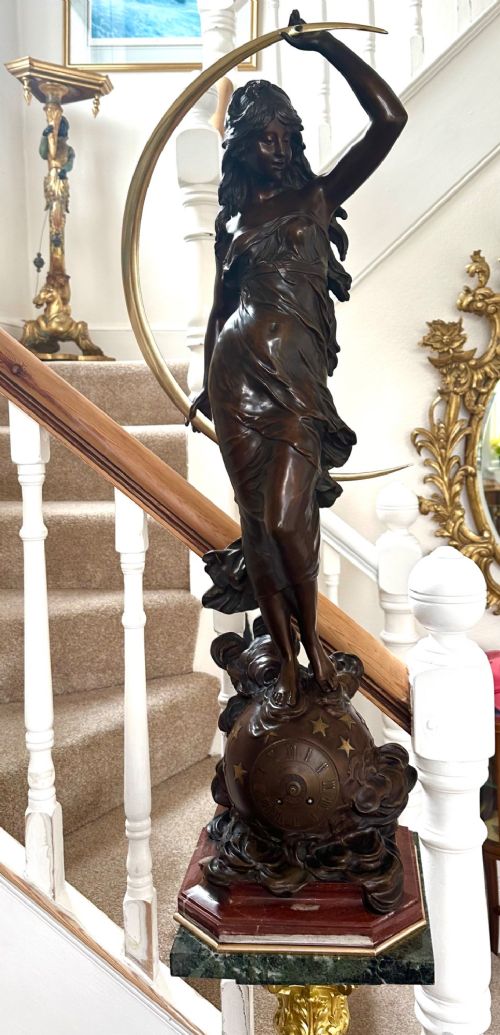
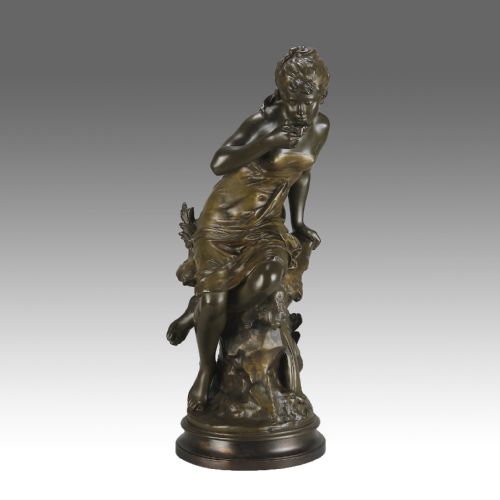
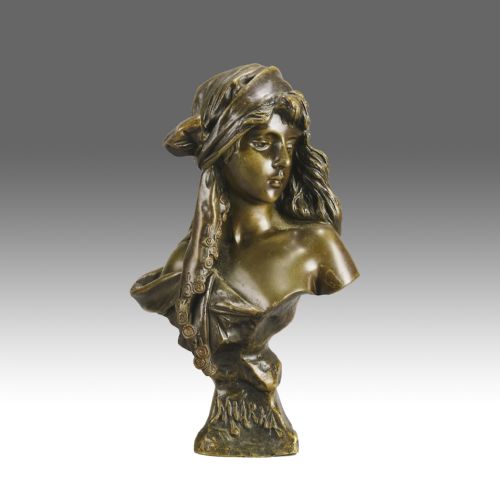
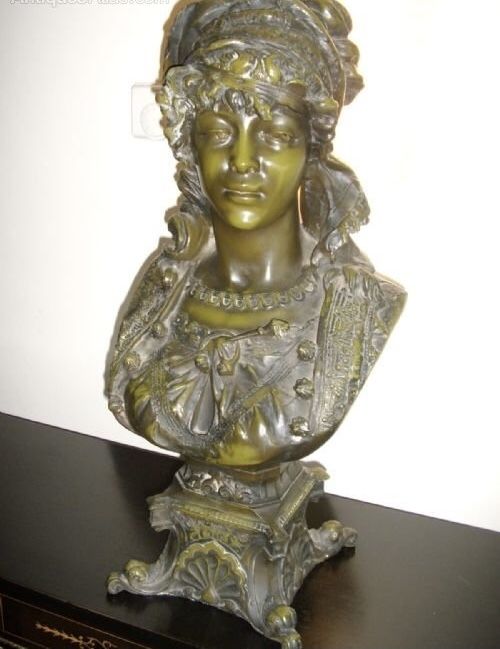
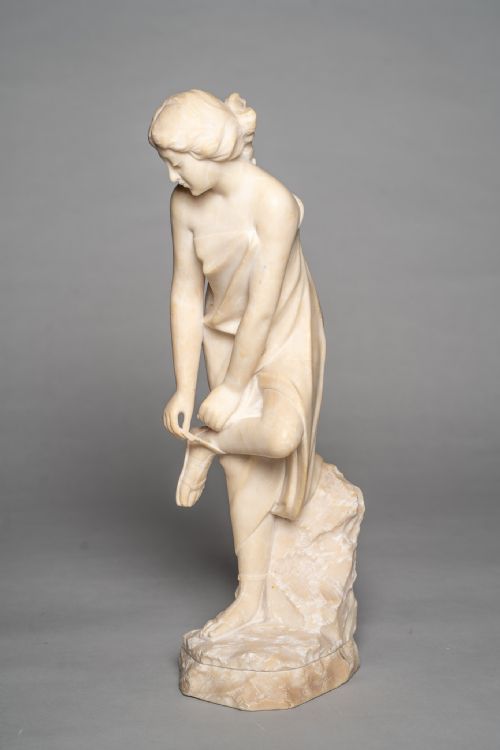
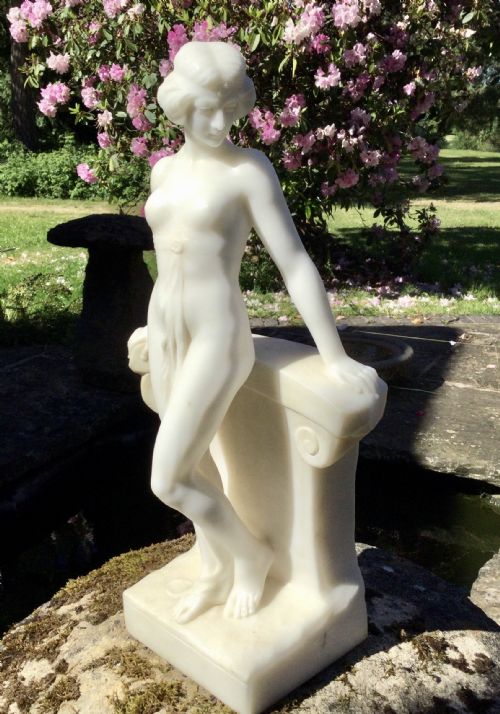
When searching for an art nouveau maiden statue, buyers encounter pieces originating primarily from the late nineteenth and early twentieth centuries, spanning Victorian, Edwardian, and Art Deco periods. These works manifest predominantly as sculptural figures, decorative busts, and figural centrepieces depicting female allegories, water nymphs, and country maidens.
French and Austrian foundries and potteries dominate the selection, bringing continental craftsmanship to domestic display. Common iterations include seated or standing figures accompanied by natural motifs, as well as functional objects like figural lamps and centrepieces integrated with female forms.
Materials and Techniques
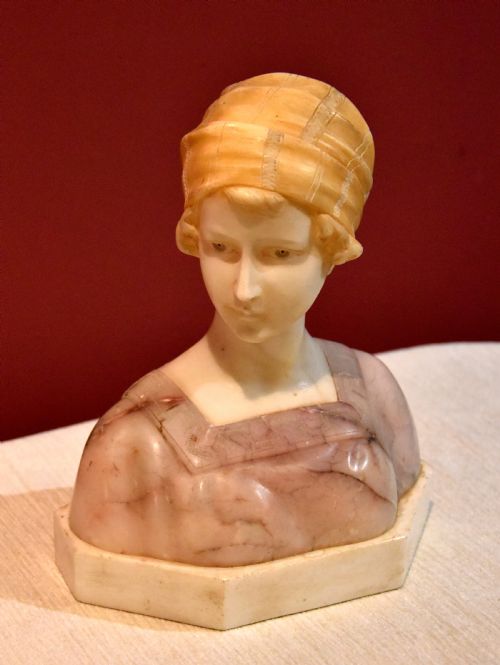
Foundries utilised bronze, patinated bronze, and gilt bronze, often mounted on marble bases to give substantial weight and colour contrast to the metallic figures. Sculptors also employed carved alabaster and marble for busts, sometimes combining two-tone stone to delineate hair and drapery.
Ceramic and porcelain works from major potteries involved intricate modelling, hand-painting, and earthenware casting. Makers applied glazes and painted finishes to porcelain figures, while metalworkers chased and finished bronze and spelter castings by hand.
Listings feature works created across bronze, porcelain, marble, alabaster, ceramic, and terracotta from the late nineteenth and early twentieth centuries.
Quality and Execution
In ceramic and stone works, quality reveals itself through the depth of carving in alabaster and the precise detailing of painted porcelain. Master modellers achieved fluid movement and lifelike proportions, whereas lesser examples exhibit rigid postures and heavy, opaque finishes.
Moreau Family·Mathurin Moreau·Emmanuel Villanis·Hans Müller·Goldscheider·Royal Dux Bohemia
The Art Nouveau Maiden Statue Glossary
- Patinated bronze
- Bronze treated with chemical solutions to produce a coloured surface finish. This technique enhances depth and highlights sculptural details.
- Spelter
- An alloy of zinc and lead used as a cost-effective alternative to bronze. It takes fine detail well but requires careful handling due to its softer composition.
- Figural centrepiece
- A decorative sculptural group designed for the middle of a dining table or sideboard. These often depict water nymphs or allegorical female figures.
- Allegory
- The representation of abstract ideas, such as seasons or virtues, through human form. Artists frequently portrayed summer or spring as graceful young women.
Art Nouveau Maiden Statue: Frequently Asked Questions
How do I identify bronze from spelter?
Bronze objects carry a heavier weight and ring with a resonant tone when gently tapped, whereas spelter feels lighter and sounds duller.
Closer inspection often reveals areas where the surface finish has worn thin, exposing the greyish metal underneath in cheaper alloy castings.
Where should I display an alabaster bust?
Alabaster requires stable indoor environments away from direct sunlight and moisture to preserve its translucent surface and prevent yellowing.
Placing the sculpture on a secure mantelpiece or dedicated pedestal ensures proper weight support for heavy stone pieces.
What defines the Art Nouveau style?
Art Nouveau rejects rigid geometric symmetry in favour of undulating organic lines inspired by natural plant stems, flowers, and flowing hair.
Figurative works from this movement emphasise expressive movement and feminine grace combined with naturalistic drapery.
How do I clean porcelain figures safely?
Dust porcelain surfaces gently with a soft dry brush, avoiding water or chemical cleaners that might damage hand-painted details or glazes.
Antique ceramic pieces require careful manual dusting rather than immersion to protect delicate extremities like fingers and foliage.