



Art Nouveau Ceramic Sculpture
Art nouveau ceramic sculpture captures flowing organic lines in terracotta and porcelain, bringing distinctive figurative elegance and characterful continental design into a room.
Art Nouveau Ceramic Sculpture
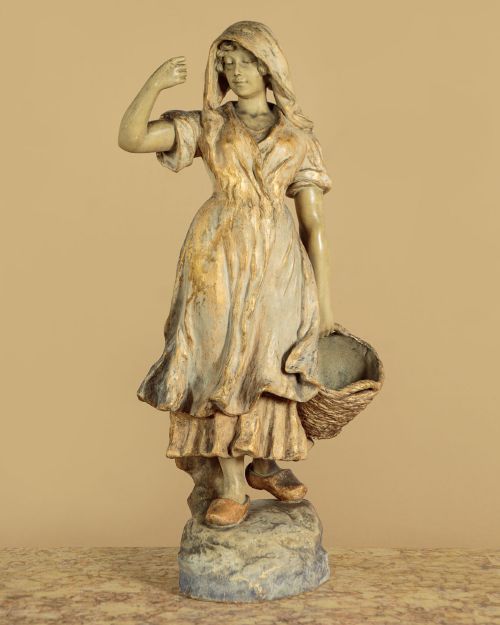
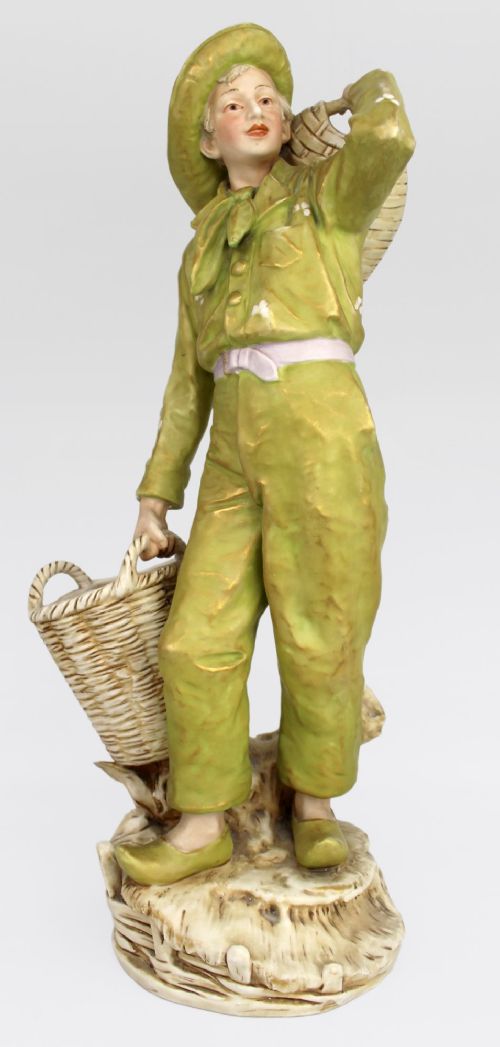
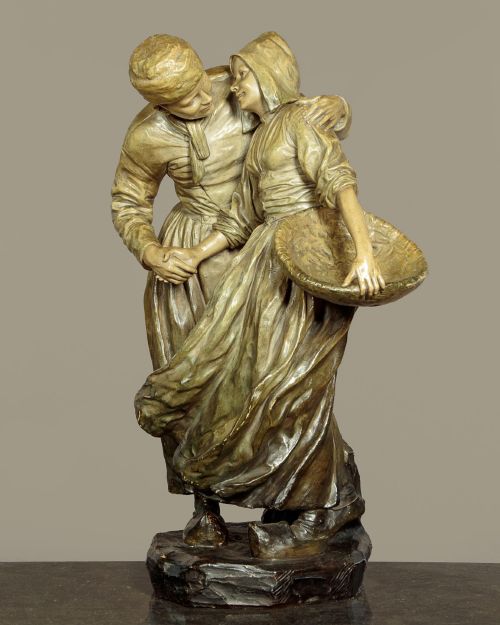
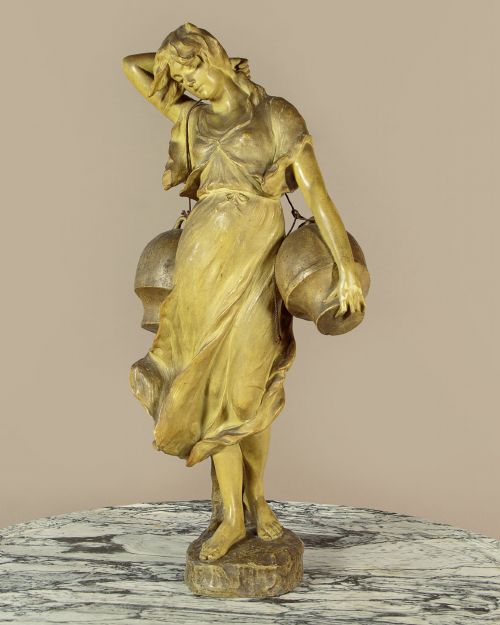
An art nouveau ceramic sculpture presents figures of young women, maidens, water nymphs, and country girls rendered in the fluid, organic aesthetic characteristic of the turn of the twentieth century. These decorative works take the form of freestanding figurines, large bust portraits, spill vases, and elaborate figural centrepieces designed to draw the eye in interior spaces.
The pieces on this page emerge primarily from the late nineteenth century, the eighteen-nineties, nineteen hundred, and the Edwardian era, reflecting continental European production centres. Figures frequently depict female beauties, water carriers, and domestic scenes modelled with flowing drapery and naturalistic postures that define the period style.
Makers and modellers of the period applied distinct finishes to earthenware, terracotta, and porcelain to achieve depth and texture in these sculptural forms. A buyer encounters everything from monumental porcelain maidens to terracotta portrait busts and bronzed slip-cast figures.
Materials and Working Methods
Potteries and studios utilised terracotta, earthenware, and porcelain as the primary foundational media for shaping complex figurative compositions. Artisans shaped these clay bodies through modelling and slip casting to capture fine details in hair, drapery, and facial expressions.
Surfaces received specialised treatments including painted pigments, metallic gilt highlights, and smooth or textured glazes to accentuate the contours of the design. Bisque porcelain provided an unglazed matte finish that highlighted the sculptural modelling without the distraction of glossy reflection.
Listings feature terracotta, porcelain, earthenware, and bisque porcelain across the nineteenth and early twentieth centuries.
Assessing Design and Execution
The fidelity of the modelling and the crispness of the casting separate standard factory output from the most ambitious sculptural works. Finer examples display sensitive facial expressions, deeply undercut drapery, and dynamic asymmetry characteristic of the best design output.
The scale and ambition of the piece dictate its visual impact, with monumental centrepieces and large figural groups demonstrating greater technical mastery in kiln firing and stabilization. Palette choices and surface finishes similarly vary, ranging from restrained monochrome bisque and terracotta to richly gilt and painted glazed surfaces.
Goldscheider·Royal Dux Bohemia·Ernst Wahliss·Luca Madrassi·Georges Morin
The Art Nouveau Ceramic Sculpture Glossary
- Bisque porcelain
- Unfired or unglazed porcelain that possesses a matte, white texture resembling marble. It allows fine details of the sculptural modelling to remain sharp.
- Terracotta
- A porous, brownish-red earthenware clay that is fired and left unglazed or painted. It provides a warm, earthy medium suited for expressive figurative busts.
- Slip cast
- A technique where liquid clay slip is poured into a plaster mould to create hollow ceramic figures. This method allowed production houses to replicate complex sculptural forms consistently.
- Centrepiece
- A large decorative object placed in the middle of a table or sideboard. These ceramic examples often incorporate basins, shells, or figural groups.
- Spill vase
- A small decorative container designed to hold tapers or wooden spills used for lighting lamps and fires. They frequently take figurative or organic sculptural forms.
Art Nouveau Ceramic Sculpture: Frequently Asked Questions
What subjects do these sculptures depict?
These works primarily portray graceful young women, water nymphs, maidens, and classical figures engaged in everyday or symbolic activities. Animals and religious subjects also appear among the figurative groups.
The human forms reflect the sinuous lines and natural motifs popular during the turn of the twentieth century. Artists captured movement through flowing hair and wind-blown drapery.
Where were these ceramic sculptures made?
Production was concentrated in continental Europe, particularly Austria, Bohemia, and France. Major firms and independent artists operated studios in Vienna and Paris.
These centres exported decorative ceramics worldwide, supplying homes with stylish ornaments that reflected contemporary artistic tastes.
How should I display a large centrepiece?
Large figural centrepieces and tall sculptures require a sturdy surface with adequate space to be viewed from multiple angles. Placing them on a central table or sideboard allows the three-dimensional modelling to catch ambient light.
Keep pieces away from direct heat sources and areas of heavy foot traffic to protect the ceramic body and delicate painted or gilt surfaces.
How do I distinguish terracotta from porcelain?
Terracotta is an opaque, reddish-brown earthenware that is typically heavier and porous when unglazed. Porcelain is a vitrified, white ceramic material that is dense and rings slightly when struck.
Terracotta often retains a matte, painted, or natural earth finish, while porcelain may feature glossy glazes or smooth unglazed bisque surfaces.