

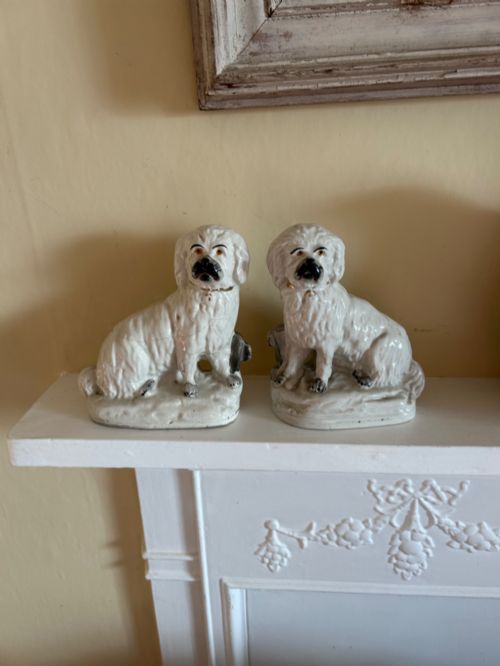


Earthenware Country Statue
These earthenware country statue pieces are rustic figural works that bring authentic nineteenth-century domestic character to a room.
Earthenware Country Statue
An earthenware country statue represents traditional figurative ceramics and terracotta sculptures produced primarily during the nineteenth century. When searching for an earthenware country statue, collectors encounter robust animal groups, theatrical pairs, and portrait figures made to adorn domestic mantelpieces.
The pieces on this page span the Victorian era alongside earlier Georgian roots, taking the form of decorative figurines, busts, and flatback sculptures. Subjects range from domestic dogs and cattle to literary characters, historical figures, and pastoral maidens.
How they were made
Potters shaped these figures using local earthenware clay or terracotta, often forming them in multiple moulds before hand-finishing the details. Artisans then applied foundational glazes to seal the porous body.
Enamel glaze and lead glaze treatments provided the vibrant surface colour seen across Staffordshire pottery and continental sculptures. Kiln firing fixed these mineral pigments into a durable decorative finish.
Earthenware Country Statue Retail Price Guide 2026
Typical asking prices for earthenware country statue among the pieces listed under this phrase on Sellingantiques today, from the lower quarter to the upper quarter. They describe what is for sale here now, not the wider market.
The available selection includes Victorian Staffordshire pottery figures alongside continental terracotta sculptures.
What varies in quality
The distinction between ordinary and superior pieces lies in the crispness of the moulding and the skill of the hand-painting. Stronger examples display confident facial expressions, distinct brushwork on enamel details, and balanced proportions.
The retention of original glaze lustre and the preservation of delicate raised elements also separate standard decorative examples from masterworks. Form complexity, such as pairs or multi-figure compositions, typically indicates greater production skill.
The Earthenware Country Statue Glossary
- Earthenware
- A porous pottery body fired at lower temperatures than stoneware or porcelain. It requires a glaze to become impermeable to liquids.
- Flatback
- A figure designed with an unpainted or minimally finished flat reverse side intended to stand flush against a cottage mantelpiece. This construction method saved clay and simplified kiln placement during production.
- Lead glaze
- A glossy coating containing lead oxide applied to earthenware to create a smooth, waterproof surface. It enhances the brightness of underlying enamel colours.
- Terracotta
- Unglazed or slip-glazed fired red clay used for larger sculptural works and busts. The material reveals a warm, earthy tone across its surface.
Earthenware Country Statue: Frequently Asked Questions
What is an earthenware country statue?
These pieces are nineteenth-century ceramic and terracotta sculptures depicting animals, people, and pastoral scenes.
Potters shaped them for domestic display in homes and cottages across Britain and Europe.
Where were these figures displayed?
Makers designed flatback figures to sit securely on mantelpieces, shelves, and sideboards in nineteenth-century parlours.
Their flat rears made them ideal for placement directly against a wall.
How do I date these pieces?
Stylistic markers, such as Victorian dress or Art Nouveau curves, help narrow down the period of production.
Material choices like terracotta or lead-glazed earthenware also point toward nineteenth-century manufacturing traditions.
What subjects are most common?
Common subjects include domestic animals like dogs and cows, alongside theatrical pairs and historical figures.
Many pieces also depict literary characters, royalty, and country workers.