
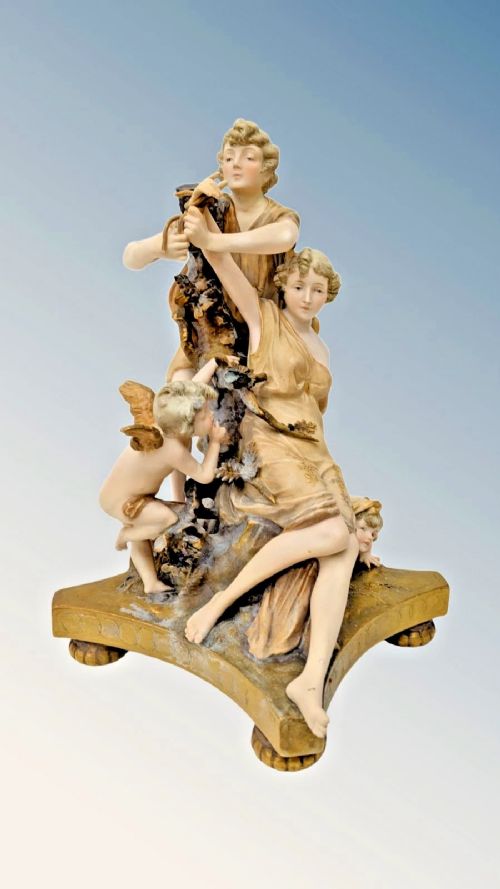


Ernst Wahliss Ceramics
Ernst Wahliss ceramics bring flowing organic lines and expressive modelling to interiors, capturing the essence of continental craftsmanship.
Ernst Wahliss Ceramics
When searching for ernst wahliss ceramics, a collector encounters figures, vases and wall plaques spanning the late nineteenth century into the early twentieth century. These works originate from the Austrian manufactory, demonstrating distinct artistic ambitions across various decades.
The objects available include large porcelain figures of women, decorative spill vases and striking figural groups. Art Nouveau aesthetics dominate the selection, appearing alongside Neoclassical influences and Turn-Teplitz productions.
Vessels and sculptures take diverse forms, from cornucopia vases to satirical wall plaques and detailed portrait busts. Pieces range from delicate porcelain works to robust terracotta reliefs, reflecting the broad output of the Vienna and Turn workshops.
How They Were Made
Production relied upon refined porcelain and earthenware bodies, shaped carefully to achieve complex sculptural contours. Terracotta was also utilised, particularly for expressive relief plaques that required precise modelling before firing.
Decoration involved applied enamels and rich gilding, utilising gold leaf and metallic highlights to accentuate sculptural details. Glazes were applied to porcelain surfaces to create smooth finishes or to contrast with matte biscuit areas.
Listings feature periods spanning from the 1880s through the 1920s, with a strong concentration of Art Nouveau porcelain and earthenware.
What Varies in Quality
The refinement of the modelling separates standard decorative items from exceptional sculptural pieces. Crisp execution in facial expressions, drapery folds and botanical motifs indicates superior workshop output.
The sophistication of the palette and the application of enamel and gilding influence the visual impact of each object. Careful hand-painting enhances the depth of Art Nouveau designs and figural compositions.
Ernst Wahliss·Alexandra Porcelain Works
The Ernst Wahliss Ceramics Glossary
- Art Nouveau
- A decorative style characterised by flowing, organic lines, asymmetrical plant forms and stylised depictions of women. It flourished between the late nineteenth century and the First World War.
- Terracotta
- Fired clay used for sculptural works and architectural reliefs, often left unglazed to display its natural reddish-brown earthy tone.
- Cornucopia
- A horn-shaped vessel traditionally symbolising abundance and plenty, frequently adapted into ornate nineteenth-century decorative vases.
- Spill Vase
- A small container designed to hold wooden spills used for transferring flames from a fireplace to candles or lamps.
Ernst Wahliss Ceramics: Frequently Asked Questions
Where were Ernst Wahliss ceramics made?
These ceramics were produced in Austria, with principal operations based in Vienna and the Turn-Teplitz region.
The factories established a strong reputation for producing fashionable earthenware and porcelain wares for the European market.
What styles define Ernst Wahliss pieces?
Art Nouveau is the predominant style associated with these ceramics, featuring characteristic whiplash lines and natural motifs.
Neoclassical influences and classical figural subjects also appear frequently across the production eras.
How do I identify a wall plaque?
Wall plaques are flat-backed sculptural works designed to be hung directly onto a wall surface.
They often feature high-relief figural scenes, such as satirical or narrative compositions executed in terracotta.
What materials are common in these ceramics?
Porcelain and earthenware form the foundation of most decorative vessels and figural sculptures.
Terracotta is also utilised for relief plaques, while surface decoration relies on enamel, glaze and gilding.