





Bronze Female Portrait Sculpture
These bronze female portrait sculpture pieces capture expressive character in cast metal, bringing classical elegance and refined nineteenth-century portraiture directly to your interior.
Bronze Female Portrait Sculpture
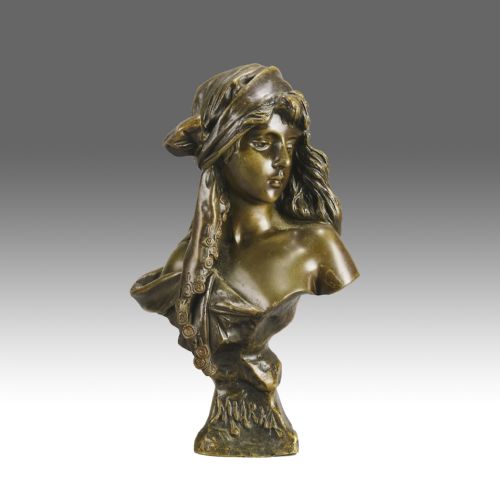
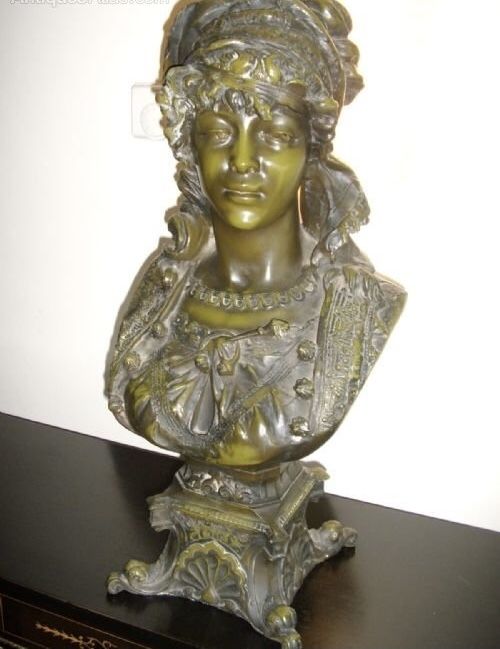
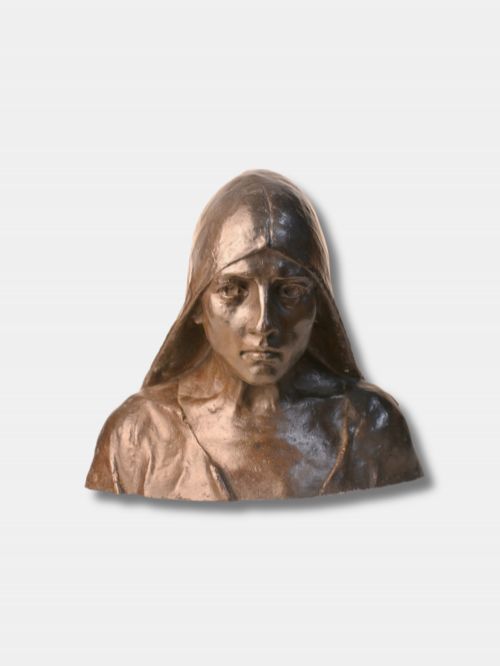
A bronze female portrait sculpture presents the head, shoulders, or bust of a woman, frequently rendered in patinated or gilt metal. These works draw upon historical, allegorical, and mythological subjects, spanning classical heroines and literary figures alongside contemporary models of the period.
The versions most commonly met on this page date from the nineteenth and early twentieth centuries, heavily influenced by the flowing lines of Art Nouveau and the structured formality of the Victorian and Edwardian eras. French founders and continental studios produced the majority of these portrait busts and sculptures.
Subjects range from named historical figures like Diana de Poitiers and Sappho to allegorical representations of seasons or regional types such as a Bohemian young girl or a medieval woman. Many pieces carry specific titles inscribed into the metal or the base, providing a direct link to the narrative intention of the sculptor.
Materials and casting techniques
Foundries utilised traditional casting methods to shape molten metal into complex portraits, frequently employing patination or gilding to alter the surface colour and texture. These techniques allowed artists to achieve deep, rich brown tones or bright metallic highlights across the hair and garments.
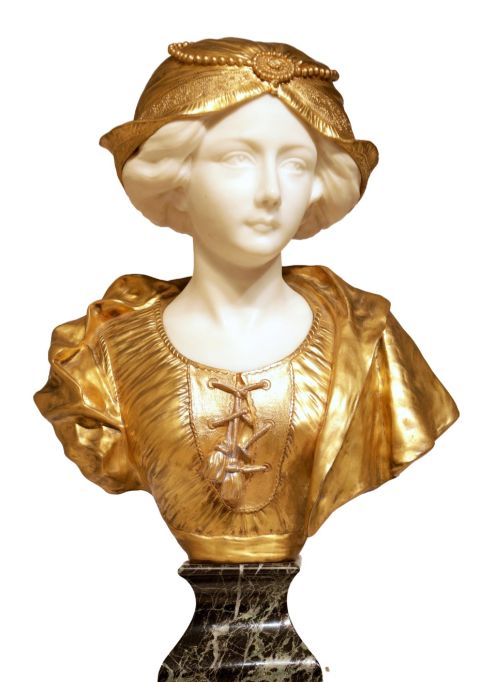
Many sculptures incorporate mixed media, mounting the metal bust upon carved marble, portoro marble, alabaster, or verdi green bases to provide stability and visual contrast. Alternative materials such as bronzed terracotta, plaster, and painted surfaces appear alongside pure metal works.
Listings feature works spanning the nineteenth century through the nineteen-twenties, incorporating periods such as the Victorian, Edwardian, Art Nouveau, and Art Deco movements.
Judging the quality of execution
The selection and combination of base materials also dictate the distinction of an object, where heavy carved marble or multi-media integration involving alabaster and ormolu signals a more ambitious commission. Signature placement and foundry marks further indicate the standing of the piece within a sculptor's output.
Affortunato Gory·Emmanuel Villanis·Georges Charles Coudray·Hans Muller·George Van Der Straeten·Eugene Laurent·Eutrope Bouret·Goldscheider
The Bronze Female Portrait Sculpture Glossary
- Patina
- The chemical or natural surface alteration applied to bronze over time. It provides colour, depth, and protection to the metal.
- Ormolu
- Gilt bronze produced by applying a finely ground mercury and gold amalgam to metal and heating it. This technique creates a durable, bright golden finish.
- Spelter
- A zinc alloy commonly utilised as a less expensive alternative to bronze during the nineteenth century. It frequently received a bronze-coloured coating to mimic heavier metal.
- Terracotta
- Fired clay moulded into sculptural forms. It serves as an earthy, porous medium that is often painted or bronzed.
- Portoro
- A distinctive black marble featuring prominent gold and yellow veins. It originates from Italy and provides a luxurious foundation for portrait busts.
Bronze Female Portrait Sculpture: Frequently Asked Questions
Where should I display a bronze female portrait sculpture?
These sculptures suit prominent locations such as a sturdy mantelpiece, a library shelf, or a dedicated pedestal where light can catch the patination and facial details.
Because many examples incorporate heavy marble bases, ensure the supporting furniture offers adequate stability and depth to accommodate the weight safely.
How do I clean patinated bronze safely?
Dust the surface regularly with a soft, dry cloth to prevent particulate buildup within the recessed chased lines of the hair and drapery.
Avoid commercial polishes, water, or abrasive cleaners, as these substances strip the historic patina and permanently damage the metal finish.
How can I tell bronze from spelter?
Bronze possesses a heavier weight and a cooler temperature to the touch compared to zinc-based metal alloys. Examining the underside or unpainted areas often reveals the reddish-brown tone of copper underneath rather than grey metal.
Spelter is also more brittle and frequently exhibits minor stress fractures or casting wear that differs from durable bronze.
What is the significance of marble bases?
Marble bases provide structural counterweight to keep the heavy metal bust upright while adding aesthetic contrast through polished stone colour and grain. The choice of marble, such as verdi green or portoro, frequently helps indicate the period and origin of the sculpture.