



Emmanuel Villanis Bronze Sculpture
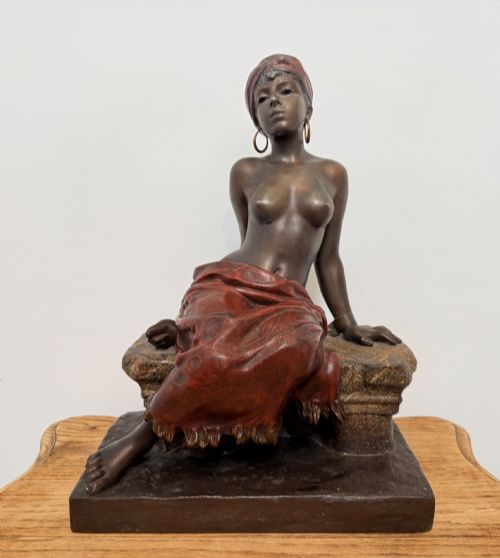
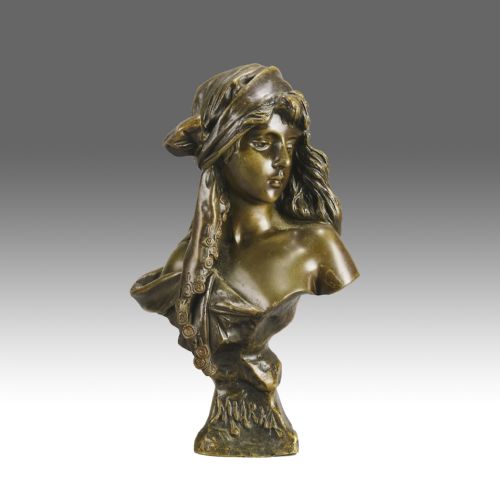
Emmanuel Villanis bronze sculpture works capture the refined elegance of the Art Nouveau period through finely cast female figures and portrait busts.
Emmanuel Villanis Bronze Sculpture
An emmanuel villanis bronze sculpture typically presents a distinct female subject drawn from mythology, literature or exotic themes, often rendered as a bust or full figure. These works belong firmly to the nineteenth century and the turn of the twentieth century, aligning with the height of the Art Nouveau movement in France.
Collectors most frequently encounter portrait busts such as Miarka, Tanagra, Thaïs and Bohémienne, alongside figurative studies like L Esclave and Lucrece. The subjects bear titled inscriptions on the casting, reflecting the sculptor's deep engagement with theatrical and literary heroines of the era.
The aesthetic of an emmanuel villanis bronze sculpture merges classical academic modeling with the flowing, organic lines characteristic of French Art Nouveau design. These pieces serve as exemplary decorative objects from a prolific period of European foundry production.
How they were made
The creation of an emmanuel villanis bronze sculpture relies on traditional foundry casting methods using bronze, which captures intricate details in hair, drapery and facial expression. Artisans apply various patination techniques to the metal surface to achieve subtle tonal gradients and depth.
Listings for emmanuel villanis bronze sculpture works predominantly feature pieces from the late nineteenth century and the year 1890, executed in bronze and marble.
What varies in quality
The choice and integration of the marble or alabaster plinth also influence the overall presence of the piece, with harmonious proportions and superior stone selection marking superior examples.
Emmanuel Villanis
The Emmanuel Villanis Bronze Sculpture Glossary
- Patina
- A thin chemical layer or coating applied to the surface of the bronze to alter its colour and protect the metal. This finish often ranges from deep brown to golden hues.
- Bust
- A sculpted representation of a person from the chest or shoulders up. This format allows the artist to focus entirely on facial expression and upper garment details.
- Art Nouveau
- An international style of art and architecture that peaked in popularity around the turn of the twentieth century. It is characterised by asymmetrical natural forms and flowing lines.
- Alabaster
- A fine-grained, translucent stone used historically for carving bases and small decorative objects. Its pale appearance offers a striking contrast to dark metal.
Emmanuel Villanis Bronze Sculpture: Frequently Asked Questions
Who was Emmanuel Villanis?
Emmanuel Villanis was a prominent French sculptor known primarily for his elegant bronze busts of female figures during the Art Nouveau period.
His works frequently depicted characters from classical mythology, opera and literature, bearing distinct stamped signatures and titles.
How do I identify a Villanis bronze?
Authentic pieces typically feature the artist's signature cast directly into the metal, accompanied by a title naming the subject and often a foundry mark.
The distinct French Art Nouveau aesthetic and nineteenth century casting characteristics further help verify the origin of the sculpture.
What materials are used in these sculptures?
The primary material is patinated bronze, which provides the dark metallic finish characteristic of the artist's output.
Many examples also incorporate integral bases made of carved marble or alabaster to elevate the main figurative casting.
How should I display a bronze bust?
These sculptures require a stable surface such as a heavy sideboard, console table or dedicated pedestal that can adequately support their weight.
Keeping them away from direct heat sources and abrasive cleaning agents helps preserve the delicate surface patina over time.