
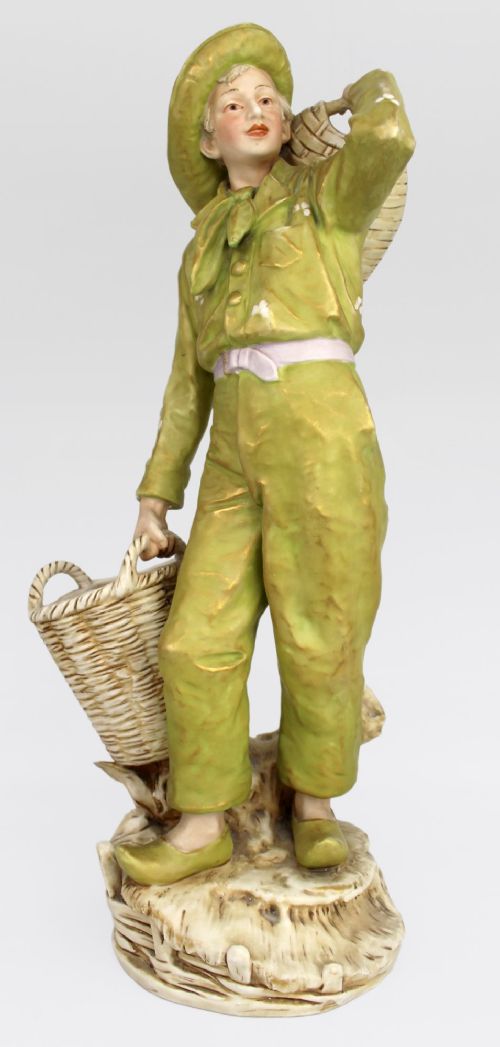


Royal Dux Bohemia
Royal Dux Bohemia pieces are distinct ceramic works prized for sculptural presence, flowing figures, and rich decorative detail.
Royal Dux Bohemia
Royal Dux Bohemia works encompass porcelain figurines, large sculptural groups, and decorative vases spanning the late nineteenth and early twentieth centuries. When searching for royal dux bohemia, collectors frequently encounter figural studies depicting figures such as water carriers, fishermen, and Bedouin camel riders.
The objects bridge the Victorian and Edwardian eras, incorporating sculptural forms from the 1880s through to the 1910s. Large figures and substantial pairs dominate the physical forms recorded across historical and current inventories.
Art Nouveau styling heavily influences the sculptural output, alongside Victorian Orientalism themes seen in depictions of Eastern water bearers and Bedouin riders. These pieces function primarily as decorative centrepieces rather than utilitarian vessels.
Assessing quality
Quality varies significantly through the scale of the modelling, ranging from standard cabinet figurines to huge sculptural groups and monumental pairs. Larger, more ambitious compositions like paired figures or camel riders represent a higher tier of production.
The precision of the hand-painted enamel, the application of gold leaf, and the crispness of the porcelain glaze distinguish finer examples. Art Nouveau pieces with complex figural drapery and dynamic modelling command greater attention from collectors.
Materials recorded across these listings include porcelain, terracotta, glaze, enamel, paint, and gold leaf.
H Schubert
The Royal Dux Bohemia Glossary
- Porcelain
- A fine, hard ceramic material fired at high temperatures, forming the primary body for these Bohemia sculptures.
- Art Nouveau
- An international decorative style characterised by flowing lines and organic motifs, prevalent in the listed figures and vases.
- Gilt
- A thin layer of gold or gold leaf applied to the ceramic surface to highlight decorative details.
- Terracotta
- Fired clay used in sculptural modelling, appearing alongside glazed porcelain elements in these works.
Royal Dux Bohemia: Frequently Asked Questions
What is royal dux bohemia?
Royal Dux Bohemia refers to decorative ceramics and porcelain figures produced in Bohemia during the nineteenth and twentieth centuries.
These pieces are recognised for distinctive figural subjects, Art Nouveau styling, and elaborate hand-painted and gilt finishes.
How do I date these figures?
Dating relies on stylistic indicators such as Art Nouveau curves or Victorian Orientalism themes, alongside recorded production periods from the 1880s to the 1910s.
Comparative analysis of model numbers and physical scale also helps establish the era of manufacture.
Where were these pieces made?
The works originate from Bohemia, a historical region known for rich ceramic traditions and skilled porcelain manufacturing.
Workshops in this area produced diverse figures, vases, and large sculptural groups for international markets.
How should I display them?
These large porcelain figures and vases suit prominent placement on sturdy surfaces where their sculptural forms and glazed details remain visible.
Keeping them away from direct sunlight protects the delicate enamel, paint, and gold leaf finishes.