




Biscuit Porcelain Sculpture
Biscuit porcelain sculpture offers a tactile, unglazed finish that captures the crisp detail of classical figures and literary characters.
Biscuit Porcelain Sculpture
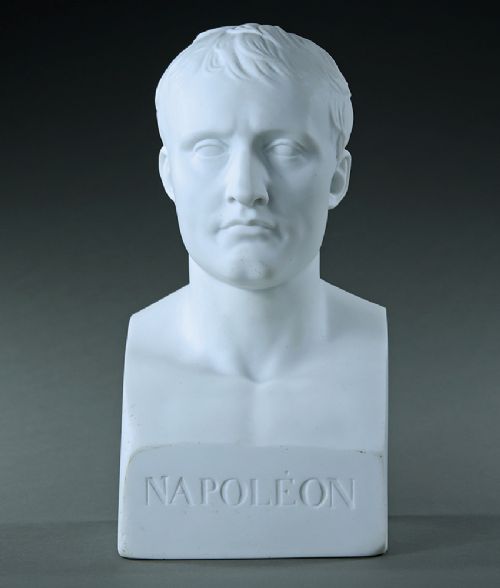
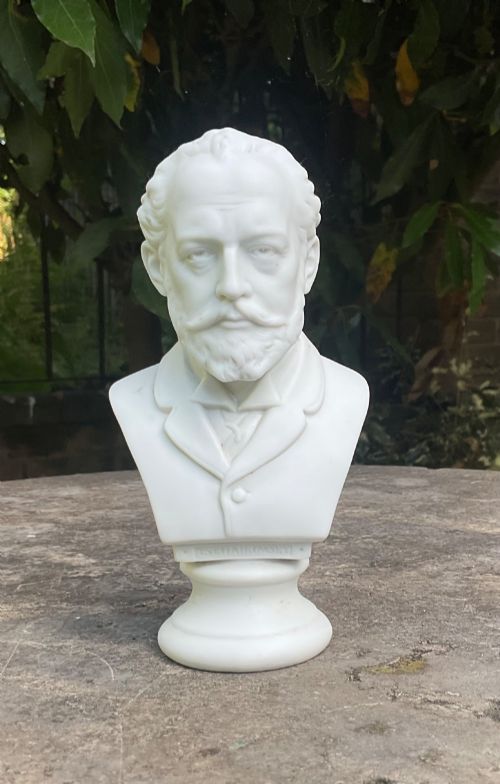
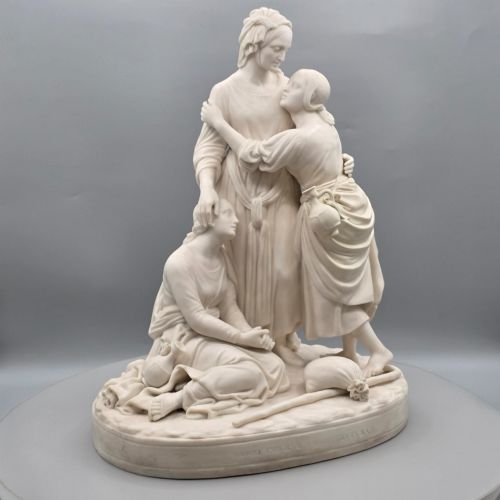
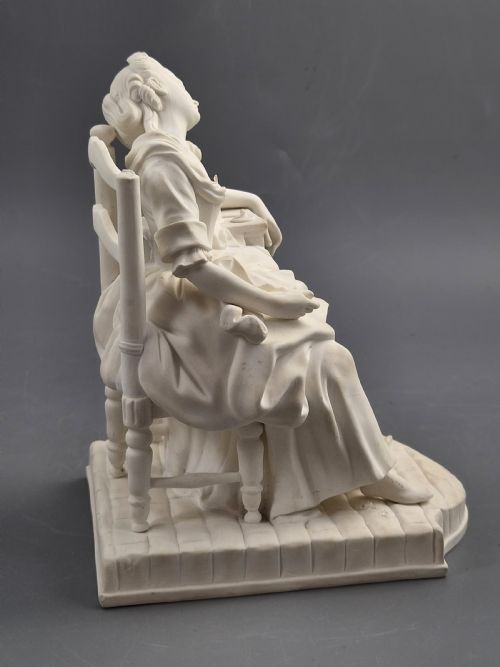
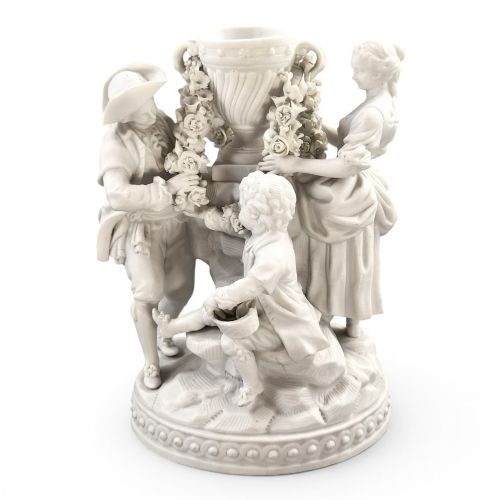
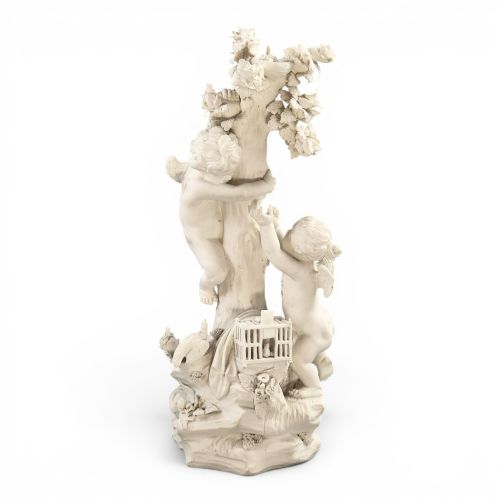
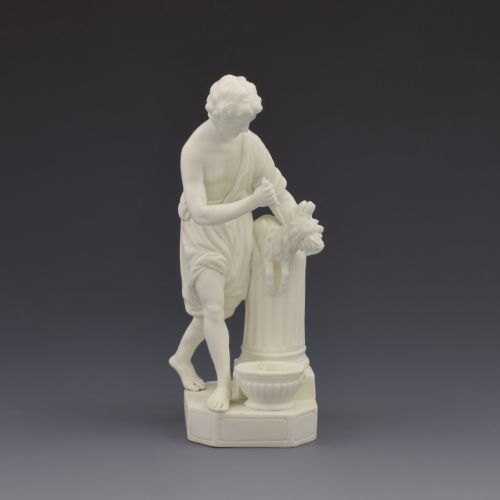
Biscuit porcelain sculpture represents an unglazed ceramic medium prized for its matte texture and capability to show fine modelling. When you search for biscuit porcelain sculpture, you encounter figural groups, busts, and standalone statues spanning from the Georgian period through the Victorian era and into the early twentieth century.
The objects on this page range from small cabinet figures depicting mythological scenes to monumental sculptural groups and portrait busts of historical figures. Origins stretch across English manufactories, French houses such as Sèvres and Vieux Paris, and continental works from makers like Royal Dux.
Victorian examples frequently utilise the dense, marble-like body known as parian ware, while earlier pieces display the delicate soft-paste biscuit characteristic of eighteenth-century Derby. These works bring neoclassical grace, allegorical themes, and portraiture into domestic interiors.
Materials and production
Makers produced these sculptures by firing a finely ground ceramic body, often porcelain or parian, without applying a final vitreous glaze. This unglazed firing, known as biscuit or bisque, leaves the surface with a porous, chalk-white finish that mimics carved marble.
Listings feature biscuit porcelain and parian ware sculptures spanning from the eighteenth-century Georgian era through the Victorian period and into the early twentieth century.
Distinctions in quality
Quality in these sculptures rests upon the crispness of the modelling and the subtlety of the finishing work after the kiln firing. Superior pieces retain sharp facial expressions, distinct fingers, and deep undercut drapery, whereas lesser examples suffer from soft contours and blurred details caused by worn moulds.
The purity of the ceramic body also dictates the tier of the piece, with high-grade parian ware exhibiting an even, marble-like translucency without grey discoloration or firing cracks. Master modellers and renowned factories achieved better anatomical proportions and more convincing classical poise.
Sèvres·Minton·Derby·Royal Dux·Copeland·Royal Worcester·Triebner Ens And Co·Vion And Baury
The Biscuit Porcelain Sculpture Glossary
- Biscuit porcelain
- Unglazed ceramic fired at high temperatures to achieve a matte, white surface resembling marble. This finish highlights the precise modelling of the sculptor.
- Parian ware
- A self-glazing, fine-grained porcelain developed in Victorian England to imitate carved marble. It contains a high feldspar content that melts during firing to give a dense appearance.
- Bisque
- An alternative term for biscuit porcelain, denoting ceramic ware that has undergone its initial firing without glaze. It is commonly applied to continental and Victorian figures.
- Soft-paste porcelain
- An artificial ceramic composition fired at lower temperatures than hard-paste porcelain. Eighteenth-century factories utilised this material for delicate figures before standardising recipes.
- Neoclassical
- A stylistic movement drawing inspiration from classical antiquity. Sculptures in this mode feature mythological subjects, classical drapery, and balanced, restrained compositions.
Biscuit Porcelain Sculpture: Frequently Asked Questions
What is biscuit porcelain?
Biscuit porcelain is ceramic ware that has been fired without a glossy glaze, leaving a matte, chalk-white surface that resembles carved marble. This finish allows the fine details of the modelling to remain sharp and visible without surface glare.
Craftsmen favoured this medium for portrait busts and classical figures because the unglazed texture absorbs light in a way that accentuates contours and drapery.
How do I clean biscuit porcelain?
Cleaning unglazed porcelain requires care due to the porous nature of the biscuit surface, which can absorb dirt and oils from hands. Dusting with a soft, dry brush is usually sufficient for routine maintenance.
For stubborn marks, conservators sometimes utilise dry cleaning sponges or gentle natural rubber, avoiding water and liquid detergents that can penetrate the unglazed clay body.
What is the difference between parian and biscuit?
Parian is a specific type of nineteenth-century porcelain developed to imitate marble, containing a high proportion of feldspar that vitrifies partially during firing. Biscuit porcelain is a broader term for any unglazed ceramic body, including eighteenth-century soft-paste formulas.
Parian ware tends to have a heavier, denser feel and a subtle sheen compared to the drier, chalky appearance of traditional biscuit porcelain.
How do I identify the period of a sculpture?
Dating these sculptures involves examining the style of the modelling, factory marks stamped or incised into the base, and the composition of the ceramic body. Eighteenth-century pieces often display soft-paste bodies and theatrical rococo or early neoclassical themes.
Victorian and later nineteenth-century examples frequently utilise parian ware, depict literary or sentimental subjects, and bear impressed factory ciphers or model numbers.