
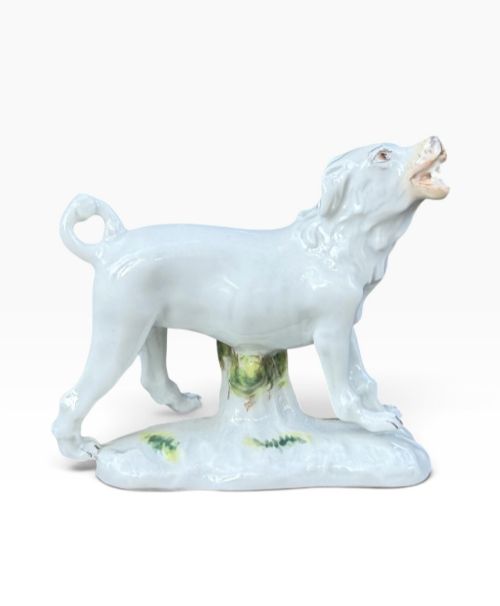


Antique Porcelain Hound Figure
These antique porcelain hound figure examples capture canine form through modelled clay, offering collectors a tangible piece of sculptural history.
Antique Porcelain Hound Figure
An antique porcelain hound figure represents canine subjects across multiple periods, including Victorian, Edwardian, and eighteenth-century examples. Buyers searching for this phrase encounter decorative objects, figurines, and inkwells modelled as dogs.
The selections on this page span diverse geographical origins, featuring German porcelain, Chinese export pieces, and Staffordshire pottery. Forms range from simple greyhound figures to large sculptural groups depicting hunting dogs with game.
Materials and construction
Makers utilised porcelain, earthenware, and parian ware to shape these canine subjects. Glaze and enamel paint added surface colour and detail to the fired bodies.
Potters and sculptors employed lead glaze to achieve glossy finishes on ceramic surfaces, while parian ware provided a matte, marble-like texture favoured for nineteenth-century sculptures.
Listings feature porcelain, earthenware, and parian ware across Victorian, Edwardian, and eighteenth-century periods.
Judging the work
Superior examples display precise anatomical modelling and careful hand-painting that define muscle structure and expression. Lesser pieces exhibit softer details in the moulding and simpler application of enamel.
The sophistication of the glaze and the crispness of the porcelain paste distinguish high-status works from standard commercial production.
Thomas Parr·Meissen·Royal Dux
The Antique Porcelain Hound Figure Glossary
- Parian ware
- A fine white unglazed biscuit porcelain resembling marble, developed during the nineteenth century for sculptural figures. It takes its name from Paros, the Greek island famous for its white marble.
- Staffordshire pottery
- Earthenware figures and utilitarian items produced in the pottery towns of Staffordshire. These pieces often depict animals and historical figures with hand-painted enamel decoration.
- Lead glaze
- A glossy coating containing lead oxide applied to ceramic bodies before firing. It fuses with the clay to create a waterproof and lustrous surface.
- Chinese export
- Porcelain manufactured in China specifically for the Western market. These objects combine traditional Eastern production methods with European decorative tastes.
Antique Porcelain Hound Figure: Frequently Asked Questions
What periods do these hound figures come from?
The pieces span from the mid-eighteenth century through the Victorian and Edwardian eras up to the nineteen-twenties. Each period brings distinct ceramic formulations and stylistic approaches to animal modelling.
Early examples often reflect Chinese export traditions or eighteenth-century German workshops, whereas nineteenth-century pieces frequently originate from Staffordshire potteries or utilise parian ware.
How were hound inkwells used?
Staffordshire greyhound inkwells combined domestic desk utility with decorative sculpture. The hound's body or an attached component held the ink reservoir for writing.
Owners placed these functional objects on library desks and writing tables, where the ceramic animal served as both a practical tool and a decorative ornament.
How do I identify parian ware figures?
Parian ware appears as a dense, unglazed white ceramic with a smooth matte texture that mimics carved marble. It lacks the shiny finish typical of standard glazed porcelain.
Sculptors favoured this material for nineteenth-century figurative groups because it rendered fine anatomical details and subtle contours with exceptional clarity.
What is Chinese export porcelain?
Chinese export porcelain refers to wares made in China for export to European and American markets. These items blended Eastern ceramic techniques with Western aesthetic preferences.
Objects from this tradition often exhibit high refinement in the paste and painting, reflecting the advanced state of Chinese kiln technology during the eighteenth century.