



Central Asian Woven Bag
When you search for a central asian woven bag, you are looking at tribal utility pieces created for nomadic life by Turkmen and associated groups.
Central Asian Woven Bag
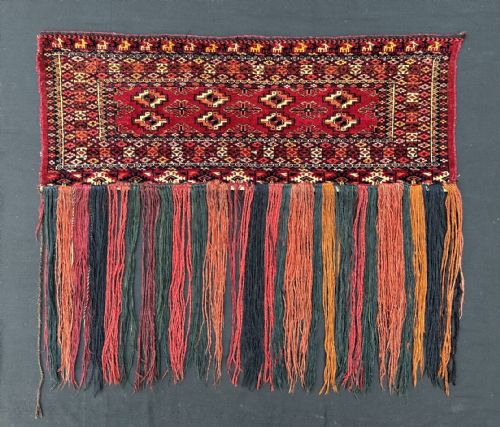
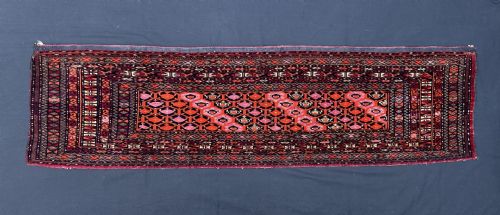
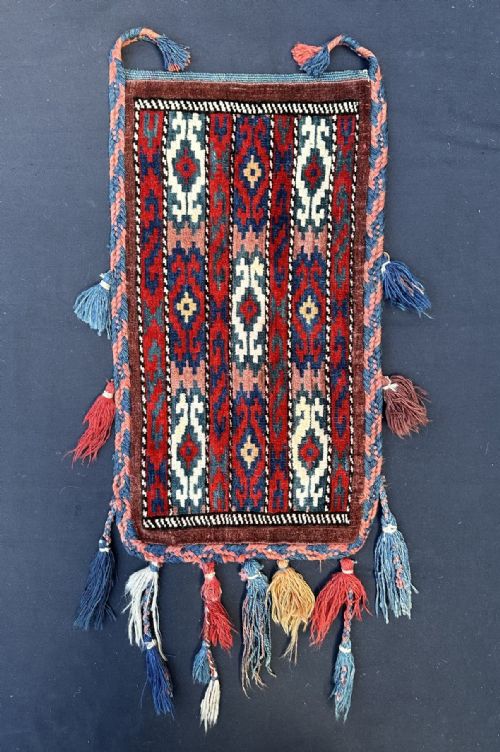
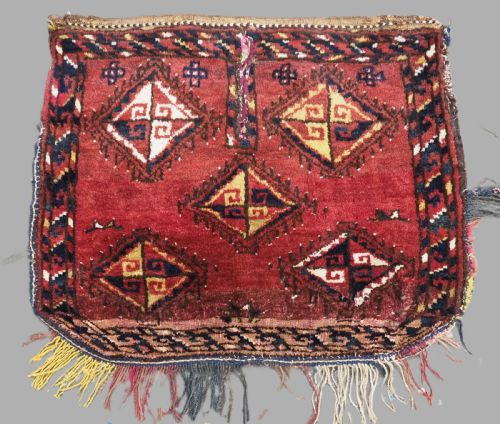
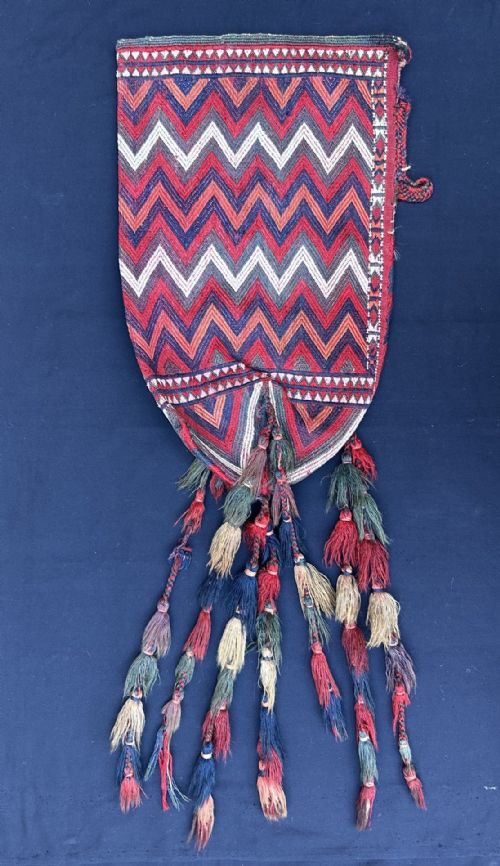
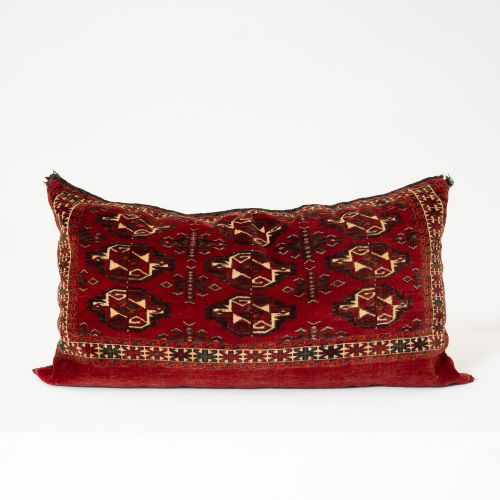
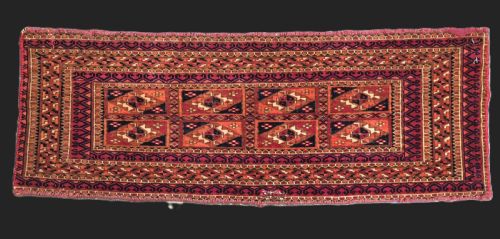
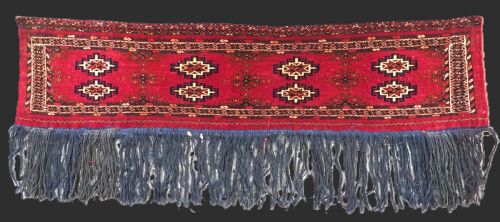
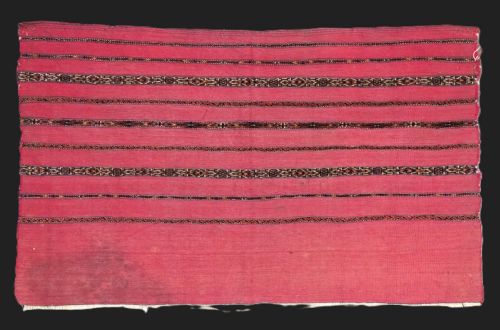
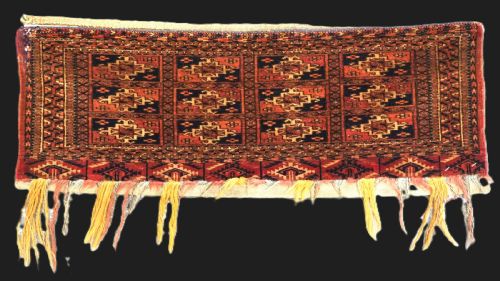
A central asian woven bag encompasses functional containers, storage pouches, and tent furnishings produced by nomadic and tribal groups across the region. These items include torbas, chuvals, kap pouches, and spindle bags designed for practical domestic use inside a yurt or during migration.
The pieces available on this page date predominantly from the nineteenth and early twentieth centuries, reflecting the traditional weaving output of tribes such as the Tekke, Yomut, Saryk, and Ersari. Most examples survive as either complete pouches with original plain weave backs or as decorative bag faces preserved from heavier utilitarian objects.
How They Were Made
The construction relies primarily on hand-spun wool and cotton foundations worked with dense pile knots, supplemented by flatweave techniques and embroidered highlights in silk. Weavers utilised natural dyes to achieve deep madder reds, ivory grounds, and contrasting secondary tones that define the regional palette.
Durability governed the production method, as these textiles needed to withstand the rigours of desert transport and daily handling within tribal camps. Edges are frequently reinforced with sturdy selvedges, and many surviving complete examples retain functional plain weave wool backs.
What Varies in Quality
The standard of a central asian woven bag depends heavily on the density of the knotting and the crispness of the tribal guls or geometric motifs executed across the surface. Finer weaves allow for sharper delineation of complex patterns like the kepse, 'aina gul, or turreted forms.
Condition and completeness also separate examples, distinguishing fragments and trimmed bag faces from intact pouches that preserve their original plain weave backs and structural selvedges.
The Central Asian Woven Bag Glossary
- Torba
- A small utilitarian storage bag used in nomadic households for holding household goods or personal items. They typically display intricate tribal guls along the face.
- Chuval
- A large tent storage bag traditionally employed for bedding and wool storage within a Turkmen yurt. These pieces often feature multiple rows of primary guls.
- Gul
- A repeated primary medallion or octagonal motif associated with specific Turkmen and Central Asian tribes. Each design helps identify the weaving group.
- Kap
- A general term for a small storage bag or pouch used for specific domestic functions in tribal settings. They are frequently encountered as surviving decorative faces.
- Mafrash
- A rectangular storage bag or container face, often associated with bedding or transport loads. They appear in pile or flatweave structures.
Central Asian Woven Bag: Frequently Asked Questions
How were these bags used?
Nomadic families utilised these woven containers inside yurts for storing clothing, bedding, and smaller domestic utensils. Their durable construction also suited them for loading onto pack animals during seasonal migrations.
Over time, many of these functional containers transitioned into decorative hangings or dowry items within tribal households. Their designs often signaled the specific clan or lineage of the maker.
What tribes made these bags?
The primary weaving groups include the Tekke, Yomut, Saryk, and Ersari tribes residing across Turkmenistan and the broader Central Asian steppes. Each group maintained distinct aesthetic traditions and preferred specific medallion motifs.
Other associated groups, such as the Beshir and various Uzbek populations, also produced distinctive storage bags and saddle covers. These pieces often incorporated regional ikat patterns or unique floral interpretations.
How do I care for a textile?
Keep wool and natural dye pieces away from direct sunlight to prevent fading of the saturated reds and ivory tones. Gentle vacuuming through a mesh screen helps remove dust without stressing old foundations.
Avoid hanging heavy bags by their upper edges alone, as the antique wool and cotton can stretch over time. Proper support distributes the weight evenly across the structure.
How do I identify different tribes?
Tribal attribution relies primarily on the structural guls, border arrangements, and the specific palette of natural dyes employed in the weave. For instance, Tekke pieces frequently display precise octagonal guls, while Yomut examples often utilise the kepse design.
Secondary characteristics like the weave density and the presence of silk highlights also provide clues to the specific origin. Comparing the primary motifs against documented tribal standards confirms the attribution.