
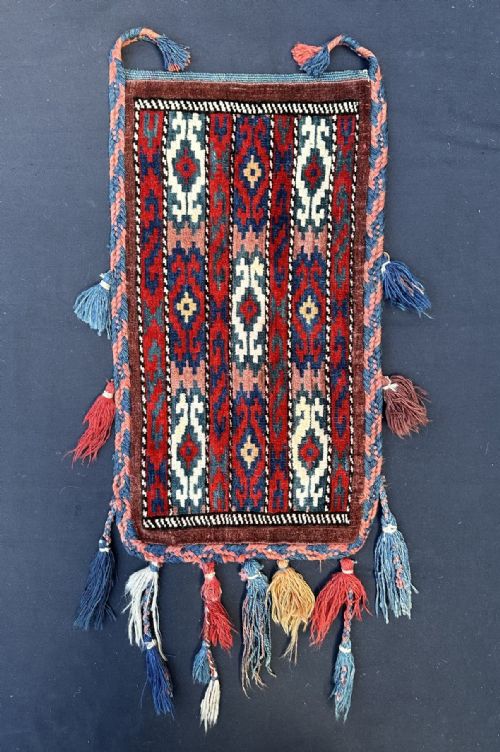
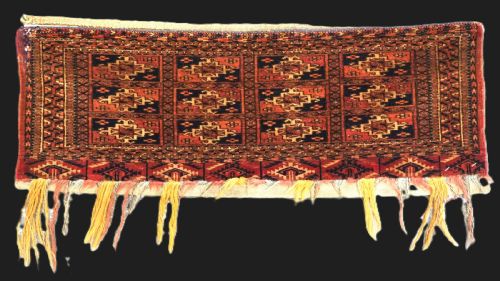


Antique Turkmen Wool Pouch
These antique turkmen wool pouch examples are tribal textile pieces carrying deep regional heritage and traditional nomadic craftsmanship.
Antique Turkmen Wool Pouch
An antique turkmen wool pouch represents functional nomadic tribal weaving originating from Central Asia, specifically Turkmenistan and the Trans-Caspian Steppes. Buyers encountering this selection will find specialised forms such as spindle-bags, torbas, mafrash items, and chuval pieces.
The objects stem from distinct tribal groups including the Tekke and Yomut tribes, reflecting the rich textile art traditions of the Akhal Oasis. These woven works served practical storage purposes within nomadic camps while displaying intricate tribal iconography.
How they were made
Maker communities constructed these textiles using hand-spun wool alongside cotton and dyed yarn, incorporating natural dyes to achieve deep regional colour palettes. Artisans utilised traditional weaving methods to create durable structures featuring patterned faces and plain weave backs.
The construction integrates structural foundation threads with carefully manipulated pile or flatweave surfaces. Each pouch combines functional backing materials with dense front knotting characteristic of Turkmen tribal production.
Materials recorded across the current inventory include wool, natural dyes, hand-spun wool, cotton, and dyed yarn.
What varies in quality
Quality differences emerge through the precision of the tribal patterning and the integrity of the surviving plain weave backs. Superior examples maintain complete structural components, including original backing fabrics and well-preserved natural dye coloration.
The fineness of the hand-spun wool and the complexity of the specific gul motifs distinguish individual weaving workshops. Better preserved specimens display crisp tribal designs and consistent material density across the entire textile surface.
The Antique Turkmen Wool Pouch Glossary
- Torba
- A small Turkmen wall pocket or storage bag traditionally used inside a yurt. These pieces typically feature horizontal rectangular proportions.
- Chuval
- A large Turkmen tent-storage bag utilised for bedding and household belongings. They frequently display multiple major guls across the face.
- Gul
- A medallion motif repeated across Turkmen carpets and bags, serving as an identifying emblem for specific tribes. Each design variation connects to particular ancestral lineages.
- Mafrash
- A rectangular storage container or bedding bag woven in flatweave or pile techniques. They form part of the essential furnishings of nomadic households.
- Igsalyk
- A specific Yomut tribal term for a spindle-bag designed to hold spinning tools and raw wool fibres. These items exhibit elongated narrow shapes suited for their specific function.
Antique Turkmen Wool Pouch: Frequently Asked Questions
How were these pouches used?
Nomadic families utilised these woven pouches inside tents for storing household items, personal belongings, or spinning tools like spindles.
They hung against the lattice walls of yurts, combining practical storage with expressions of tribal identity and artistic heritage.
How do I care for wool textiles?
Protect these antique textiles from direct sunlight to prevent natural dye fading and preserve the integrity of the hand-spun wool.
Gentle vacuuming through a mesh screen helps remove dust without disturbing the delicate fibres or ancient flatweave structures.
Which tribes made these items?
The available pieces originate primarily from the Tekke and Yomut tribes inhabiting the Trans-Caspian Steppes and Akhal Oasis regions.
Each tribal group maintained distinct weaving traditions, colour palettes, and characteristic geometric medallion motifs.
What periods do these pieces date from?
The listings span the latter half of the nineteenth century, encompassing dates from eighteen-fifty through eighteen-ninety.
This era represents the active period of traditional nomadic tribal weaving in Central Asia before significant commercial alterations.