
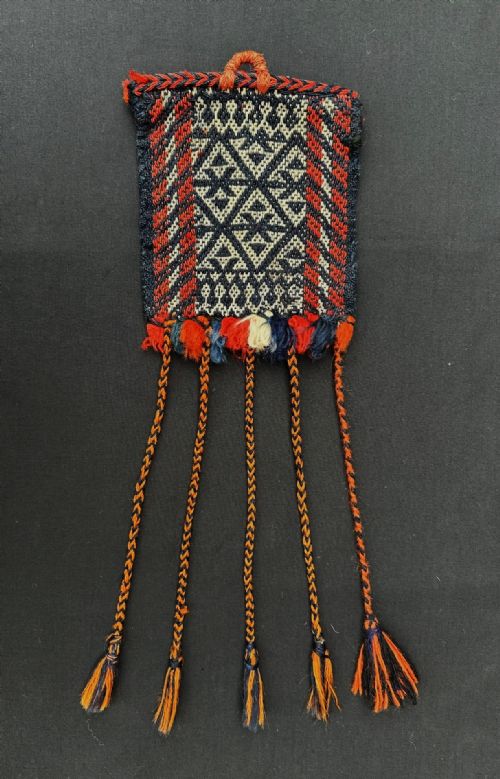
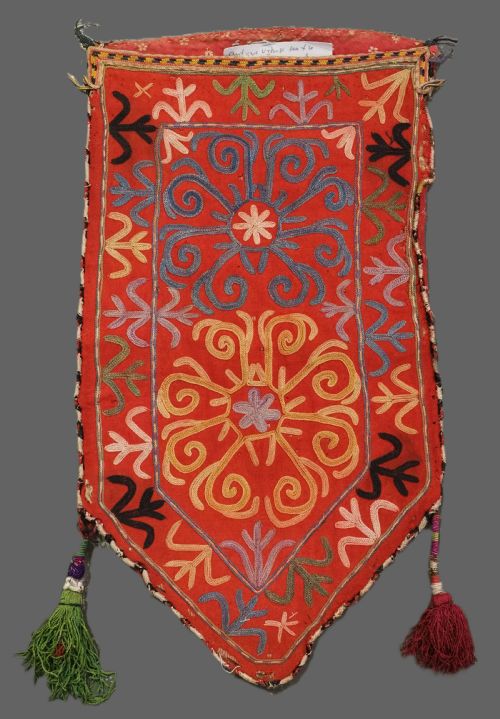
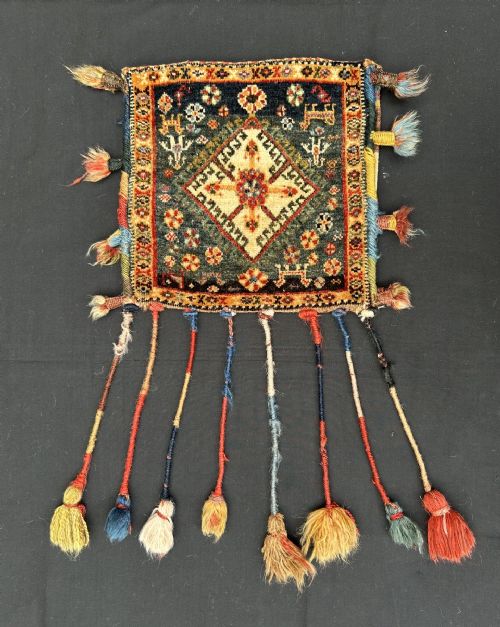
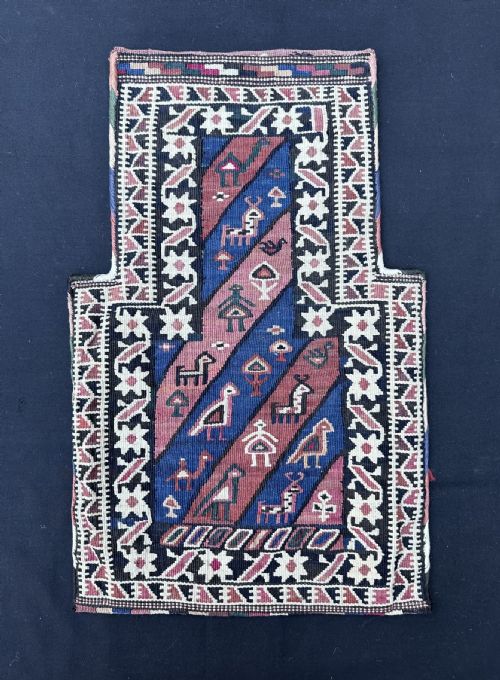
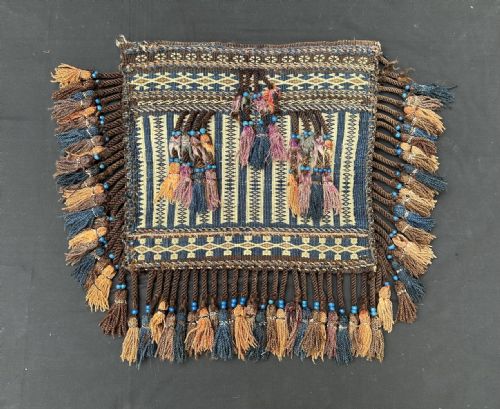
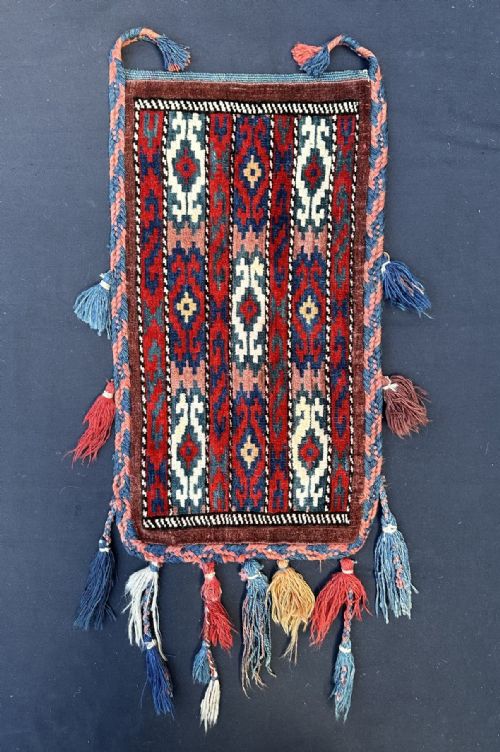

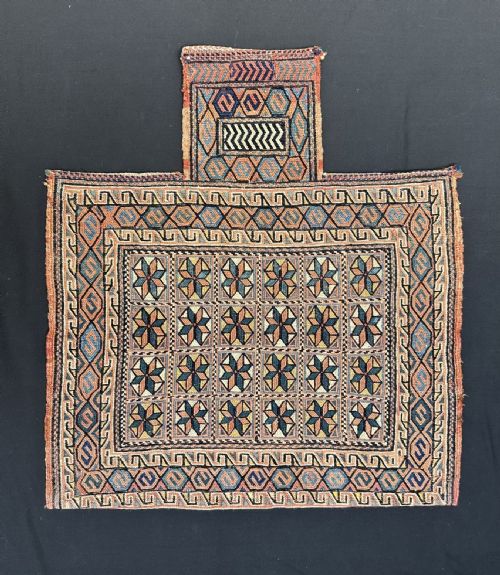


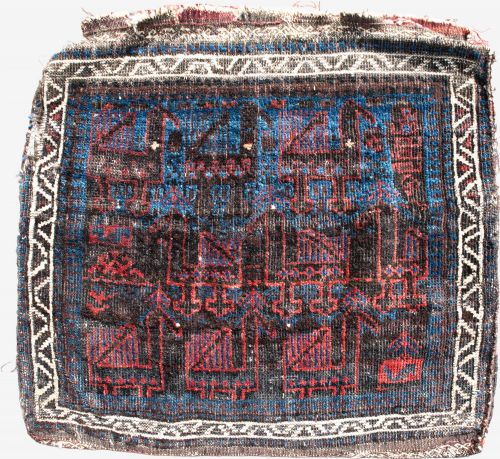

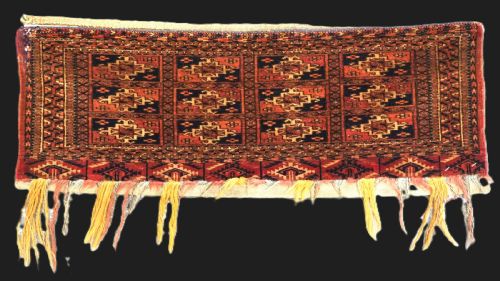


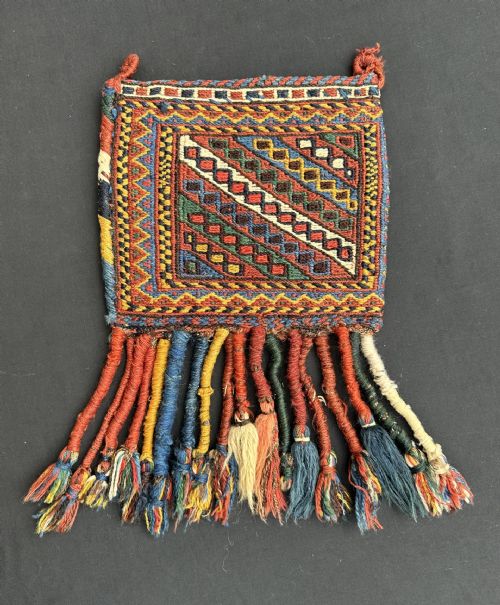
Wool Tribal Wall Pouch
These wool tribal wall pouch examples are nomadic utility bags transformed by age into striking textile art for the home.
Wool Tribal Wall Pouch
When searching for a wool tribal wall pouch, collectors examine utilitarian containers originally woven by nomadic and village confederacies across Persia, Central Asia, and Afghanistan. These functional items include salt-bags, vanity-bags, spindle-bags, and small saddle-bags produced during the nineteenth and early twentieth centuries.
The pieces encountered on this page originate from specific tribal groups such as the Afshar, Qashqa'i, Baluch, Yomut, Tekke, and Lakai Uzbek. Each piece reflects the distinctive domestic customs and regional weaving traditions of its makers, transitioning from practical camp objects to decorative wall hangings.
How they were made
Weavers constructed these containers using hand-spun wool and dyed yarn, frequently employing natural dyes to achieve rich, enduring palettes. Specialised techniques such as Soumak work and banded weft work structures provide textural depth and structural integrity.
Many surviving examples retain their original plain weave backs and complete structures, occasionally incorporating supplementary materials like cotton, silk, cowrie shells, and glass beads into the design.
Listings span production dates from 1850 through 1920, predominantly featuring hand-spun wool and natural dyes.
What varies in quality
The distinction between average and exceptional pieces rests upon the crispness of the tribal motifs, the saturation and complexity of the natural dyes, and the fineness of the knotting or weave. Structural completeness, such as retaining an original plain weave back, elevates a textile.
Regional execution also plays a part, where tightly controlled geometric precision in Soumak work or complex secondary ornamentation like glass beads demonstrates superior workshop skill and artistic intent.
The Wool Tribal Wall Pouch Glossary
- Chanteh
- A small personal bag or vanity pouch woven by nomadic groups for carrying small belongings. These pocket-sized textiles are frequently displayed today as flat art on walls.
- Torba
- A wide storage bag produced by Turkmen and other Central Asian tribes. They were traditionally hung inside the yurt to hold household items.
- Soumak
- A flat-weave technique where working threads wrap horizontally over the warp strands before returning. This method creates a durable, ribbed surface texture distinct from standard pile carpets.
- Namakdan
- A specialised Persian salt-bag characterised by a narrow neck and bottle-like shape. They were designed to protect salt from moisture during nomadic migrations.
- Igsalyk
- A specific Turkmen designation for a spindle-bag. These elongated containers held spinning implements used in daily textile production.
Wool Tribal Wall Pouch: Frequently Asked Questions
What are wool tribal wall pouches?
These items are antique utilitarian containers created by nomadic and village weavers for daily camp use, such as storing salt, tobacco, or spindles.
Over generations, collectors repurposed these small woven bags as wall hangings to display their intricate tribal patterns and natural dyes.
How were these bags used originally?
Nomadic groups utilised these pouches inside tents and during migrations to organise personal possessions, food items, or spinning tools.
Specific shapes corresponded to specific contents, such as narrow necks for salt-bags or elongated pouches for spindles and water-pipes.
How do I hang a textile bag on the wall?
Mounting typically involves a non-invasive sleeve stitched to the reverse or careful attachment using archival display clips that distribute weight evenly.
This prevents strain on the original wool structure and allows the full front design and back construction to remain visible.
How can I tell different tribal designs apart?
Tribal attribution relies on distinctive colour combinations, specific wool preparation, and characteristic geometric or pictorial motifs unique to regions like Fars, Kerman, or Turkmenistan.
For instance, Yomut and Tekke Turkmen pieces display structured guls, while Afshar and Qashqa'i examples often feature boteh motifs or structured medallion layouts.