





Yomut Turkmen Textile Art
Yomut Turkmen textile art brings the geometry of the Trans-Caspian steppes into your home through tribal weavings made for nomadic life.
Yomut Turkmen Textile Art
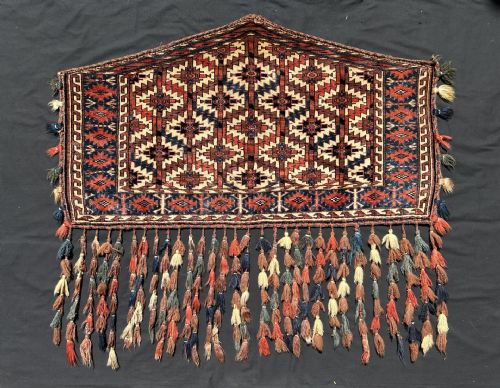
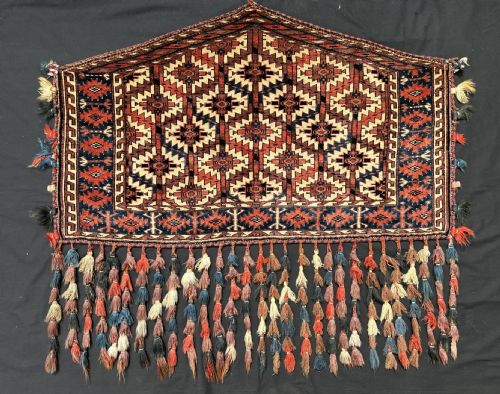
Yomut Turkmen textile art comprises tribal weavings originating from the Trans-Caspian steppes and Central Asia. Buyers encounter asmalyks, kap, uk bash, dizlyks, spindle bags, torbas, mafrash, and chuvals spanning the late nineteenth and early twentieth centuries.
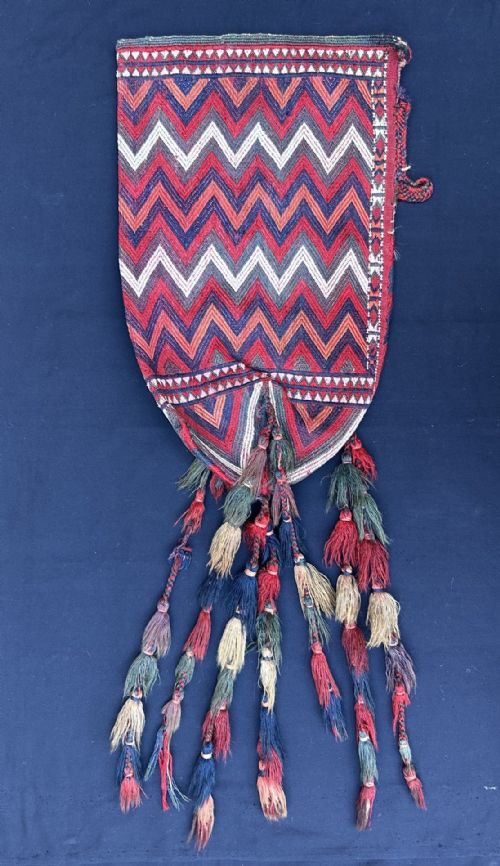
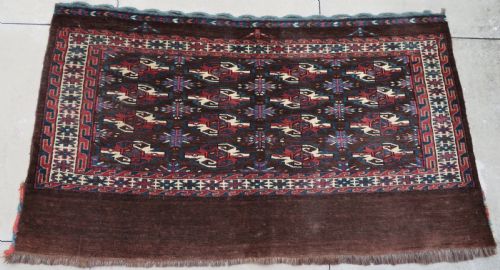
These nomadic pieces include pairs of asmalyks, functional spindle bags, and large chuvals featuring gul motifs. The tribal objects reflect the traditional nomadic lifestyle of the Yomut tribe across Turkmenistan.
Assessing quality
The refinement of the weave distinguishes the standard of execution, visible in the precision of the geometric gul patterns and the handling of natural dyes. Finer examples display tighter knot counts and crisp drawing across the field.
Completeness of form also shapes the character of each piece, whether preserved as a matched pair of asmalyks, a complete spindle bag with its plain weave back, or a large chuval.
Current listings feature pieces dated between eighteen sixty and nineteen twenty, utilising hand-spun wool, cotton, and natural dyes.
The Yomut Turkmen Textile Art Glossary
- Asmalyk
- A triangular or pentagonal trapping traditionally mounted on camel flanks during wedding processions. These decorative pieces display complex tribal motifs unique to the weaver's clan.
- Chuval
- A large storage bag used within the yurt for household goods and bedding. They frequently feature repeated rows of guls across the face.
- Gul
- A medallion motif repeated across Turkmen carpets and bags. Each tribal group utilised distinct geometric variations to signify lineage.
- Torba
- A small rectangular wall hanging or storage bag utilised for domestic organisation. These compact weavings showcase concentrated tribal designs.
- Okbash
- A specialised tent-band cover or hood designed to fit over the ends of wooden tent struts. They protect the structural framework while adding decoration to the interior.
Yomut Turkmen Textile Art: Frequently Asked Questions
What are yomut turkmen textile art pieces?
These items are tribal weavings created by nomadic groups in the Trans-Caspian steppes, including bags, storage sacks, and wedding trappings.
They reflect the traditional material culture of Central Asia through geometric designs and hand-spun wool construction.
How were these textiles used?
Nomadic families utilised these weavings for practical storage, tent decoration, and ceremonial processions during weddings.
Items like chuvals held bedding inside the yurt, while spindle bags stored working tools.
How do I hang a chuval?
Larger bags and chuvals adapt well as wall hangings to display the dense geometric patterning and natural dyes.
Mounting them requires a padded sleeve or specialist support to distribute the weight evenly across the textile.
How do I date these textiles?
Dating relies on material analysis, observing the use of hand-spun wool, natural dyes, and traditional tribal structures.
Pieces originating from the late nineteenth and early twentieth centuries exhibit specific structural traits characteristic of that era.