
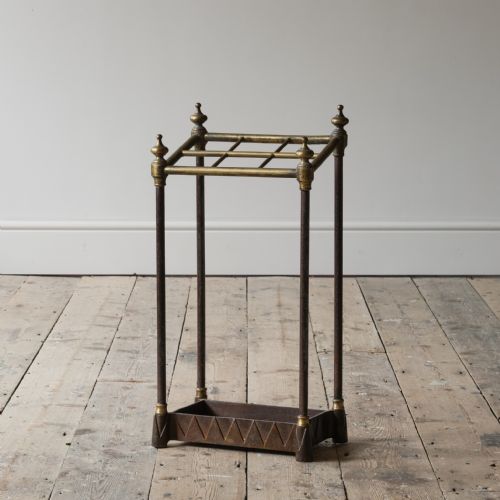
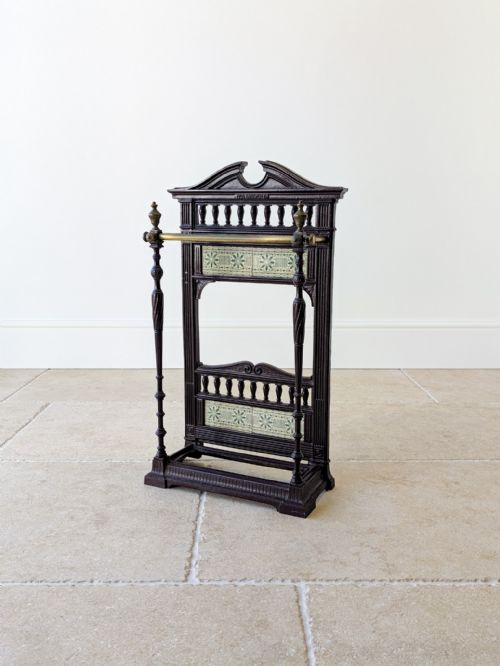

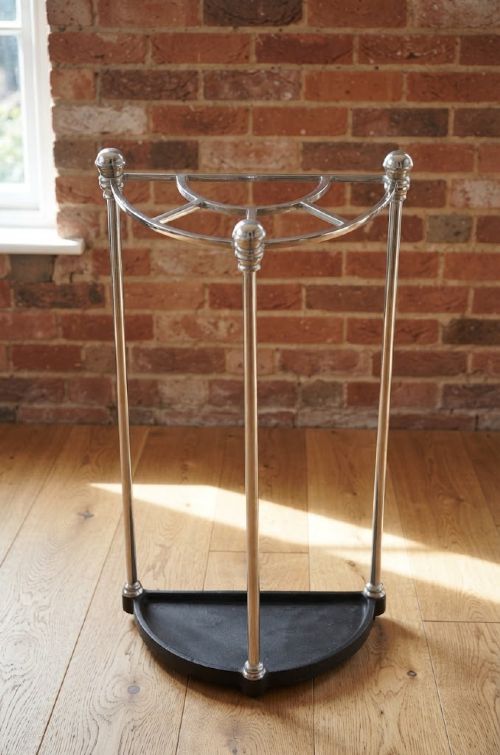
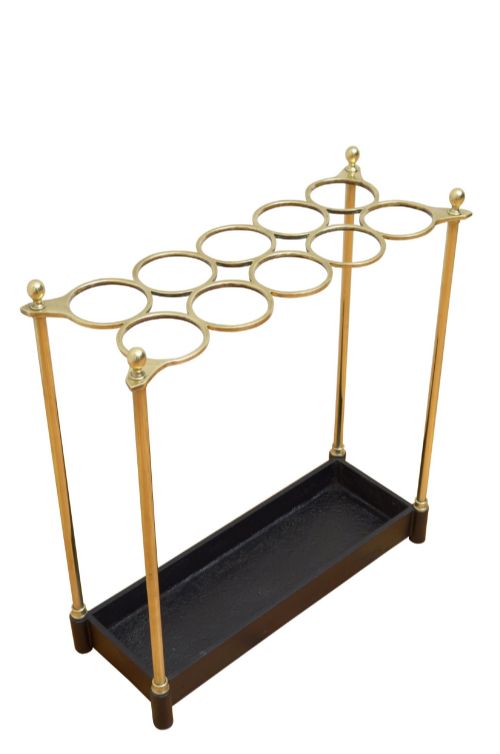
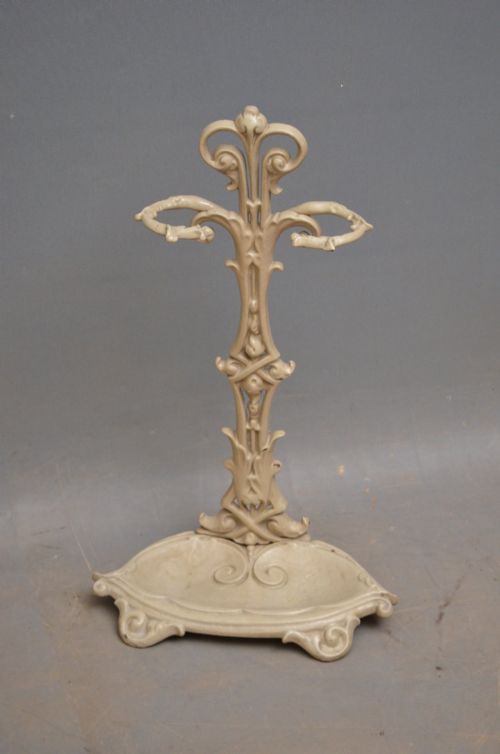
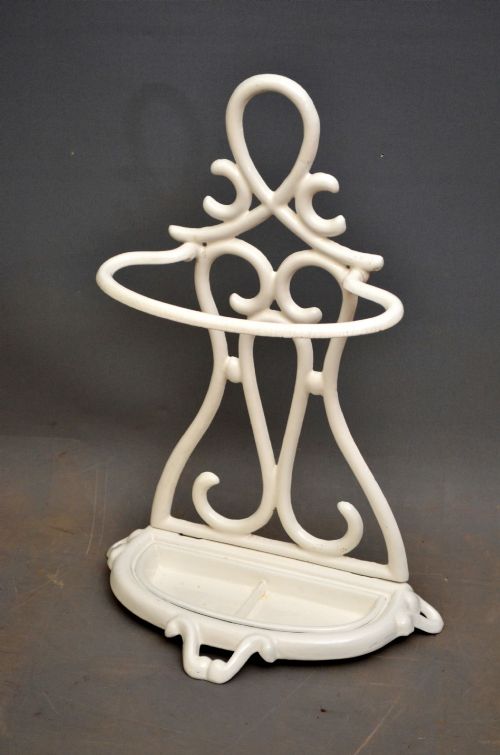
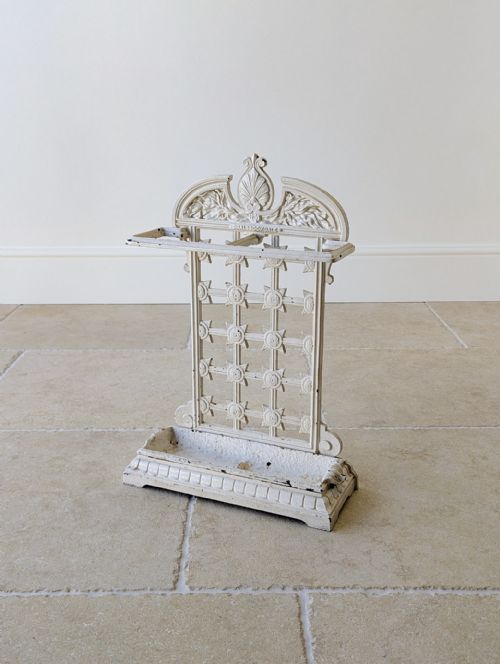
Cast Iron Umbrella Rack
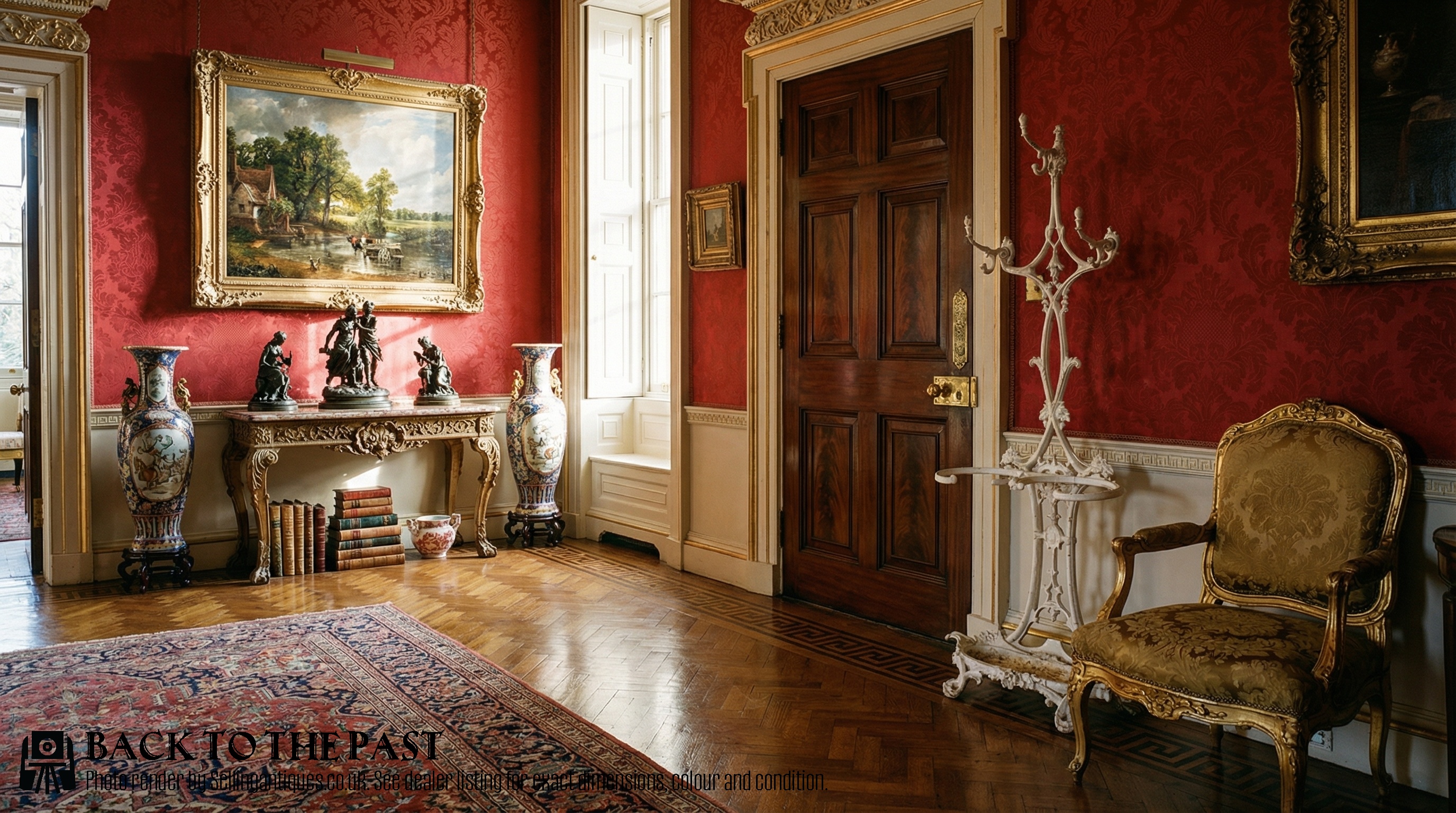
A cast iron umbrella rack brings heavy industrial strength and intricate moulding into the hallway to keep wet walking gear organised.
What these pieces are
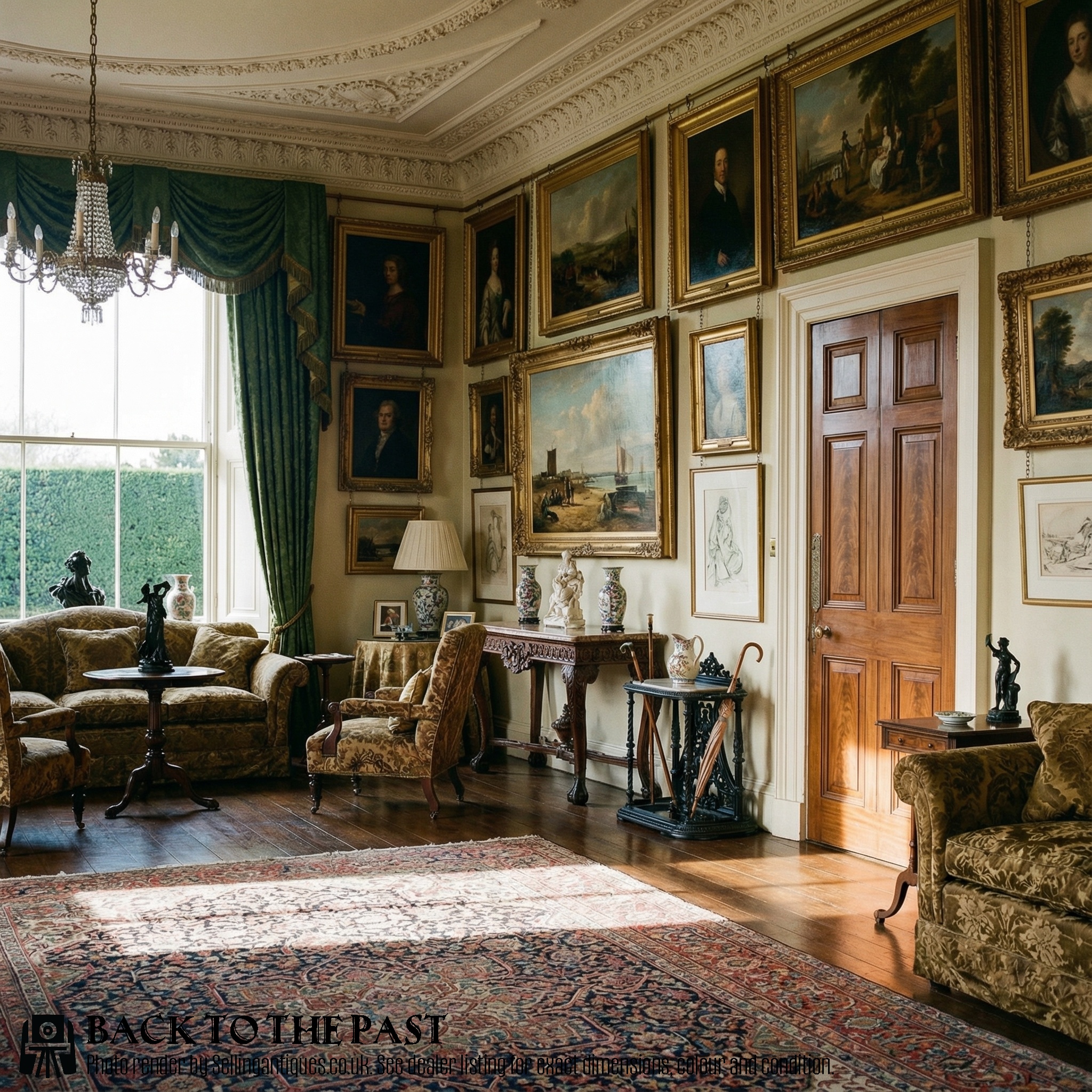
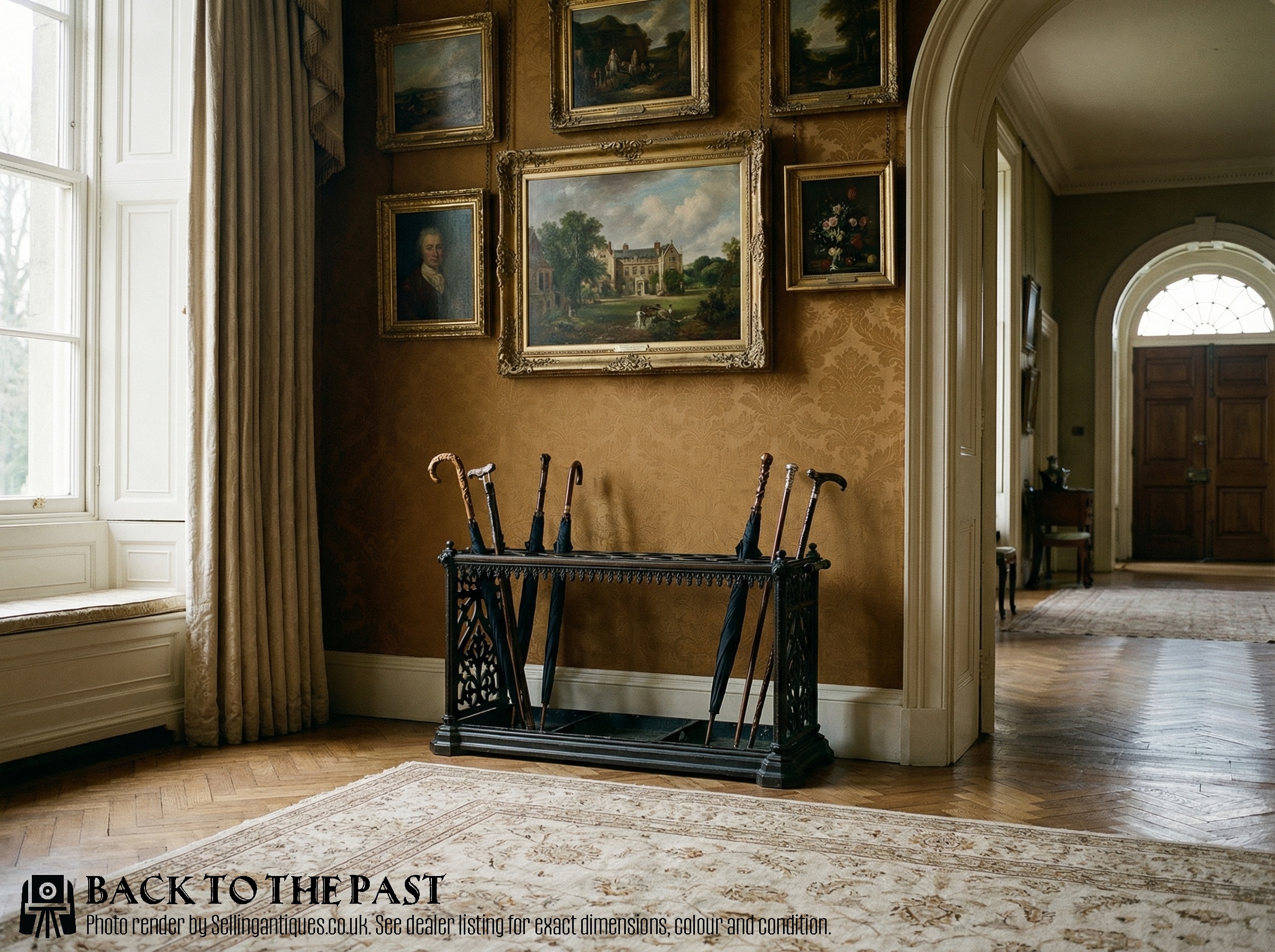
A cast iron umbrella rack serves as a heavy-duty hallway furnishing designed to hold wet sticks, canes, and umbrellas without tipping over. The selection here spans the nineteenth century, including Victorian, Edwardian, and Gothic Revival styles designed to anchor a home's entryway.
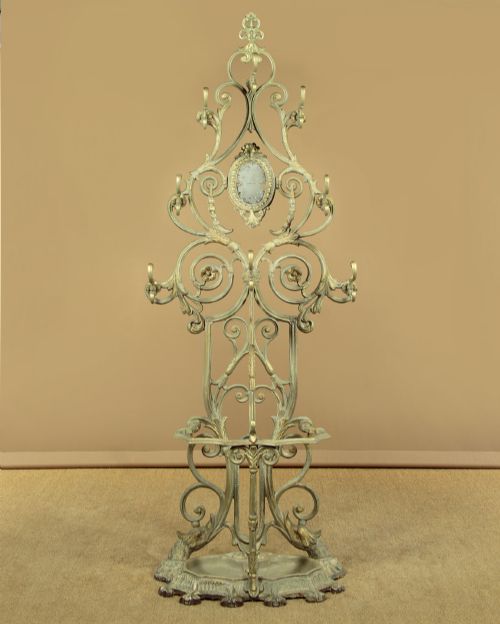
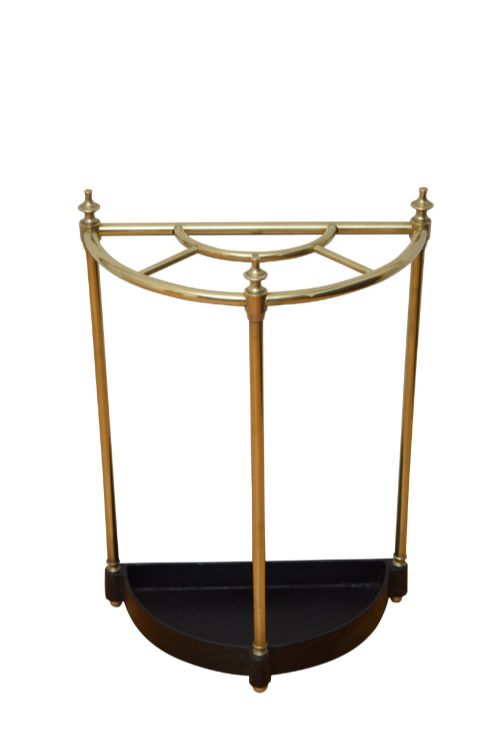
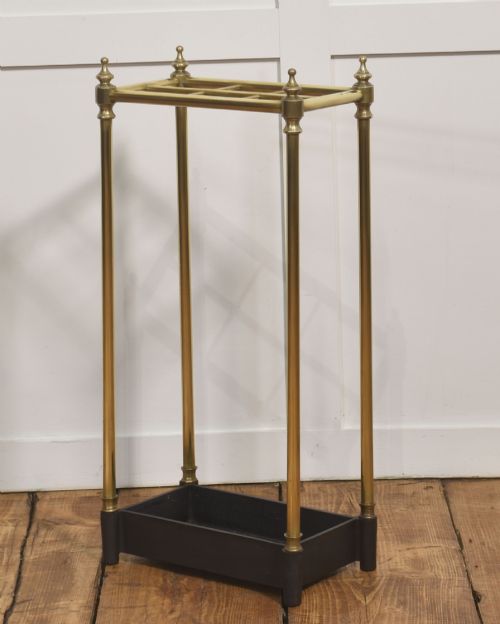
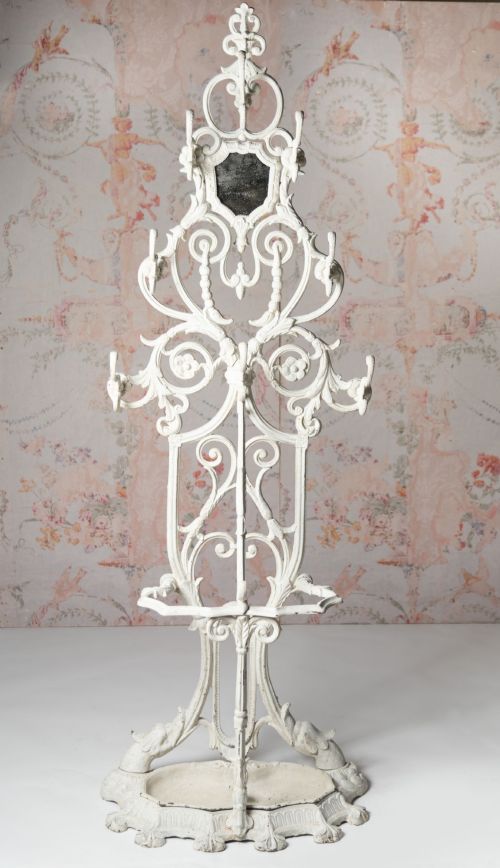
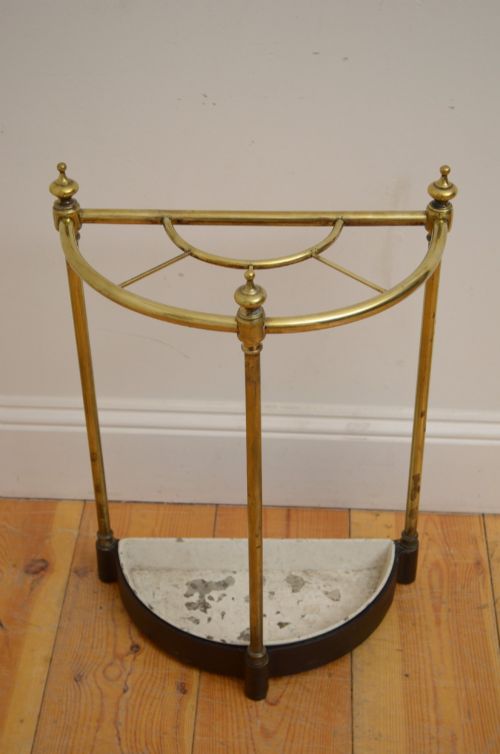
Most examples function as dedicated stick or umbrella stands, while larger forms incorporate coat hooks and hall stands. These functional items appear in corner designs, demi-lune shapes, and multi-division formats intended to handle large households.
Makers and foundries utilised robust iron casting techniques to produce durable furniture that often integrated drip trays made of ceramic or metal. These pieces reflect the practical domestic needs of nineteenth-century interiors alongside decorative stylistic shifts.
How they were made
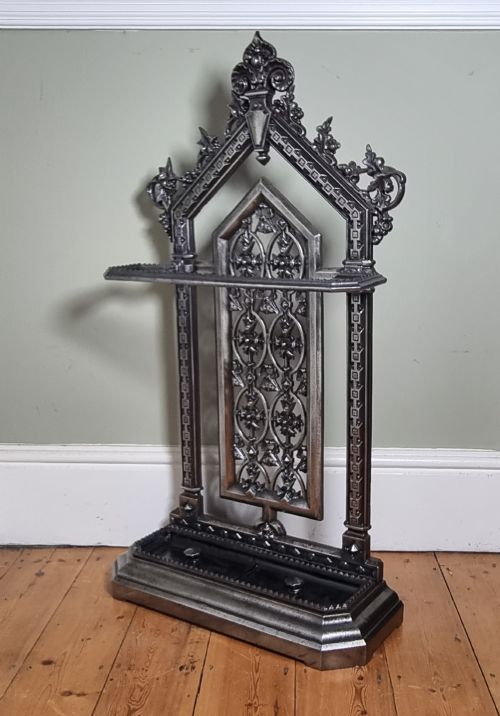
Foundries produced these items by pouring molten metal into sand moulds, capturing intricate details ranging from Gothic Revival tracery to Aesthetic Movement motifs. This manufacturing process allowed for openwork grilles and lattice patterns that kept the overall structure relatively light while retaining immense strength.
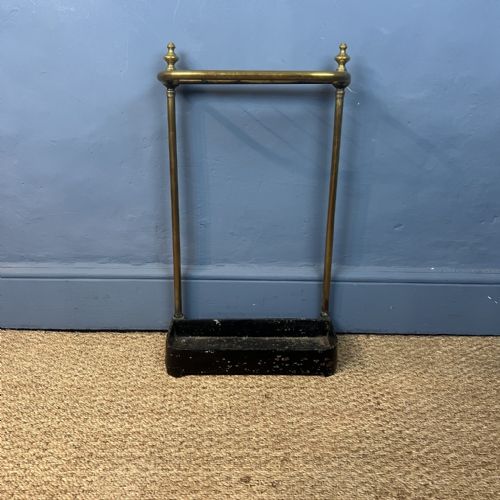
Makers combined cast iron with supplementary materials such as brass rails, marble shelves, and removable ceramic drip pans to catch water runoff. Painted finishes, sometimes layered over time, provided protection against rust and matched the dark, restrained palettes favoured in period hallways.
Retail Price Guide 2026
Typical UK retail prices for cast iron umbrella rack, calculated from the Sellingantiques database of over a million retail prices indexed since 2003. This retail price guide relies exclusively on Sellingantiques data; no external sources or auction records are used, so the figures do not describe the wider market.
Listings feature nineteenth-century pieces incorporating cast iron, ceramic, brass, and marble elements across Victorian and Edwardian periods.
What varies in quality
The sophistication of the casting separates standard utility items from sculptural showpieces, with finer examples displaying crisp relief work and well-defined decorative motifs. Foundries like Coalbrookdale achieved notable refinement in their openwork patterns and structural proportions.
The presence of original associated fittings, such as uncracked ceramic drip trays or matching brass elements, elevates a piece beyond a mere survivor. The complexity of the form, whether a simple four-division rack or a combined coat and hall stand, dictates the piece's architectural presence.
Coalbrookdale·Falkirk Foundry
The Cast Iron Umbrella Rack Glossary
- Cast iron
- A strong, hard alloy of iron and carbon poured into moulds to create rigid forms. It forms the primary structural body of every rack on this page.
- Demi-lune
- A half-moon shape designed to sit flat against a hallway wall. This profile saves floor space while accommodating multiple walking sticks.
- Aesthetic Movement
- A late nineteenth-century design style emphasising visual beauty over narrative subject matter. Pieces from this movement often feature stylised plant motifs and geometric grilles.
- Gothic Revival
- An architectural and decorative style drawing inspiration from medieval forms. It manifests here in pointed arches, trefoils, and heavy structural tracery.
Frequently Asked Questions
How do I stop rust on a cast iron rack?
Keep the iron dry and apply a light coat of paste wax to seal the metal surface against moisture from wet umbrellas.
Avoid harsh chemical cleaners that strip historical finishes and instead use a soft brush to remove dust from intricate relief work.
Were these racks meant for hallways?
Yes, they stood near front doors to catch drips from walking sticks and umbrellas before moisture reached interior wooden floors.
Larger versions often doubled as coat stands to handle hats, heavy overcoats, and outerwear for visitors.
How do I date a Victorian rack?
Examine the casting style, bolt construction, and stylistic clues such as Gothic tracery or Aesthetic Movement plant forms.
Foundry marks and registration numbers cast into the iron frame can also provide specific clues to the year of production.
Are ceramic drip trays original?
Many nineteenth-century stands incorporated fitted ceramic or metal trays to protect floors from standing water.
Original trays match the exact dimensions and drainage requirements of the specific cast iron frame they accompany.