




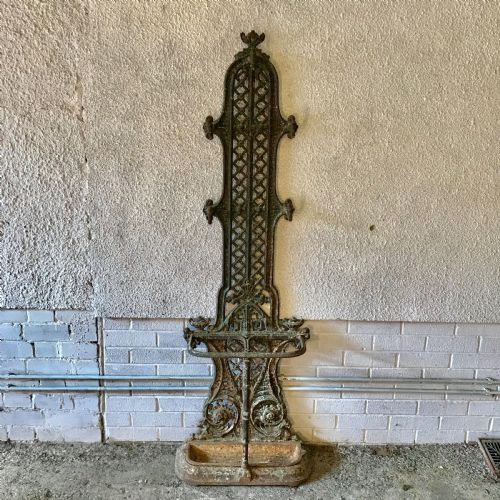
Victorian Cast Iron Hallstand
A victorian cast iron hallstand brings robust utility and striking industrial artistry straight into the hallway.
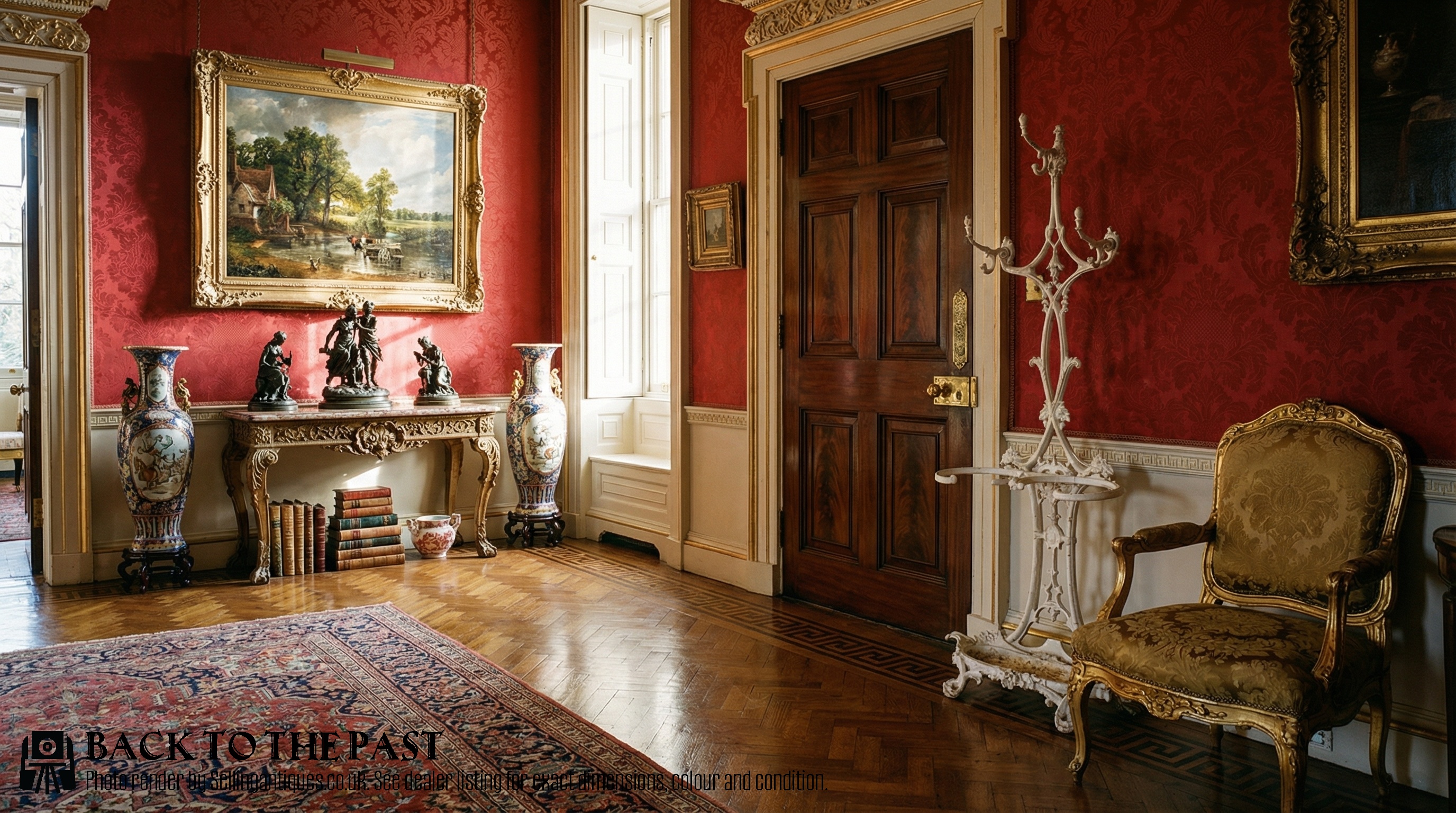
Victorian Cast Iron Hallstand
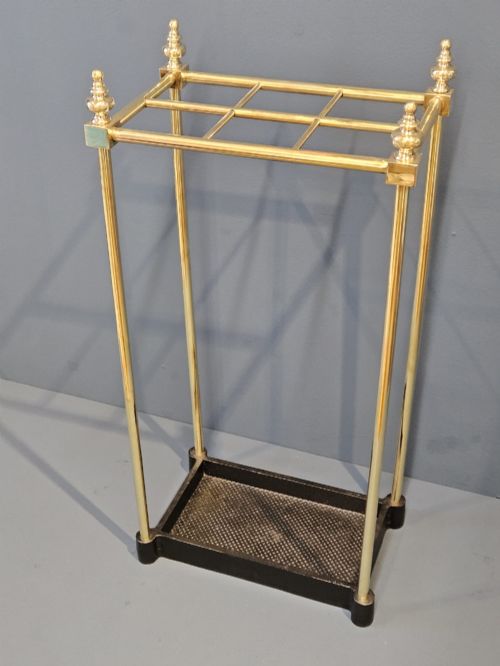
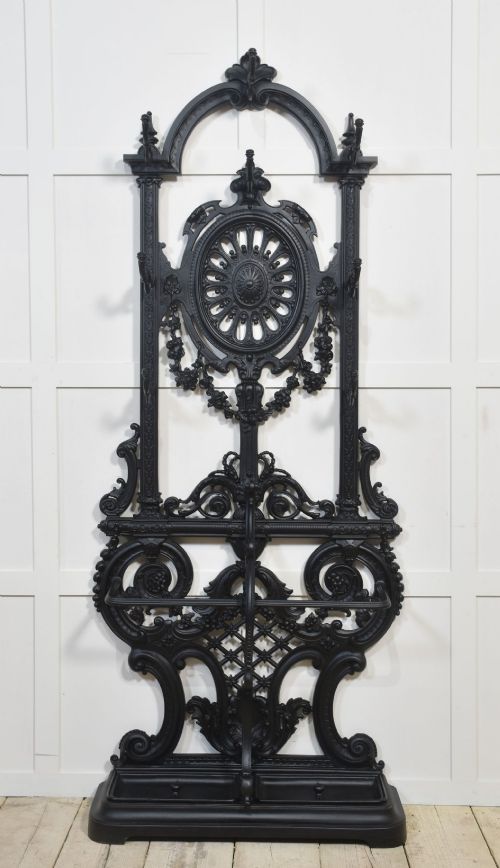
A victorian cast iron hallstand serves as a heavy-duty piece of entranceway furniture designed to hold wet umbrellas, heavy coats, and hats. These objects combine utilitarian purpose with decorative ironwork to anchor an entryway with architectural presence.
Most examples encountered on this page date from the nineteenth century, spanning Victorian and Edwardian periods. Pieces range from straightforward umbrella stands to complete hallstands incorporating coat hooks and stick holders.
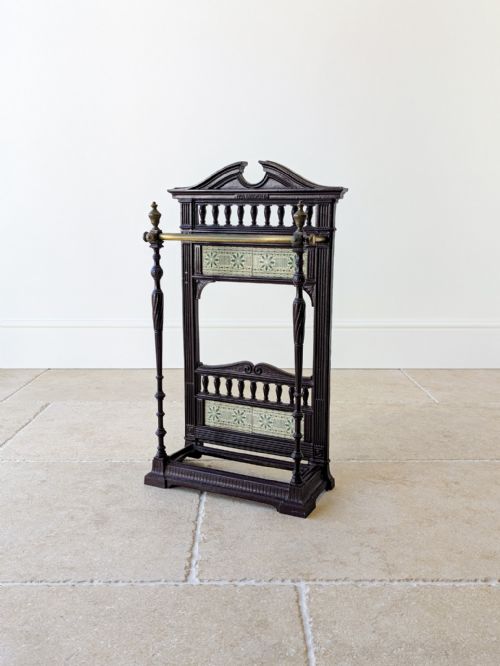
Design influences vary from classic Victorian styles to Aesthetic Movement pieces and Victorian Gothic Revival creations. Makers utilise distinct casting methods to produce both simple half-moon umbrella racks and elaborate country house furniture.
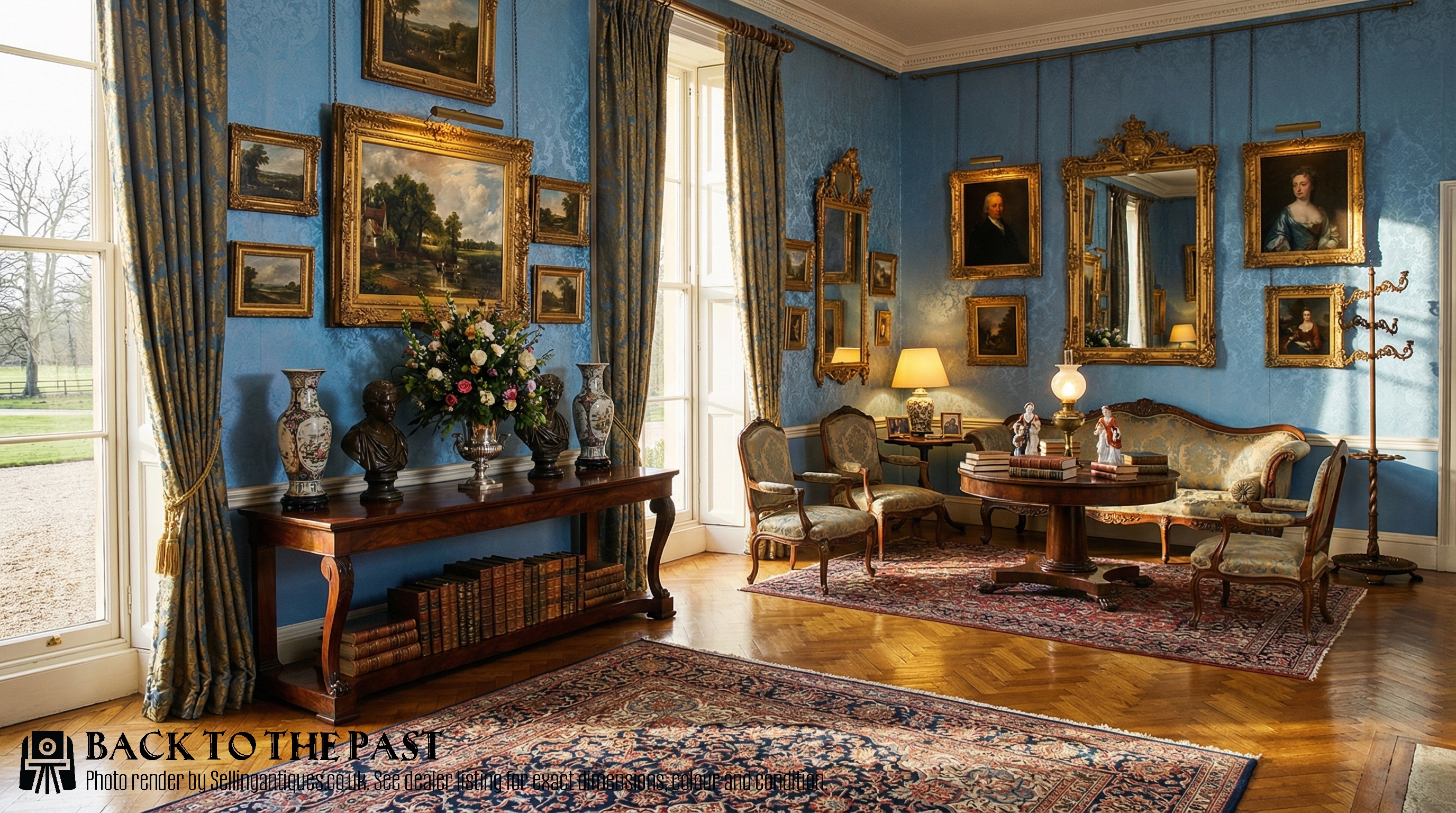
How they were made
Foundries manufactured these items using molten metal poured into sand moulds, a technique allowing for intricate openwork patterns and crisp structural details. Cast iron provided the necessary weight and rigidity to support heavy outerwear without tipping.
Many designs integrate additional materials such as brass hooks, glass components, ceramic elements, and marble inserts to contrast against the dark iron framework. Painted finishes, frequently in black, protected the metal while accentuating the relief work.
Victorian Cast Iron Hallstand Retail Price Guide 2026
Typical asking prices for victorian cast iron hallstand among the pieces listed under this phrase on Sellingantiques today, from the lower quarter to the upper quarter. They describe what is for sale here now, not the wider market.
Some nineteenth-century makers cast ordinary water pipes to look like exotic bamboo.
What varies in quality
Quality in these items depends upon the crispness of the casting and the sophistication of the pattern rather than sheer size alone. Finer examples display sharp detailing in foliage, faux bamboo moulding, or figural elements without the blurring seen in lesser secondary castings.
The integrity of the construction and the retention of original fittings, such as brass hooks or drip pans, elevate a piece. Foundries known for high-standard production, like Coalbrookdale or Falkirk, demonstrate superior finish and structural balance.
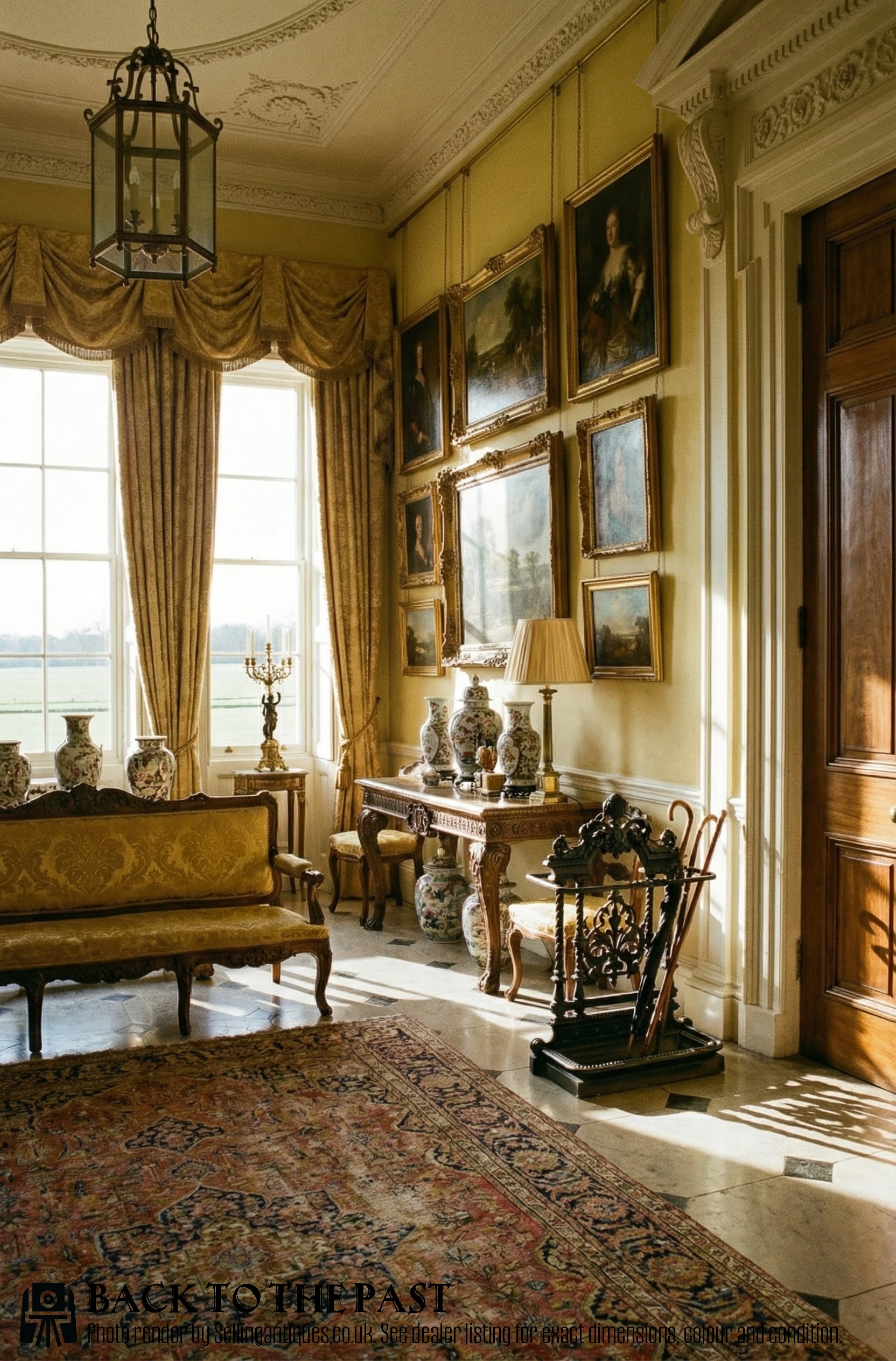
Coalbrookdale·Falkirk Ironworks·Falkirk Foundry
The Victorian Cast Iron Hallstand Glossary
- Aesthetic Movement
- A late nineteenth-century design style focusing on visual beauty over narrative meaning, often featuring stylized nature motifs.
- Coalbrookdale
- A prominent English ironworks famous for producing highly decorative cast iron furniture and architectural metalwork.
- Faux bamboo
- A decorative moulding technique carved into wood or cast into metal to imitate natural bamboo stalks.
- Gothic Revival
- An architectural and decorative style drawing inspiration from medieval design, characterised by pointed arches and robust forms.
- Drip pan
- A removable metal or ceramic tray placed at the base of a stick stand to catch rainwater from wet umbrellas.
Victorian Cast Iron Hallstand: Frequently Asked Questions
How do I care for cast iron?
Keep the metal dry and dust it regularly with a soft cloth to protect the painted or finished surface. Avoid harsh chemical cleaners that might strip the original finish.
Check periodically for any signs of moisture accumulation, particularly around the drip trays where water collects.
Where were these stands placed?
These pieces sat directly inside the entrance hall or vestibule of nineteenth-century homes to greet visitors and store outerwear. Their heavy construction ensured they remained stable when loaded with wet coats and walking sticks.
They functioned as both practical storage and a deliberate statement of taste for arriving guests.
Are all black stands original?
Many nineteenth-century pieces received protective dark paint finishes during production or subsequent maintenance over the decades. Black finishes highlight the intricate casting relief and match the industrial nature of the material.
Subsequent repainting was common practice to refresh worn hallways and protect the metal from rust.
How do I identify a period piece?
Examine the sharpness of the casting detail, the construction methods, and the presence of stylistic markers like Aesthetic Movement or Gothic Revival motifs. Nineteenth-century pieces typically feature heavier ironwork and specific structural assembly bolts characteristic of the era.
Maker attributions or foundry marks cast into the reverse side often confirm the origin and period.