
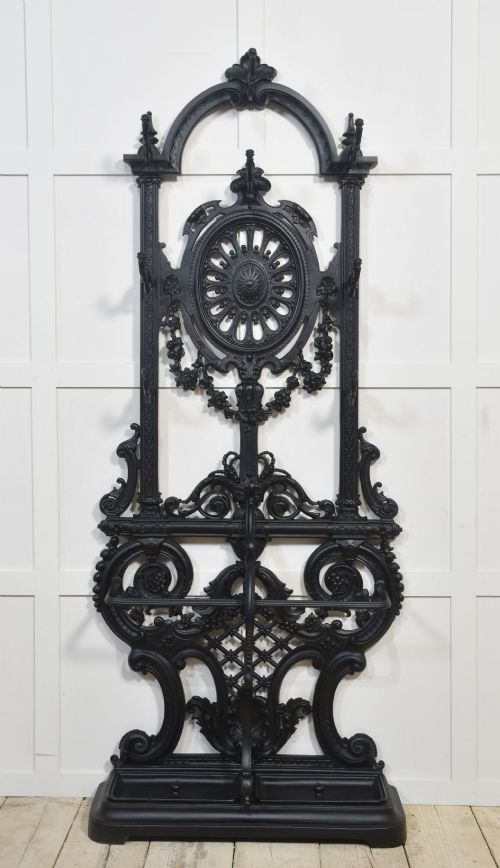
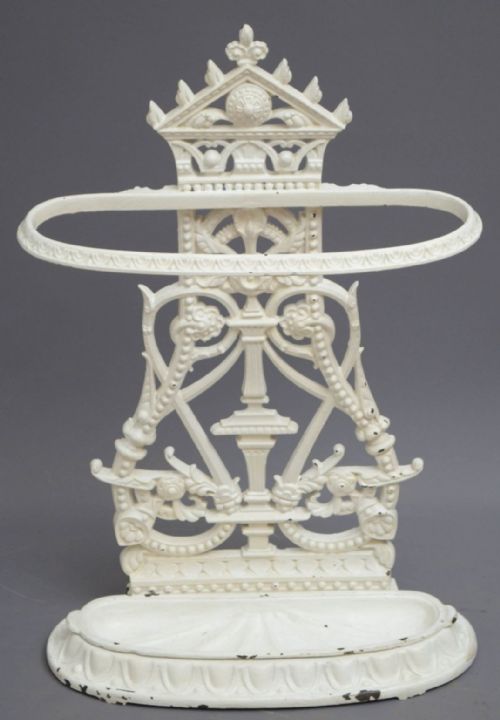


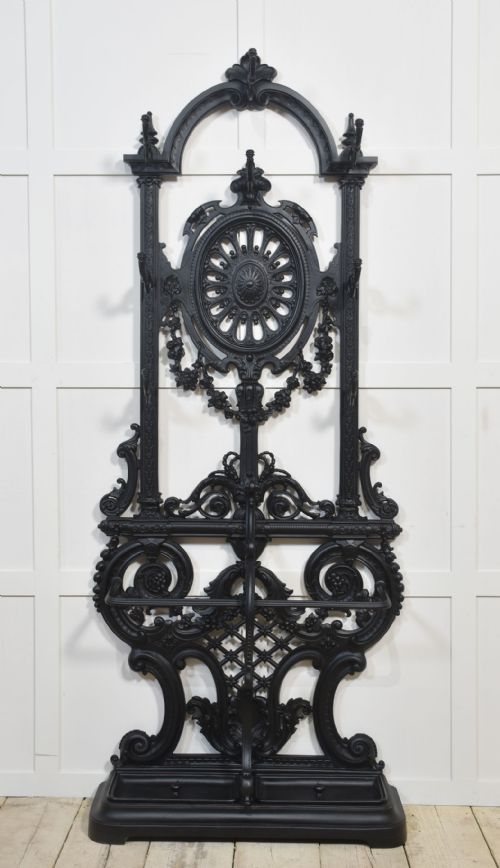


Cast Iron Coat Stand
These heavy cast iron coat stand designs anchor a hallway with solid presence, offering robust hanging space that withstands daily weight.

Cast Iron Coat Stand
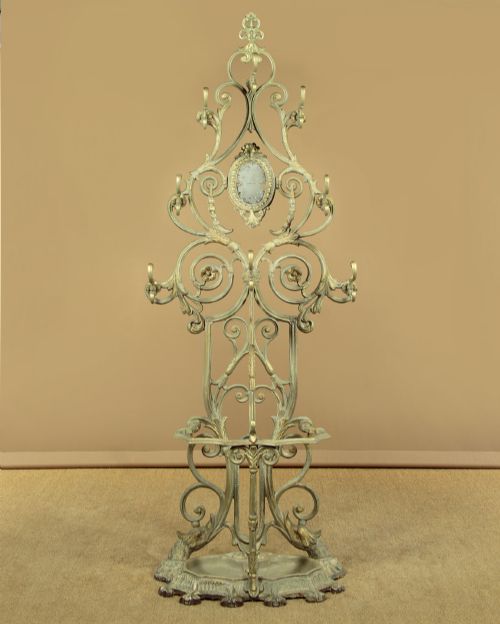
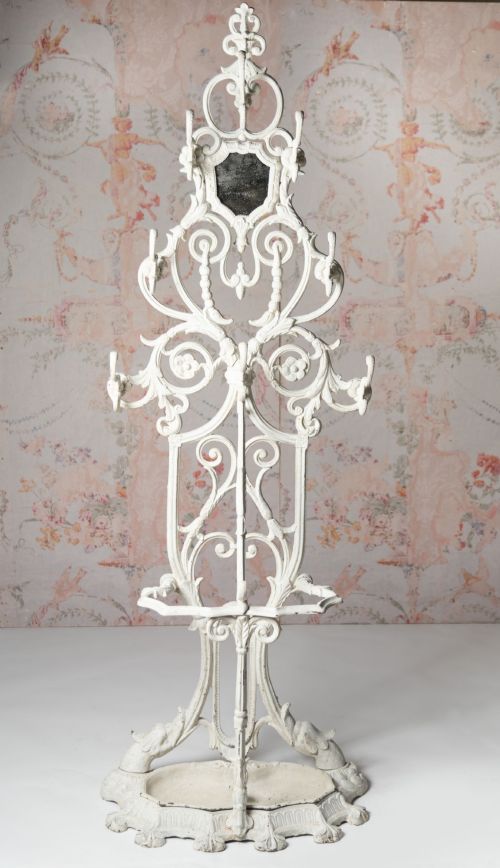
A cast iron coat stand provides heavy-duty hallway storage designed to hold coats, hats, and umbrellas on structural hooks and integrated bases. The Victorian period dominates these listings, alongside Edwardian and later examples, often combining umbrella rings with central upright pillars.
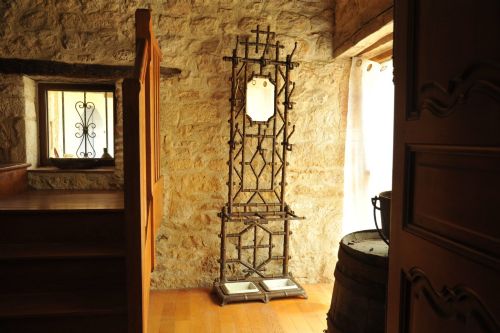
Makers range from renowned foundries such as Coalbrookdale and Falkirk to French makers producing distinct faux bamboo forms. Forms vary from towering portico designs to wall-mounted racks and combined hall stands featuring mirrors and drip pans.
Buyers encounter diverse stylistic influences including Victorian Gothic Revival, Rococo Revival, and French Chateau aesthetics. These sturdy pieces serve entrance halls and cloakrooms with practical resilience.
Materials and foundry techniques
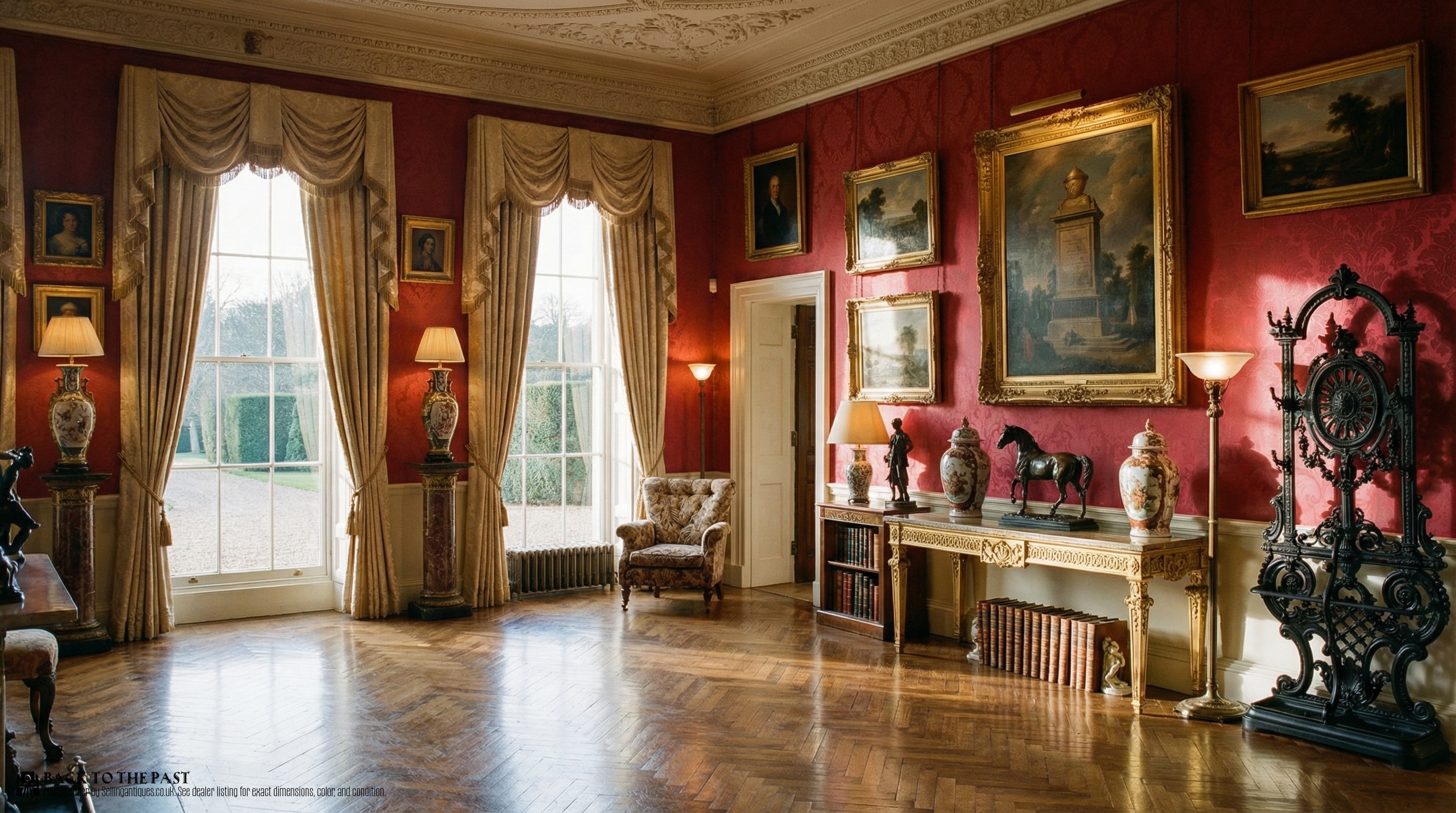
Foundries utilised sand-casting techniques to pour molten iron into intricate moulds, creating the detailed relief patterns visible on pillars and drip trays. This method allowed for mass production of ornate architectural motifs and repeating botanical or geometric designs.
Secondary materials such as brass, glass, and mirror glass appear frequently, providing contrasting highlights and functional surfaces. Original paint finishes, sometimes layered over time, protect the metal while defining the surface texture.
Cast Iron Coat Stand Retail Price Guide 2026
Typical asking prices for cast iron coat stand among the pieces listed under this phrase on Sellingantiques today, from the lower quarter to the upper quarter. They describe what is for sale here now, not the wider market.
Assessing construction and design
Quality rests in the crispness of the foundry casting, where sharper relief work distinguishes superior decorative patterns from softer, worn impressions. The integration of secondary elements like removable drip trays and secure brass hooks indicates careful initial assembly.
Structural integrity depends on the original bolt assembly holding the heavy sections together without stress fractures in the iron. Finer examples retain balanced proportions and uncompromised structural stability across tall upright frames.
Coalbrookdale·Falkirk Foundry·Stockman of Paris
The Cast Iron Coat Stand Glossary
- Coalbrookdale
- A famous Shropshire iron foundry known for producing highly ornate cast iron furniture and architectural fittings. Their distinctive fern and scroll patterns set a standard for Victorian hall furniture.
- Faux bamboo
- A decorative treatment mimicking segmented bamboo canes in cast iron or wood. This style gained popularity in nineteenth-century French and English furnishings.
- Hall stand
- A multi-functional piece of hallway furniture combining coat hooks, a hat shelf, an umbrella rack, and frequently a central mirror. They provide comprehensive cloakroom storage for entrance spaces.
- Drip pan
- A shallow metal tray positioned at the base of a stand to catch water from wet umbrellas and walking sticks. These removable trays protect flooring from moisture damage.
- Falkirk Foundry
- A major Scottish ironworks known for producing robust cast iron goods including domestic hall stands. Their foundry marks often appear on nineteenth-century utility pieces.
Cast Iron Coat Stand: Frequently Asked Questions
How do I clean cast iron?
Dust regularly with a dry cloth and remove surface dirt using a soft brush in recessed details.
Avoid harsh chemical solvents that can strip original paint finishes or accelerate oxidation on exposed metal surfaces.
Are these stands stable on carpets?
Their substantial weight naturally anchors most pieces, but tall upright designs benefit from placement on firm, level flooring.
Some iterations include wide branching bases specifically engineered to distribute weight evenly and prevent tipping.
Can I dismantle them for transport?
Many nineteenth-century examples utilise internal threaded steel rods that bolt the heavy sections together securely.
Careful dismantling requires patience to avoid cracking brittle iron components during disassembly and reassembly.
How do I spot a Coalbrookdale piece?
Look for crisp casting detail, naturalistic botanical motifs like ferns, and occasionally registry diamond marks or foundry stamps.
Many period pieces follow these specific design patterns without bearing direct factory signatures.