





Cast Iron Boot Scraper
When you search for a cast iron boot scraper, you find robust entryway hardware built to clear heavy mud from footwear before crossing a threshold.

Cast Iron Boot Scraper
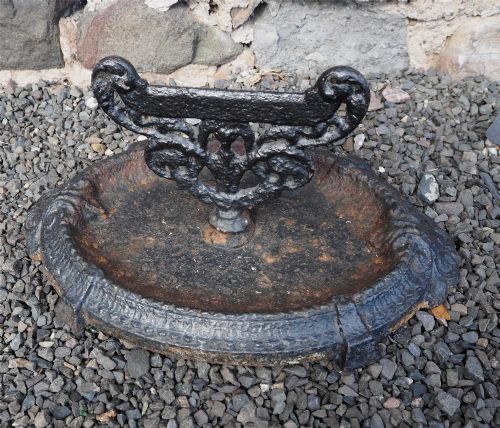
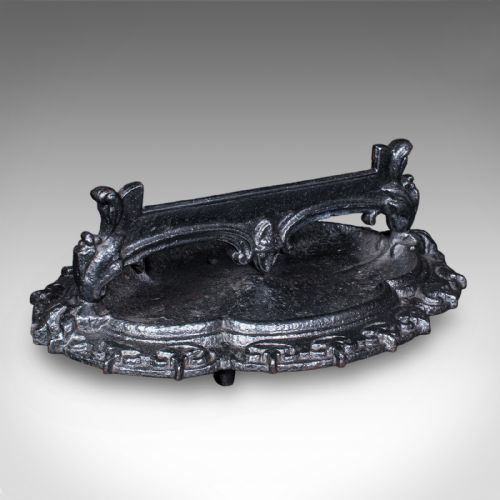
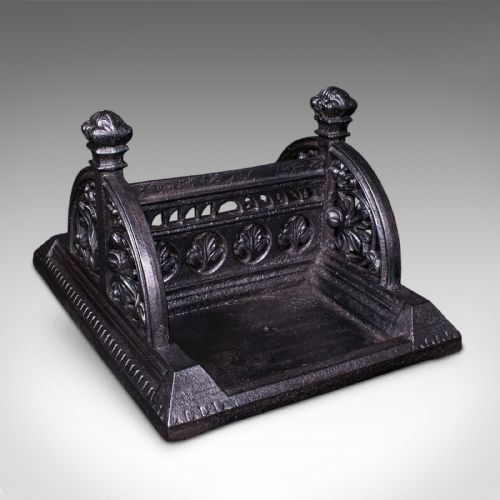
A cast iron boot scraper is a functional piece of threshold furniture designed to clean mud and dirt from footwear. The pieces found here span the Georgian, Regency, and Victorian periods, reflecting the architectural needs of country houses and townhouses.
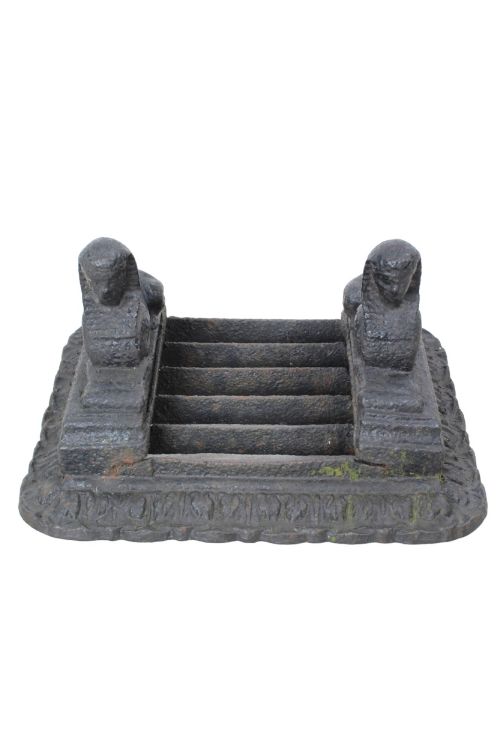
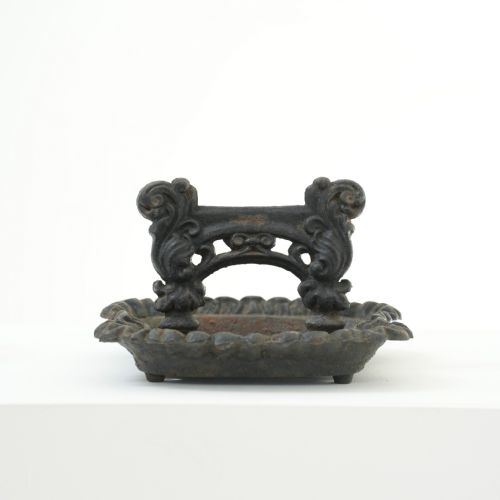
Most examples combine a rigid metal blade with sturdy mounting feet or solid stone blocks to withstand heavy daily use. Variations range from simple utility designs to ornate Gothic Revival and Egyptian Revival forms incorporating lions, sphinxes, or hounds.
Materials and construction
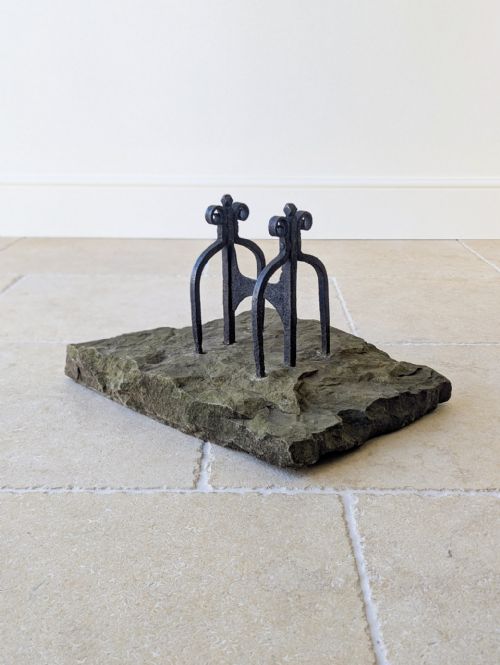
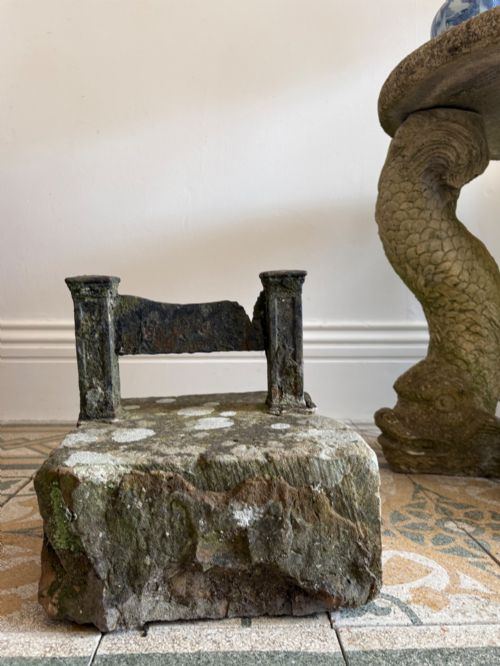
Foundry casting forms the core of these pieces, utilising molten iron poured into moulds to create both simple blades and decorative figural elements. Some designs pair the iron scraper directly with hewn stone blocks, Bath stone, or Yorkstone bases for permanent exterior installation.
Wrought iron appears alongside cast elements in specific country house examples, providing supplementary ties or handles. Foundry work from makers such as Carron or Archibald Kenrick utilised durable iron alloys capable of enduring decades of outdoor exposure.
Cast Iron Boot Scraper Retail Price Guide 2026
Typical asking prices for cast iron boot scraper among the pieces listed under this phrase on Sellingantiques today, from the lower quarter to the upper quarter. They describe what is for sale here now, not the wider market.
Listings feature cast iron and wrought iron combined with natural stones including Yorkstone and Bath stone across Victorian and Georgian periods.
Distinctions in quality
Quality rests in the crispness of the foundry casting and the architectural ambition of the design. Standard utility scrapers contrast with sculptural pieces shaped as recumbent lions, unicorns, or sphinxes.
The integration of substantial mounting media, such as fitted stone blocks or heavy cast iron bases, separates substantial townhouse and country house hardware from smaller domestic iterations.
Archibald Kenrick & Sons·Carron Foundry Scotland·T Holcroft & Sons Ltd Wolverhampton
The Cast Iron Boot Scraper Glossary
- Boot scraper
- An exterior iron blade fixed near a doorway for scraping mud from the soles of boots. It forms the primary functional element of these threshold pieces.
- Shoe pull
- An integrated metal loop or handle designed to assist in pulling off muddy boots. It frequently accompanies the scraping blade on townhouse models.
- Bath stone
- A fine-grained yellowish-white Jurassic limestone used as a mounting base for ironwork. It provides a heavy, stable foundation for exterior placement.
- Yorkstone
- A tough carboniferous sandstone originating from Yorkshire, often utilised as a hewn block to anchor heavy scrapers. It offers high resistance to weathering.
- Gothic Revival
- An architectural and decorative style drawing inspiration from medieval forms. Pieces in this style feature pointed arches and ecclesiastical motifs.
Cast Iron Boot Scraper: Frequently Asked Questions
Where were cast iron boot scrapers placed?
These scrapers stood immediately outside exterior doorways, entrance porches, and steps of townhouses and country estates. Their placement ensured visitors cleared heavy mud before stepping inside.
Many featured integral stone bases designed to sit directly on flagstones or ground level beside the main entrance.
How do I secure a heavy boot scraper?
Most examples rely on their substantial weight or heavy stone foundations to remain stable during use. Pieces inset into hewn stone blocks stand securely without additional masonry work.
Townhouse models often utilised robust iron flanges or lugs intended to anchor the piece firmly near the doorway.
What is the difference between utility and decorative designs?
Utility scrapers consist of a simple iron blade and mounting feet designed strictly for functional mud removal. These straight-forward tools served everyday household needs.
Decorative versions incorporate sculptural figures like lions, hounds, sphinxes, or elaborate Gothic and Egyptian Revival motifs suited to grander architectural settings.
How do I date a cast iron boot scraper?
Dating relies on stylistic clues such as Regency classical lines, Victorian Gothic Revival ornamentation, or regional foundry marks. Georgian and Regency pieces often display simpler architectural restraint compared to later Victorian figural castings.
Foundry stamps and specific material pairings like Bath stone or Yorkstone bases provide additional chronological context.