
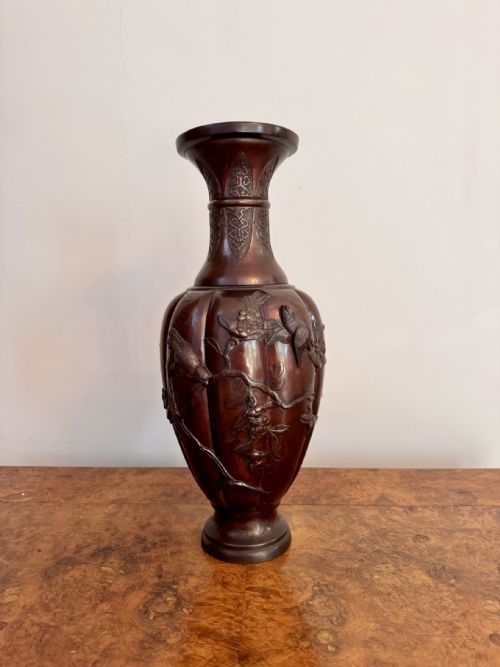
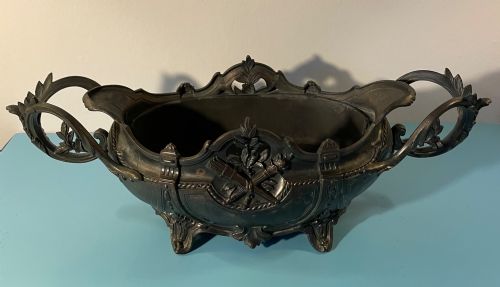


Cast Bronze Planter
These heavy cast bronze planter vessels bring architectural weight and rich patination to a room.
Cast Bronze Planter
A cast bronze planter offers a durable vessel for greenery, appearing in forms such as jardinières, campana-shaped urns, and large decorative bowls. When searching for a cast bronze planter, a buyer encounters pieces originating from nineteenth-century Europe and East Asia.
Jardinières and garden urns dominate the forms, serving both interior display and conservatory use. These heavy metal vessels command attention through sheer scale and intricate surface casting rather than delicate proportions.
Casting materials and techniques
Makers utilised traditional foundry methods, pouring molten metal into moulds to achieve thick-walled vessels with enduring structural stability. Bronze serves as the primary material, though related pieces incorporate patinated bronze, gilt bronze, brass, and verdigris finishes.
Surface treatment defines the physical character of these objects, ranging from dark natural patination to applied gilt layers and verdigris oxidation. Some works combine the cast metal body with contrasting elements like marble bases or include alternative metals such as spelter and cast iron.
One recorded Chinese bronze bowl tips the scale at two and a half kilos, proving these vessels were built with serious heft.
Evaluating casting quality and origin
Quality rests in the crispness of the chased detail and the depth of the casting, where superior examples exhibit sharply defined ornamentation rather than softened edges. The handling of the handles, rims, and base attachments reveals the care taken during the original foundry production.
The sophistication of the patination and the integrity of the heavy metal body distinguish finer workshop outputs from standard production. Pieces bearing recognisable foundry signatures or distinct stylistic provenance command greater interest from collectors.
Barbedienne
The Cast Bronze Planter Glossary
- Jardiniere
- An ornamental pot or stand for holding plants or flowers. This term appears frequently across European and Asian metalwork listings.
- Campana
- A bell-shaped classical urn form popular in neo-classical design. These vessels typically feature flared rims and mounted handles.
- Meiji Period
- A Japanese historical epoch spanning from eighteen sixty-eight to nineteen twelve noted for fine metalwork production. Works from this era often display intricate relief casting.
- Grand Tour
- A traditional cultural excursion of Europe undertaken by wealthy young men in the eighteenth and nineteenth centuries. Souvenirs included classical bronze reproductions and miniature architectural urns.
- Usubata
- A traditional Japanese bronze flower vase used primarily for ikebana arrangements. They often feature a wide basin atop a slender stem and solid base.
Cast Bronze Planter: Frequently Asked Questions
How do I care for a bronze planter?
Dust the surface gently with a soft dry cloth to maintain the existing patina without stripping the protective oxide layer. Avoid harsh chemical cleaners or abrasive polishes that can permanently damage the bronze.
Place a protective liner inside the vessel if housing living plants with moisture to prevent internal water corrosion and mineral deposits from forming on the metal.
Where were these heavy planters made?
The pieces originate from European foundries in France, Italy, and England alongside East Asian workshops in Japan and China. European makers focused on classical antiquity while Asian makers produced ritual and decorative vessels.
Nineteenth-century workshops in Paris and Italian studios produced classical revival urns for the export and Grand Tour markets.
Are these planters suitable for outdoor use?
Many cast bronze and heavy metal pieces tolerate sheltered outdoor environments well because the alloy resists heavy corrosion. However, freezing water trapped inside unlined planters can crack the metal over winter.
Protect gilt or delicate patinated surfaces from direct prolonged weather exposure to preserve the original finish.