




Italian Bronze Vessel
An italian bronze vessel brings classical antiquity straight into your room through heavy cast metal and rich patination.
Italian Bronze Vessel
An italian bronze vessel covers decorative urns, ewers, goblets, and centerpiece bowls originating from Italy or produced as souvenirs for travellers. These works draw heavily on classical antiquity, taking forms such as tazzas, planters, and lidded cups.
The pieces on this page span from the late eighteenth century through the Victorian era and the nineteenth century, reflecting sustained European interest in classical forms. Makers often produced matched pairs of display urns and drinking cups alongside single commemorative pieces.
Grand Tour souvenirs and Renaissance Revival pieces dominate the selection, showing how makers reinterpreted ancient Roman and Greek designs for nineteenth-century interiors. Such objects function primarily as decorative vessels and jardinieres rather than utility items.
Materials and Construction
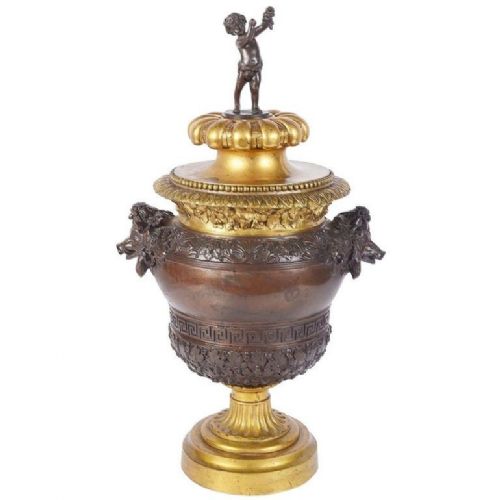
Foundries shaped these items using traditional casting methods in bronze, frequently mounting the metal bodies upon contrasting bases of marble, stone, and ebonised wood. Artisans also incorporated ormolu details to highlight handles, rims, and classical friezes.
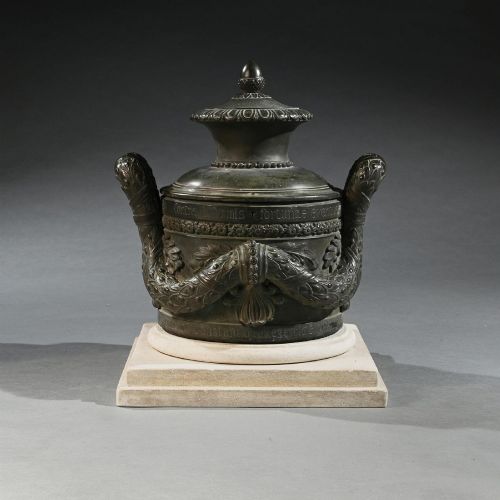
Surface treatments range from dark patination to polished highlights, while specific examples feature cast Latin inscriptions or figurative sculptural elements like water carriers. The heavy cast bronze provides structural stability, allowing larger jardiniere forms and tall display urns to stand securely on stone supports.
One late 18th-century vessel carries a Latin inscription, perhaps once holding secrets from a maritime journey.
Assessing Quality and Execution
Quality rests upon the crispness of the casting and the depth of the chasing work on the bronze surface. Superior examples display sharply defined classical motifs, clean lettering on inscriptions, and tight joints where metal meets marble or stone bases.
The material integrity of the mounting and the richness of the underlying metal alloy differentiate standard souvenir pieces from works associated with known sculptors or high-end foundries. Patination also plays a role, with untouched surfaces retaining more character than heavily polished alternatives.
Vincenzo Gemito
The Italian Bronze Vessel Glossary
- Grand Tour
- A traditional trip through Europe undertaken by upper-class European young men of means in the 18th and 19th centuries to flourish their education. Souvenirs purchased along the way included bronze reductions of classical antiquities.
- Tazza
- A shallow saucer-like dish mounted on a stem and foot, frequently utilised as a decorative bowl or centerpiece. These vessels often sit on marble plinths in nineteenth-century interpretations.
- Ormolu
- Gilded bronze, where a gold-mercury amalgam is applied to a bronze base. This technique creates a bright, durable metallic finish often found on decorative mounts.
- Jardiniere
- An ornamental pot or stand for holding plants or flowers. In bronze, these heavy vessels often feature classical relief decoration.
- Ewer
- A large jug with a wide spout and elaborate handle, traditionally used for pouring water. Antique decorative versions served as display pieces on sideboards and tables.
Italian Bronze Vessel: Frequently Asked Questions
What is an Italian bronze vessel?
An italian bronze vessel is a cast metal decorative object, such as an urn, goblet, ewer, or tazza, produced in Italy or made as a souvenir.
These pieces draw directly from classical antiquity and Renaissance design, frequently serving as ornamental centerpieces or mantel displays in nineteenth-century homes.
How were Grand Tour vessels used?
Travellers collected these bronzes as physical reminders of their educational travels across Europe and displayed them prominently in studies, libraries, and drawing rooms.
While some functioned as jardiniere planters or drinking cups, most acted purely as decorative sculpture to signal cultural refinement and classical taste.
How do you date an antique bronze vessel?
Dating relies on stylistic clues, casting techniques, and associated materials like rouge griotte marble or ebonised wood plinths.
Late eighteenth-century examples often feature hand-engraved inscriptions and distinct patination, whereas Victorian and mid-nineteenth-century pieces frequently align with Grand Tour souvenir production.
What materials accompany the bronze?
These vessels frequently incorporate marble, stone, and ebonised wood for their supportive bases and plinths.
Some items also feature ormolu highlights or cast inscriptions that provide historical context and hint at the piece's origin.