

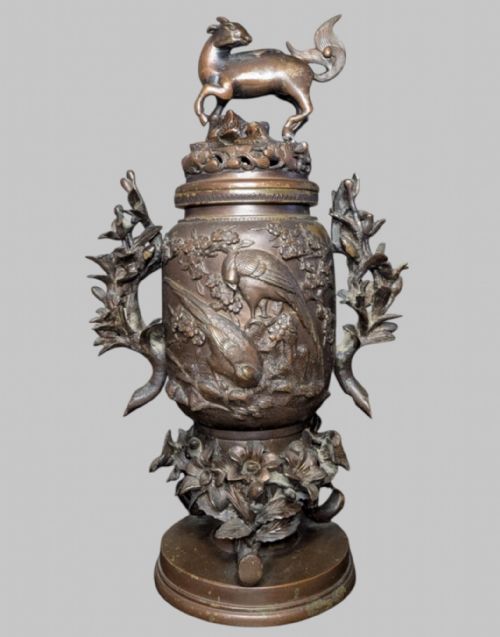


Relief Carved Urn
A relief carved urn carries weight and presence, offering detailed metalwork or ceramic form that anchors a room with historic authority.
Relief Carved Urn
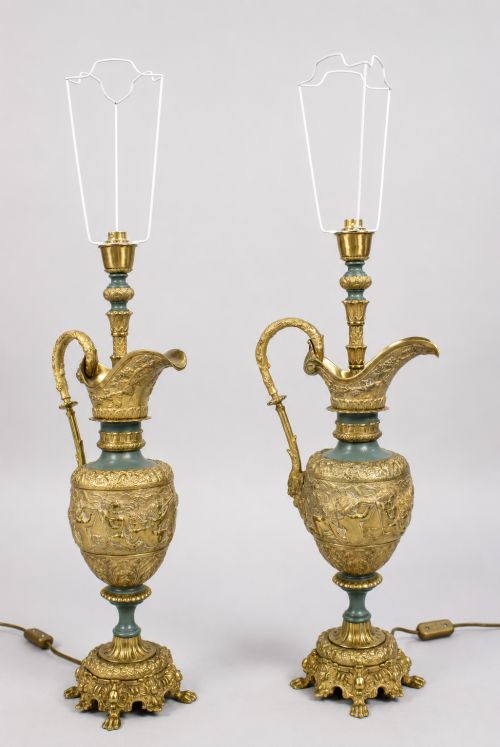
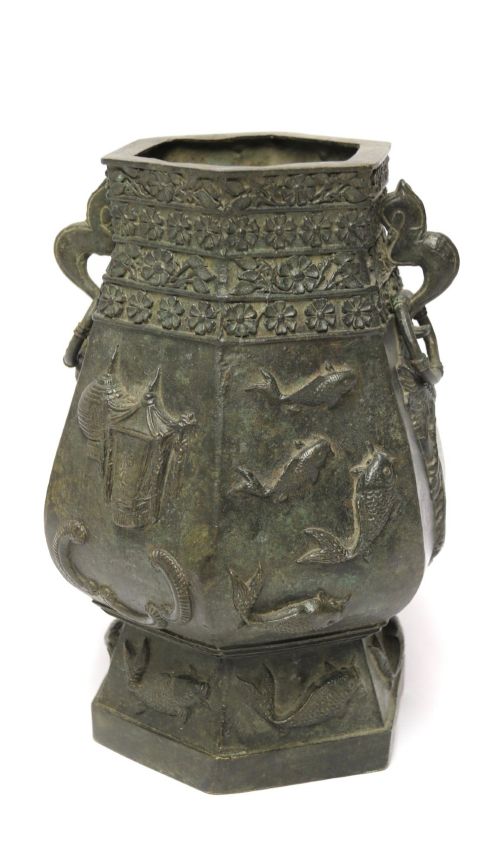
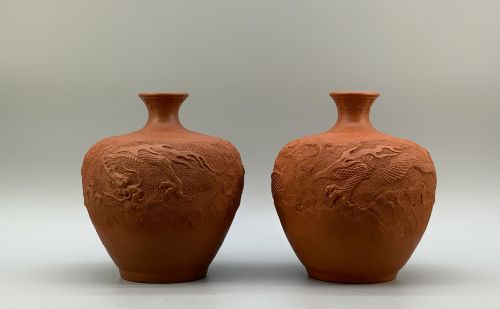
A relief carved urn encompasses a variety of vessel forms designed primarily for display rather than utility. When searching for a relief carved urn, buyers encounter pieces fashioned from bronze, copper-alloy, red clay, stoneware, and wood, originating largely from nineteenth-century Japanese Meiji workshops and Chinese kilns, alongside Italian Grand Tour productions.
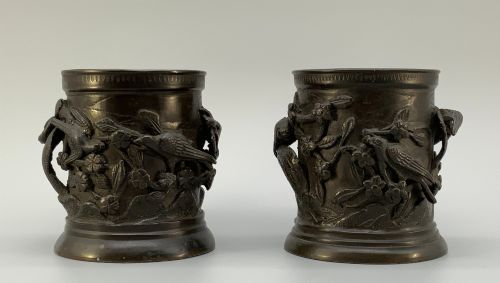
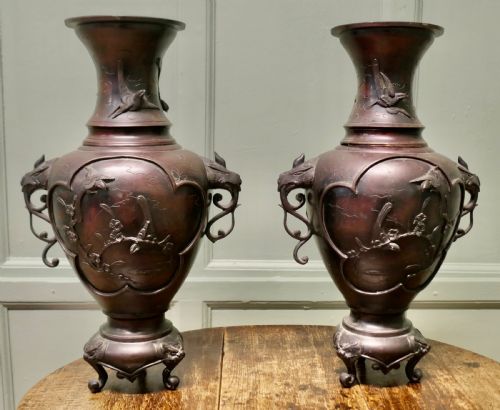
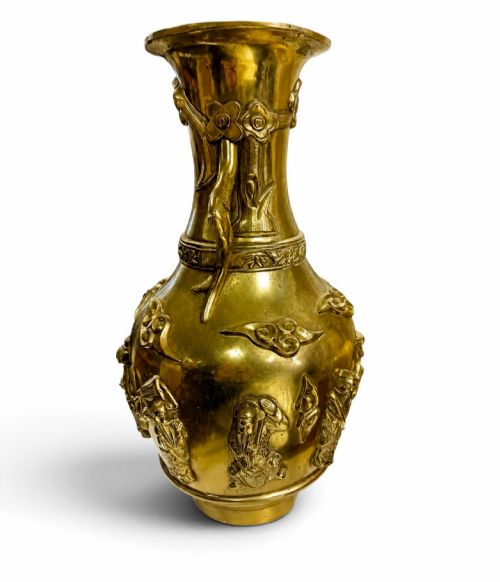
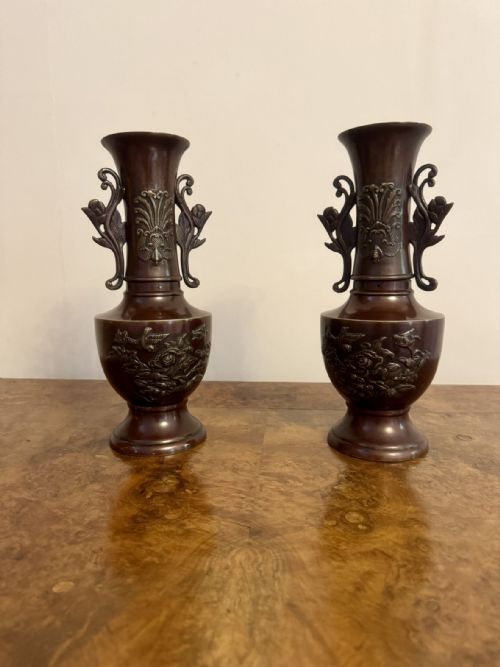
The objects take the form of baluster vases, jardinieres, incense burners, and wall panels, featuring raised ornamentation that stands proud of the main body. The most common examples on this page are Japanese bronze vases and jardinieres decorated with birds, blossom, and dragons.
Peculiarities in classification mean items such as stem vases, ewers, and planters frequently share this functional space. Each shares a sculptural emphasis where the surface decoration provides tactile depth and narrative detail.
Materials and construction methods
The construction of these pieces relies heavily on metal casting, particularly bronze and copper-alloys shaped through lost-wax or mould methods. Artisans then worked the cooled metal surfaces by hand, chiselling and carving the details to achieve high-relief depictions of figures, flora, and fauna.
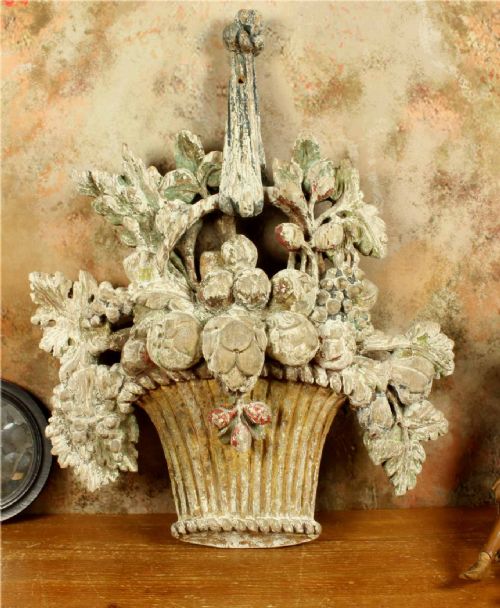
Ceramic examples employ red clay and stoneware, moulded or thrown before receiving carved or applied elements prior to firing. Wood items utilise traditional carving techniques on dense panels to produce deep floral wall relief work.
Patination and enamel additions complete the surface treatment on many metal vessels, adding colour contrast and protecting the underlying alloy from oxidation.
Listings feature nineteenth-century bronze, stoneware, and wood pieces originating from Japanese Meiji workshops and European Grand Tour traditions.
Distinctions in quality
Quality in these vessels rests upon the crispness of the surface modelling and the depth of the carving. Superior items display undercut relief work where figures and foliage detach visually and physically from the background plane, showing complete control by the artisan.
Weight serves as another indicator, as denser metal castings require more material and skilled handling during the initial pour. The integration of signed bases, maker marks, or detailed subsidiary elements like twin-dragon handles and goat finials elevates certain pieces above standard decorative wares.
Mougin
The Relief Carved Urn Glossary
- Meiji Period
- The era in Japanese history spanning from 1868 to 1912. Metalwork from this timeframe is noted for exceptional bronze casting and intricate surface carving.
- Baluster
- An architectural form resembling a urn or vase with a rounded body tapering down to a narrow base and foot. It provides the foundational silhouette for many decorative vessels.
- Jardiniere
- A large ornamental pot or stand designed to hold growing plants or flower arrangements. These items often feature heavy relief ornament around the exterior body.
- Grand Tour
- A traditional trip through Europe undertaken by upper-class young men during the nineteenth century. Souvenirs collected included classical bronze urns and architectural vases.
- Koro
- A traditional Japanese incense burner typically featuring a pierced lid and three or more feet. They frequently incorporate animal finials upon the cover.
Relief Carved Urn: Frequently Asked Questions
How do I date a bronze urn?
Dating relies on stylistic markers, manufacturing techniques, and any accompanying reign or maker marks stamped into the base. Nineteenth-century pieces often exhibit distinct patination and specific cultural motifs tied to the Meiji period or Chinese dynasties.
Examining the weight, interior casting seams, and tool marks helps confirm the period of manufacture.
Where were these pieces made?
The inventory here originates principally from East Asia, particularly Japan during the Meiji era and China, alongside European workshops in Italy and France. Japanese bronzes dominate the selection, reflecting international trade and taste during the late nineteenth century.
European pieces often reflect classical revival styles connected to the Grand Tour tradition.
How should I care for bronze?
Bronze requires minimal intervention to preserve its historic surface and natural patination. Dusting with a dry, soft cloth prevents particulate buildup without disturbing the protective layer.
Avoid chemical polishes and abrasive cleaners, which strip away centuries of oxidation and diminish the definition of the carved relief.