
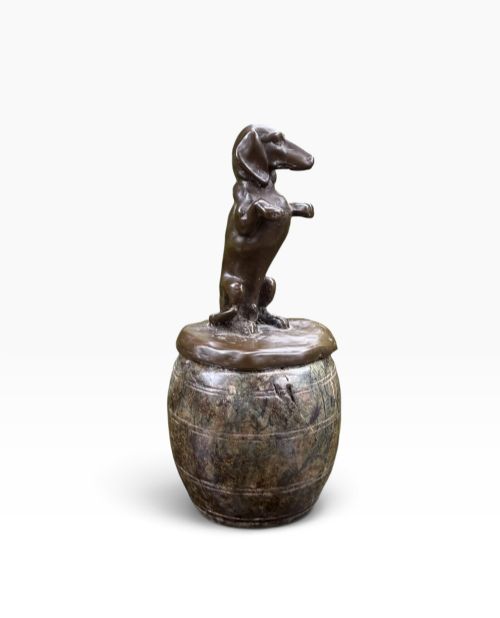
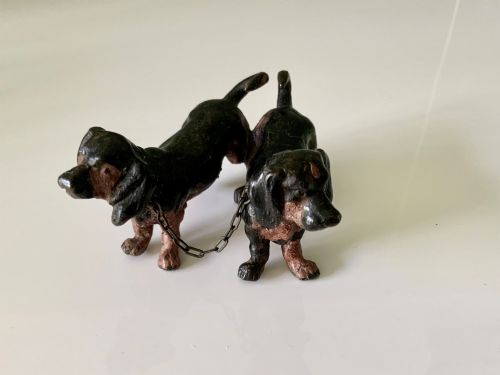
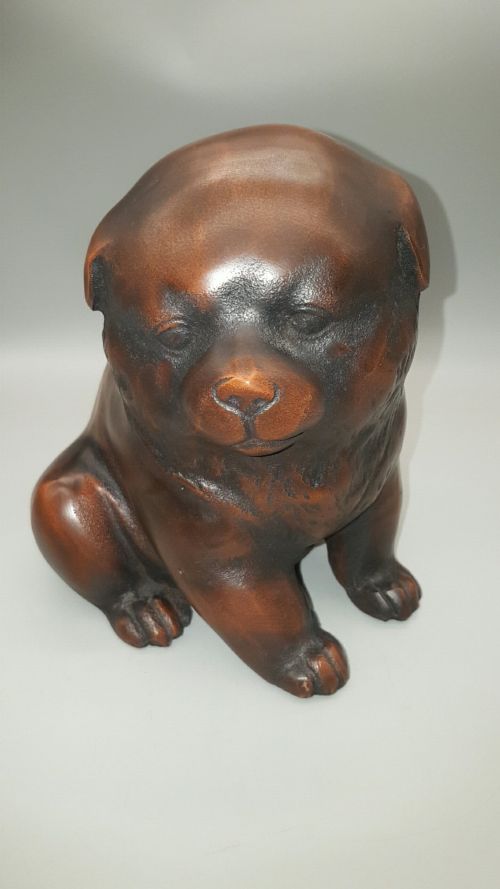
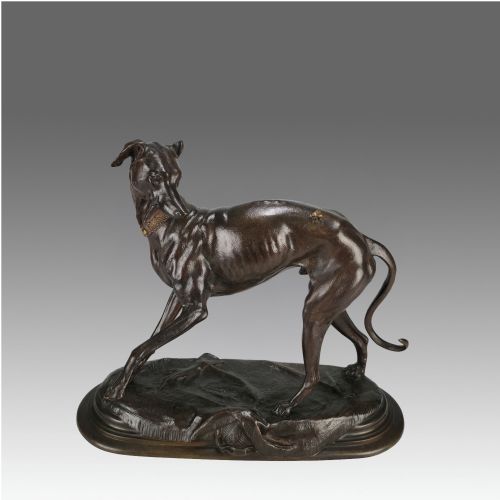
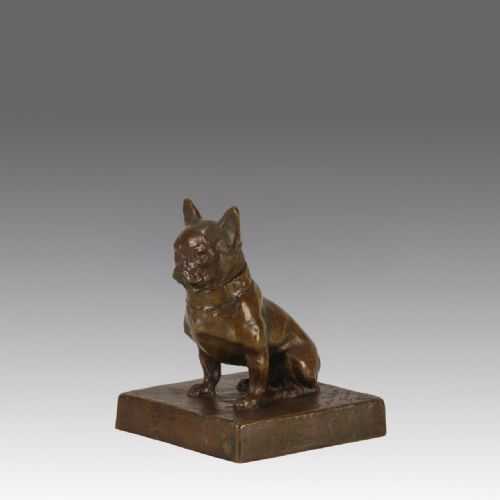
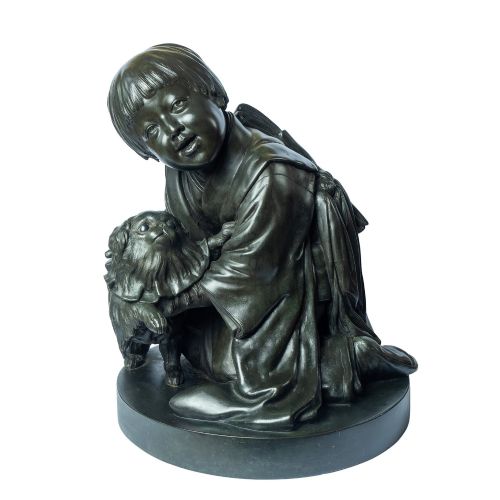


Cast Bronze Dog Ornament
These cast bronze dog ornament examples range from compact Victorian paperweights to substantial French animalier sculptures, bringing domestic character to desks and mantelpieces.
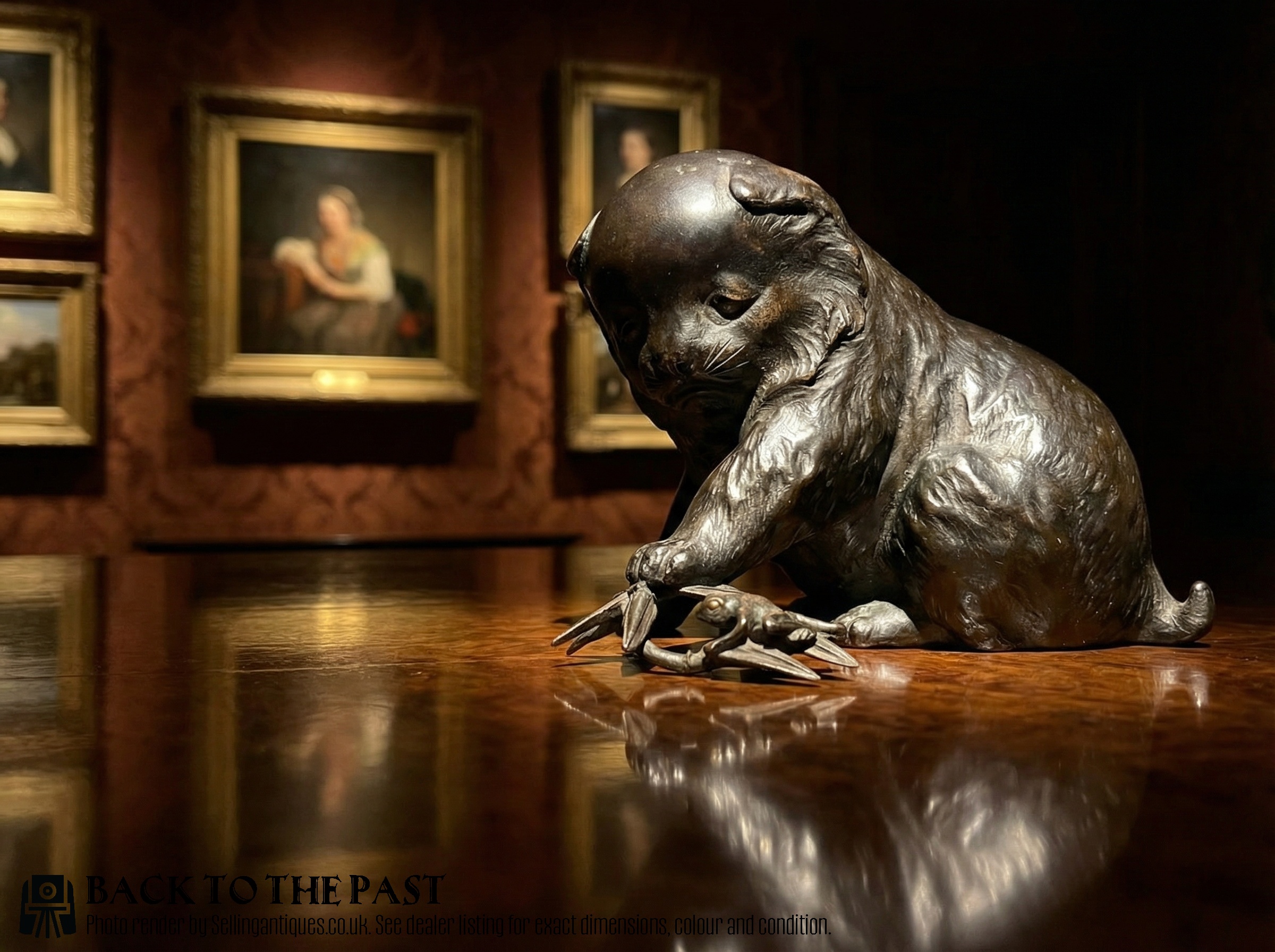
Cast Bronze Dog Ornament
When searching for a cast bronze dog ornament, buyers encounter sculptural studies, inkwells, paperweights and small statuary depicting hounds, terriers, pugs and sporting dogs. The majority originate from nineteenth and early twentieth century European and Japanese workshops.
The assortment on this page includes realistic hunting dogs, playful puppies and stylised animalier figures cast in bronze, patinated bronze and brass. Many pieces function as decorative ornaments while others serve practical uses such as inkwells, match holders or car mascots.
French animalier schools and Meiji period Japanese foundries dominate the available selection, ranging from miniature desk figures to large fireside statues. Each piece captures specific canine anatomy and posture through metal casting techniques.
How they were made
Foundries utilised the lost wax casting method or sand casting to capture fine details in bronze, brass and patinated metal. Molten alloy filled moulds carved or modelled from clay originals.
Surface finish varied through chemical patination, cold painting with polychrome pigments, or hand polishing. Some pieces incorporate marble bases or glass eyes to enhance the sculptural realism.
Cast Bronze Dog Ornament Retail Price Guide 2026
Typical asking prices for cast bronze dog ornament among the pieces listed under this phrase on Sellingantiques today, from the lower quarter to the upper quarter. They describe what is for sale here now, not the wider market.
Listings feature pieces from the Victorian era through the early twentieth century, utilising bronze, patinated bronze, brass and marble.
What varies in quality
The refinement of the casting defines the quality of a cast bronze dog ornament, distinguishing sharp muscle definition and fur texture from soft, worn details. Superior examples retain crisp tooling and clean chasing left by the metalworker.
Original surface treatments determine visual merit, particularly the preservation of cold painted polychrome colours or rich patination. The skill of the modeller and the prestige of the foundry or signed artist elevate individual sculptures.
Alfred Barye·Dora Heber·Masaaki·Jules Moigniez·Edith Parsons·Arthur Waagen·Joseph Francois Victor Chemin·Louis Riche·Dubucand·Barbedienne·L. Bureau
The Cast Bronze Dog Ornament Glossary
- Animalier
- A nineteenth century artistic movement focused on the realistic depiction of animals, particularly in bronze sculpture. Practitioners studied anatomy directly from life.
- Cold painted bronze
- A technique where bronze sculptures are painted with polychrome oil or enamel colours without firing. These pigments remain delicate over time.
- Okimono
- A Japanese decorative figurine designed for display on a traditional tokonoma alcove or cabinet. Many depict animals cast in bronze during the Meiji and Showa periods.
- Patinated bronze
- Metal treated with chemical solutions to produce a specific surface colour, ranging from deep brown to verdigris green. This coating protects the underlying alloy.
- Lost wax casting
- A method of metal casting where a wax model is melted from a mould and replaced with molten bronze. It permits intricate undercut details.
Cast Bronze Dog Ornament: Frequently Asked Questions
What is an animalier dog bronze?
An animalier dog bronze is a nineteenth century sculpture created by artists who specialised in realistic animal studies. These pieces focus on accurate proportions, muscular tension and naturalistic poses.
French foundries produced many of these works, capturing sporting dogs and hounds in moments of rest or action.
Were these dog figures used as desk accessories?
Many bronze dog sculptures doubled as functional desk items such as inkwells, stamp boxes or paperweights. Jewel boxes and desk sets incorporated cast dog figures into their lids and mounts.
Victorians appreciated practical items that combined utility with sculptural ornamentation.
How should I clean a bronze dog ornament?
Dust bronze ornaments gently with a soft dry brush to protect the original patination and any cold painted details. Avoid commercial metal polishes that remove historic surface oxidation.
Applying a very light coat of microcrystalline wax can help preserve exposed bronze surfaces from moisture.