
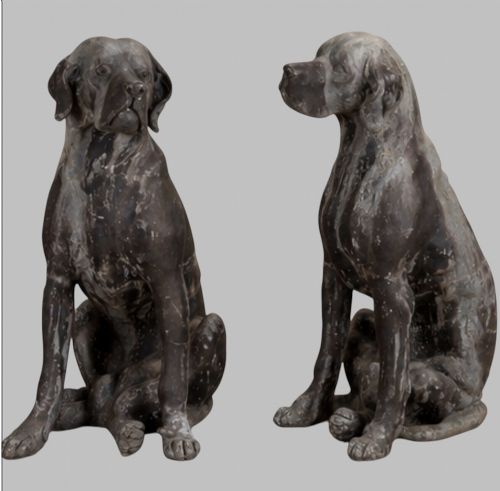


Hunting Dog Statue
These bronze, porcelain and earthenware figures capture the muscular tension of a hunting dog statue, ready to anchor a study or a mantelpiece.
Hunting Dog Statue
A hunting dog statue brings the realism of the field into the domestic interior, taking the form of hounds, setters, greyhounds and spaniels. These figures emerge from the nineteenth century through the art deco period, moving from cabinet figurines to substantial garden ornaments.
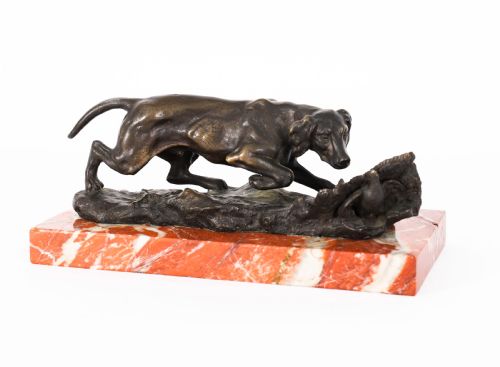
The materials span cast bronze on marble plinths, glazed earthenware, and delicate porcelain. Many examples follow the French animalier tradition, depicting working dogs pausing with game or resting beside their handlers.
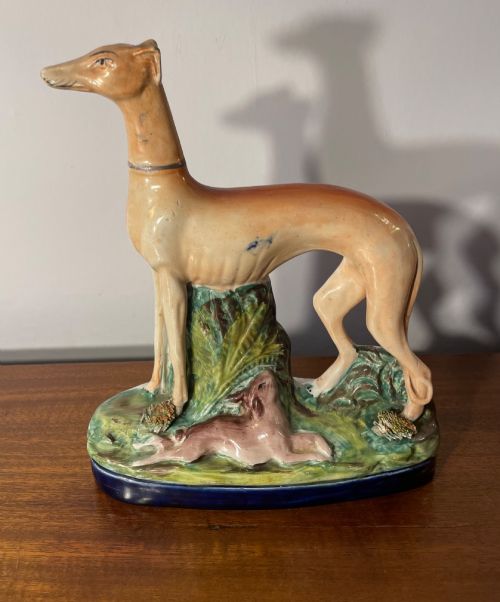
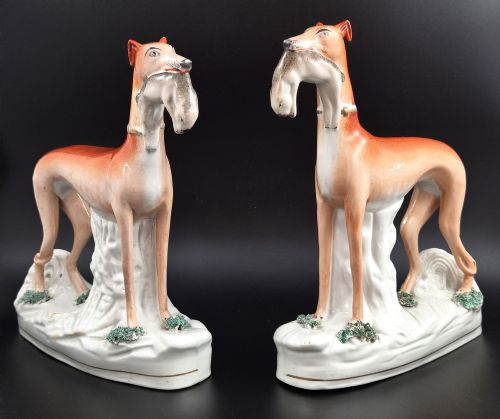
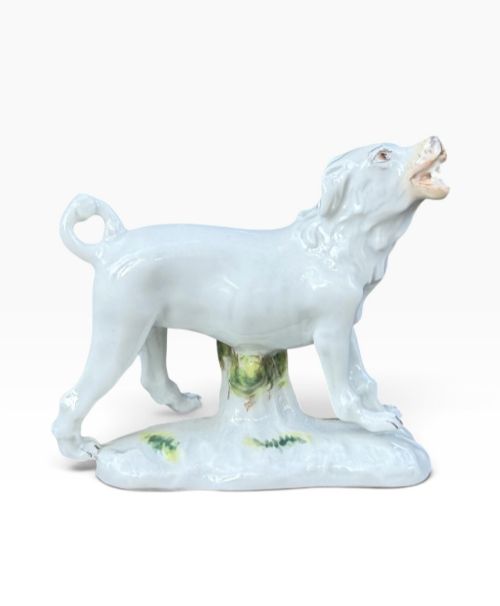
Staffordshire pairs and German porcelain models sit alongside heavy bronze groups cast in Paris. Buyers encounter everything from small cold painted bronzes to life-size cast lead hounds.
How They Were Made
Bronzes rely on the lost-wax casting method, capturing every muscle and curl of fur before being finished with dark patination or cold painting. Marble and onyx bases provide a heavy, stable foundation for these metal sculptures.
Ceramic examples combine earthenware and porcelain bodies with detailed enamel paints and glossy glazes. Staffordshire potters moulded greyhounds and gundogs in two parts before hand-painting the markings.
Lead and cast iron figures use heavy sand moulds for outdoor placement, enduring the elements while retaining sharp anatomical detail.
Several hounds carry hares or pheasants in their mouths, bringing a touch of the pheasant shoot right onto the mantelpiece.
What Varies in Quality
The precision of the casting determines the clarity of muscle structure, paw placement and facial expression in metal figures. Finer bronzes retain crisp chisel work on the fur, whereas weaker casts lose detail in the softer contours.
Ceramic quality depends on the sharpness of the press-mould and the control of the glaze or enamel colours. Careful hand-painting brings depth to the eyes and coat, distinguishing master factory output from simpler utilitarian pieces.
Carl Kauba·Jules Moigniez·Auguste Nicholas Cain·Christophe Fratin·Pierre-Jules Mêne
The Hunting Dog Statue Glossary
- Animalier
- A nineteenth-century movement dedicated to the realistic sculpture of animals. Practitioners focused on capturing natural movement and anatomical accuracy.
- Cold painted bronze
- A technique where bronze figures receive paint layers that are not fired in a kiln. This finish is delicate and susceptible to flaking over decades.
- Spelter
- A zinc alloy used as a cheaper alternative to bronze, particularly during the art deco period. It takes a bronze-like metallic finish easily but possesses a lighter weight.
- Blanc de chine
- A white porcelain glaze originating in China and later adopted by European potteries. It highlights the clean lines of monochrome animal figures.
- Patina
- The surface sheen and colour developed by bronze over time through handling and oxidation. Original patination adds depth to nineteenth-century metalwork.
Hunting Dog Statue: Frequently Asked Questions
How do I clean a bronze hound?
Dust the surface regularly with a soft, dry brush to prevent dirt accumulation in the crevices. Avoid chemical cleaners that can strip the original patina.
Apply a very thin coat of microcrystalline wax if the metal appears dry, buffing it gently with a clean cloth.
Are these figures solid bronze?
Many nineteenth-century animalier sculptures are cast in solid bronze, often mounted on heavy marble or onyx bases. Some larger or hollow casts use bronze over an internal core.
Alternative materials like spelter appear in art deco pieces, offering a similar appearance with lighter weight.
Where were Staffordshire dogs placed?
Victorian Staffordshire greyhounds and spaniels traditionally sat on either side of a fireplace mantelpiece. They faced inward toward the hearth as comforting domestic companions.
Larger pairs occasionally stood on hearthrugs or flanked doorways in English country houses.
How do I spot a reproduction?
Examine the weight, the crispness of the casting and the quality of the base materials. Modern copies often lack the sharp anatomical detail and natural wear patterns found in nineteenth-century works.
Check for signature placement and casting marks associated with known animalier sculptors or period factories.