



Antique Sporting Dog Bronze
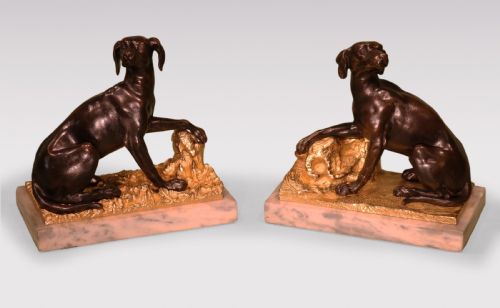
These antique sporting dog bronze figures capture hounds, setters, and gundogs in spirited metalwork that brings nineteenth-century field sports straight into your study.
Antique Sporting Dog Bronze
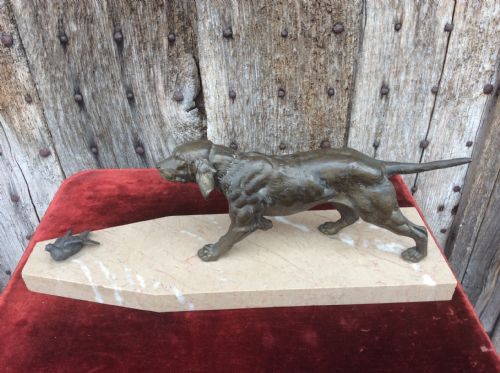
An antique sporting dog bronze represents working hounds, setters, and gundogs engaged in the field, often flushing game or standing over birds. These sculptures emerge primarily from the nineteenth-century animalier movement, reflecting a Victorian fascination with faithful animal anatomy and outdoor pursuits.
The versions most commonly met on this page date from the nineteenth century, including works attributed to French animalier sculptors. They frequently combine patinated bronze with marble or onyx plinths, capturing dogs alongside pheasants, rabbits, and hunted game.
Makers working in France and Britain during this period produced these tabletop and fireside figures using traditional foundry methods. Collectors find everything from unsigned French fireside statues to signed cabinet bronzes by prominent nineteenth-century modellers.
How they were made
Foundries produced these sculptures using the lost-wax casting method or sand casting, capturing the muscular tension and layered coats of working dogs in molten metal. Artisans then applied chemical patination to the bronze surfaces, achieving deep brown, black, or variegated tones that mimic natural fur.
Many figures integrate secondary materials such as ormolu highlights, cold-painted enamel details, or heavy marble and onyx plinths to anchor the composition. Base mounts frequently utilise contrasting stone or cast iron, providing stability and visual weight to the dynamic hunting scenes.
Antique Sporting Dog Bronze Retail Price Guide 2026
Typical asking prices for sporting dog bronze among the pieces listed under this phrase on Sellingantiques today, from the lower quarter to the upper quarter. They describe what is for sale here now, not the wider market.
Several dogs share their bronze platforms with surprisingly defiant rabbits.
What varies in quality
The fidelity of the casting dictates the artistic merit of the piece, separating crisp, sharply defined musculature and expressive fur from soft, derivative reproductions. Superior examples preserve the delicate chiselling and hand-finishing executed after the metal cools in the foundry.
The sophistication of the composition and the reputation of the modeller define the upper tier of the market, distinguishing workshop output from signed master bronzes. The integration of the plinth, whether sculpted marble or polished onyx, further separates standard decorative pieces from ambitious sculptural groups.
Jules Moigniez·Delabrierre·Auguste Nicholas Cain·p j mene
The Antique Sporting Dog Bronze Glossary
- Animalier
- A nineteenth-century artistic movement dedicated to the realistic portrayal of animals, particularly wild beasts and hunting dogs in action. Sculptors in this tradition focused on anatomical precision and observed behaviour.
- Lost-wax casting
- A traditional manufacturing method where a master model is encased in wax, melted out, and replaced with molten bronze. This technique allows for intricate details such as fur texture and facial expressions.
- Patinated bronze
- Metal treated with chemical solutions to produce a specific surface colour or aged finish. Dark browns and greenish tones protect the metal while enhancing visual depth.
- Ormolu
- Gilded bronze ornamentation applied to highlight specific details or mounts. This decorative treatment adds a bright golden contrast to darker patinated figures.
- Cold-painted bronze
- A technique where enamel paint is applied to a finished bronze sculpture without subsequent firing. This method delivers lifelike colours to subjects like birds and dogs.
Antique Sporting Dog Bronze: Frequently Asked Questions
What is an animalier bronze?
An animalier bronze is a nineteenth-century sculpture focused on realistic depictions of animals, particularly dogs, horses, and wildlife in natural or sporting poses. These works emphasise accurate anatomy and observed movement.
Artists working in this genre often captured dramatic narratives, such as a hound pointing a pheasant or retrieving game in the field.
Are these figures signed?
Many nineteenth-century bronzes carry signatures or foundry marks inscribed directly into the base or plinth during the casting process. Signatures indicate the modeller who designed the original clay or wax sculpture.
Unsigned pieces are also common, representing quality foundry production without bearing the specific name of a well-known animalier artist.
Where were these sculptures displayed?
Original owners placed these sporting bronzes on library desks, mantelpieces, and dedicated display cabinets within nineteenth-century homes. Larger examples served as fireside ornaments or heavy tabletop decorative groups.
Today, they suit similar interior settings, anchoring studies, hallways, and living spaces with traditional sporting character.