

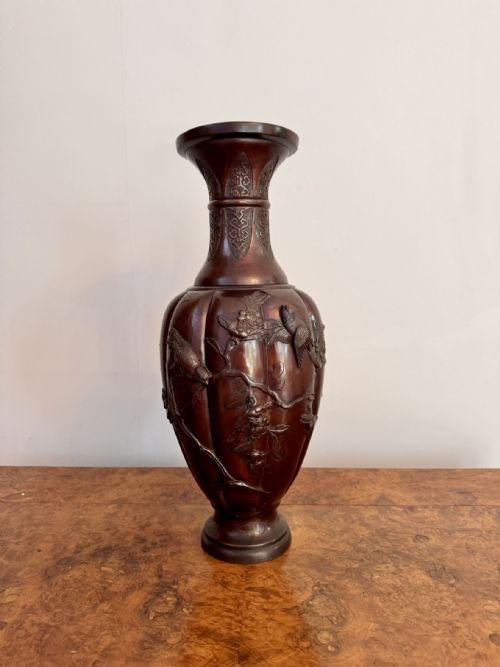


Cast Bronze Bird Urn
These cast bronze bird urn vessels and decorative vases bring substantial weight and intricate metalwork to a room.
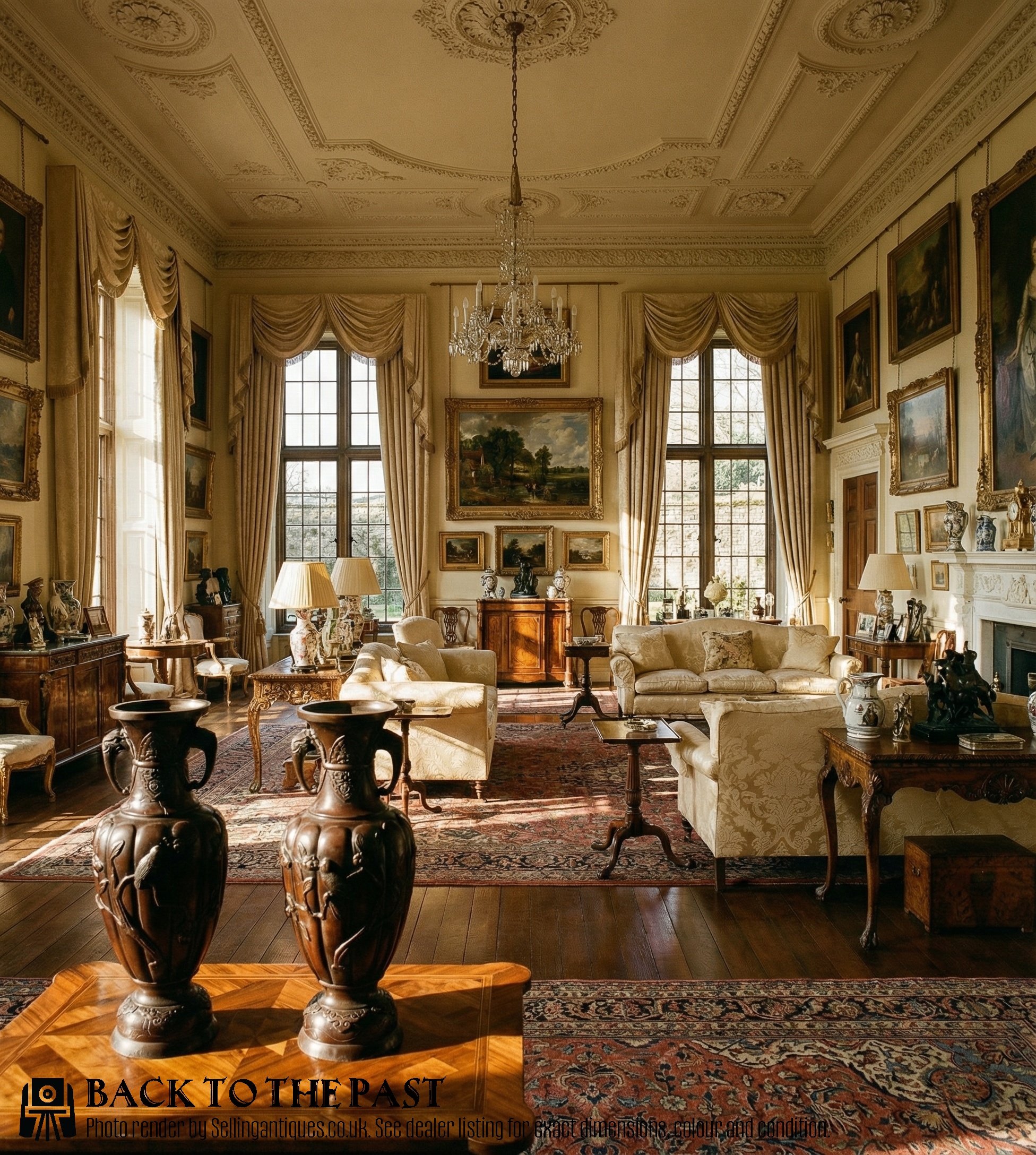
Cast Bronze Bird Urn
When you search for cast bronze bird urn, you are looking at substantial metal vessels originating from the nineteenth century, including Victorian interpretations and pieces from the Meiji period and Qing dynasty. The examples you are most likely to meet on this page take the form of large ornamental urns, jardiniere planters, altar vases, and decorative stem vases.
The aesthetic bridges several distinct cultural traditions, spanning Japanese Meiji period design and Grand Tour decorative arts. Makers utilised bronze predominantly, alongside black marble and brass, creating substantial objects that function as focal points in a room.
Materials and construction methods
The pieces rely on cast bronze, often worked with considerable precision to form complex decorative vessels, lidded urns, and jardinieres. Workshops combined this heavy metal base with secondary materials like black marble and brass to add contrast and structural support.
Surface finishing involved patination and detailed casting techniques that allowed makers to achieve high relief ornamentation. These methods resulted in durable objects designed to withstand daily placement on altars, surfaces, and pedestals.
Cast Bronze Bird Urn Retail Price Guide 2026
Typical asking prices for cast bronze bird urn among the pieces listed under this phrase on Sellingantiques today, from the lower quarter to the upper quarter. They describe what is for sale here now, not the wider market.
Distinctions in quality
The level of detail in the casting separates standard production from exceptional work, particularly in the sharpness of relief work and the finish of the bronze surface. Larger pairs often demonstrate superior handling of proportions and weight distribution.
Design consistency across matched pairs also determines the calibre of an item, alongside the integration of secondary materials such as black marble bases. Well-preserved patination contributes significantly to the visual presence of each vessel.
The Cast Bronze Bird Urn Glossary
- Meiji Period
- A span of Japanese history lasting from 1868 to 1912 characterised by distinct decorative arts exported to Western markets. Pieces from this era often feature detailed bronze casting and specific cultural motifs.
- Grand Tour
- A nineteenth-century tradition where travellers collected souvenirs across continental Europe. Items in this manner draw upon classical antiquity and European design tropes.
- Jardiniere
- A large ornamental pot or receptacle designed to hold plants or flowers. In bronze, these heavy vessels serve as standalone decorative objects.
- Altar Vase
- A ritual vessel used in religious settings, frequently cast in bronze in pairs. These objects possess a formal symmetry and substantial weight.
- Patina
- The surface appearance acquired by bronze through age and chemical treatment. A stable patination protects the metal and defines its colour.
Cast Bronze Bird Urn: Frequently Asked Questions
How do I display a heavy bronze urn?
Place these substantial pieces on sturdy furniture such as sideboards, heavy tables, or dedicated pedestals that can support their weight. Ensure the surface is level and protected if the metal base is unlined.
Position them away from high-traffic areas where they might be accidentally knocked, allowing the patination and casting details to catch the light.
Are these vases waterproof?
Most antique bronze vessels and jardinieres were created as decorative ornamental objects rather than functional planters. Using them directly with water can damage the interior surface and historical patination.
Insert a separate glass or plastic container inside the vessel if you wish to display fresh stems or water plants safely.
How do I clean antique bronze?
Dust the surface regularly with a soft, dry cloth to prevent particulate buildup in the recessed areas of the casting. Avoid harsh chemical cleaners or abrasive polishes that strip the historical patina.
Consult a specialist conservator if the bronze requires deeper cleaning or stabilisation to preserve its surface integrity over time.
How do I date a bronze vase?
Examine the casting quality, style, and materials used in the construction, referencing periods such as the Victorian era, Meiji period, or Qing dynasty. Subtle variations in surface finish and manufacturing marks often provide clues to the decade of origin.
Compare the proportions and decorative motifs against documented examples from the same cultural tradition to narrow down the timeframe.