
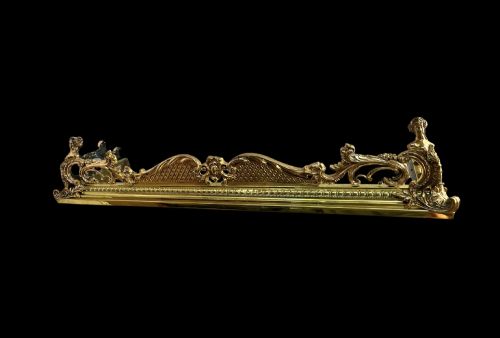


Cast Brass Hearth Fender
When you search for a cast brass hearth fender, you are looking for a substantial metal guard that frames an open fire.
Cast Brass Hearth Fender
A cast brass hearth fender sits on the floor directly in front of an open fireplace to contain embers and protect the room. The selection here spans the Victorian and Edwardian periods, stretching from the mid-nineteenth century into the early twentieth.
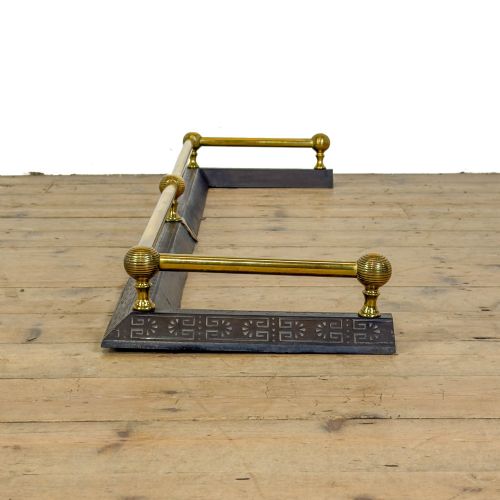
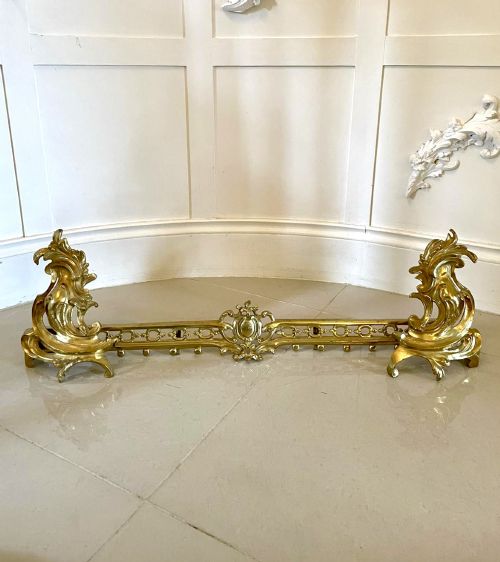
Most examples take the form of standard or extending fire guards, though club fenders and fire kerbs also appear. Makers drew on diverse stylistic traditions, ranging from French Rococo and Louis XV to Grand Regency and Art Nouveau.
These guards utilise heavy metals to anchor the fireplace surround. They function as both practical hearth accessories and decorative centrepieces for period rooms.
How they were made
Foundries cast brass, bronze, cast iron and steel into ornate rails, kerbs and scrolling corner mounts. Many pieces combine cast brass with heavier iron or steel frames to provide structural weight.
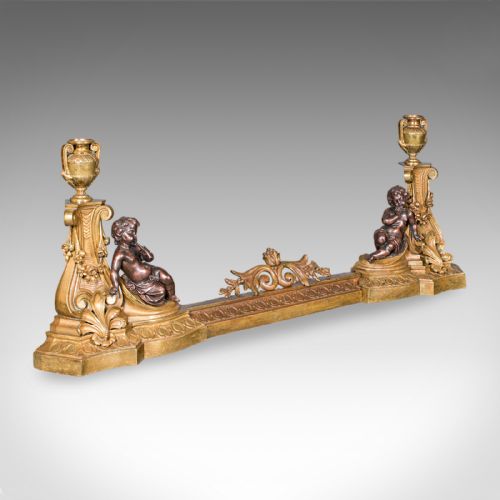
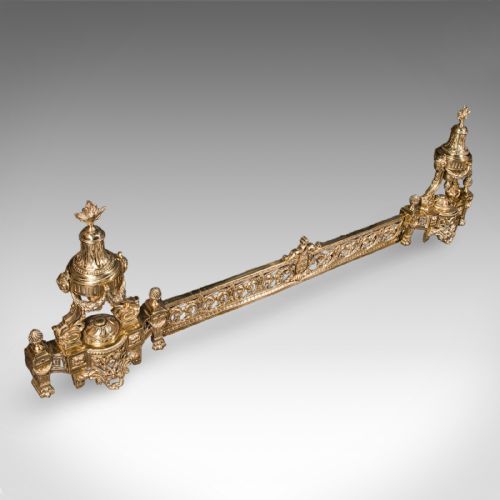
Some examples feature gilded brass or gilt bronze surfaces, adding a bright metallic finish to the cast components. Artisans applied decorative details such as cast garlands, lions and intricate scrollwork directly onto the metal framework.
Some heavy steel club fenders originated in gentleman's establishments like The In & Out Club, designed to keep members warm by the hearth.
What varies in quality
The weight of the metal gauge determines the foundational substance of each piece, distinguishing heavy, solid castings from lighter assemblies. Heavier guards provide greater stability on the hearth floor.
The crispness of the casting detail separates standard production from finer work. Deeply chased scrolls, well-defined garlands and robust extending mechanisms reflect greater care during manufacture.
The Cast Brass Hearth Fender Glossary
- Cast brass
- Molten brass poured into a mould to create solid decorative components. This technique allows for intricate relief patterns on hearth accessories.
- Fire kerb
- A low metal barrier placed around the hearth opening. It acts as the primary boundary for containment of coal and ash.
- Club fender
- A low-seated hearth guard incorporating upholstered top rails. This form provides a warm resting place close to the fire.
- Gilt bronze
- Bronze coated with a thin layer of gold or gold-coloured alloy. The technique enhances the visual richness of decorative metalwork.
- Extending fender
- A metal guard with adjustable side sections. This design allows the frame to fit various fireplace widths.
Cast Brass Hearth Fender: Frequently Asked Questions
What is a cast brass hearth fender?
A cast brass hearth fender is a protective metal barrier placed on the floor in front of an open fireplace. It holds loose coals and prevents sparks from reaching the carpet.
These pieces use heavy cast metals to anchor the hearth area while adding decorative detail to the room. They appear in various nineteenth-century styles, from simple adjustable rails to ornate Rococo designs.
How do I choose the right size?
Check the width of your fireplace opening before selecting a fender. Many period examples feature adjustable frames that expand to fit different hearth dimensions.
Fixed models require exact measurements of the hearth space to ensure proper placement. Consider the depth of the guard alongside the width to ensure it matches your fireplace proportions.
What materials are used besides brass?
Many fenders combine cast brass with iron or steel components. Iron and steel often form the internal frame or base for added weight and structural strength.
Some pieces incorporate bronze or feature gilded surfaces. These mixed metal constructions provide both durability and varied decorative finishes.
How do I clean an antique fender?
Dust the metal regularly with a soft, dry cloth to prevent dirt accumulation. Avoid harsh chemical cleaners that can strip historic patination or damage gilt surfaces.
For brass components, gentle cleaning preserves the metal's natural tone without removing its age. Take care around upholstered sections if you own a club fender style.