


Polished Brass Kerb
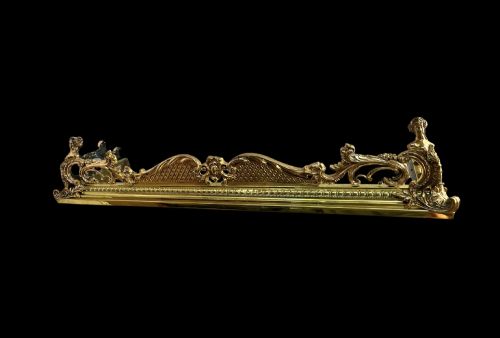
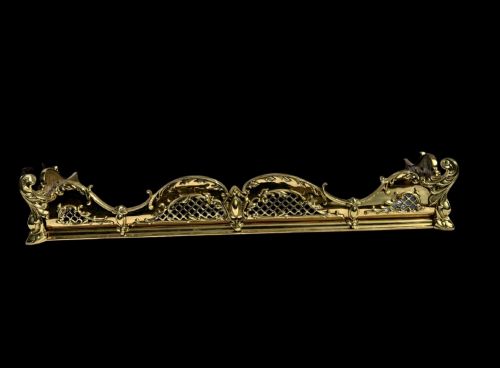
A polished brass kerb frames the hearth with a bright metallic warmth, keeping stray embers in their place while anchoring the room.
Polished Brass Kerb
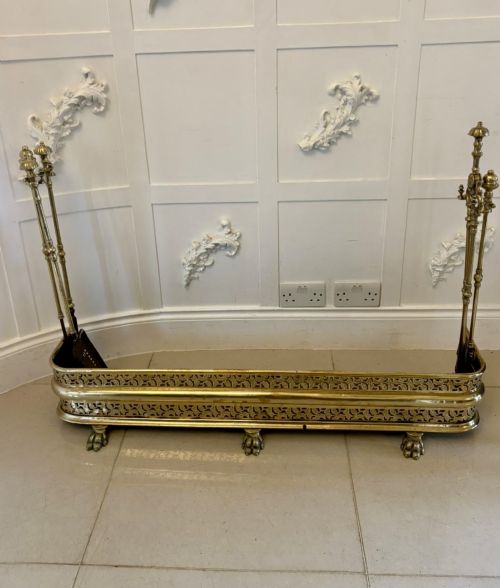
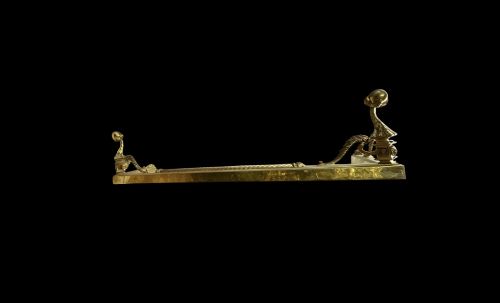
A polished brass kerb, also listed as a fireplace fender or curb fender, sits directly on the hearth to contain ash and wood while framing the fireplace opening. These pieces range from simple, linear shapes to ornate styles reflecting Regency, Victorian, Edwardian, Art Nouveau, and Art Deco periods.
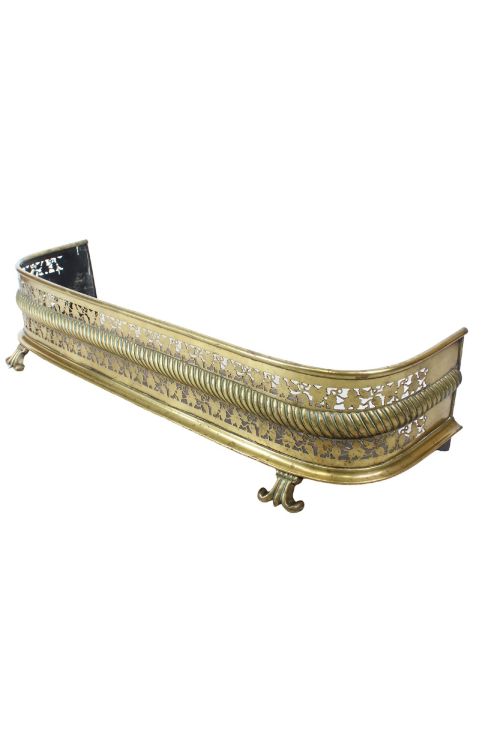
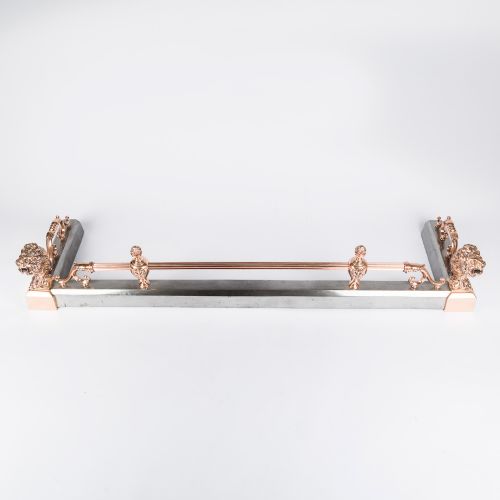
The version most commonly met on this page is the 19th-century or Victorian brass fender, often featuring pierced metalwork or extending mechanisms designed to fit varying hearth sizes. Alongside all-brass examples, many combine polished brass with steel, cast iron, bronze, or leather-topped club fender elements.
Originating as practical hearth accessories, these items often appear alongside companion pieces such as fire irons, fire guards, or fire tools. They span several decades of domestic design, accommodating both formal reception rooms and smaller hearths.
Materials and construction methods
Makers utilised brass, cast brass, and polished brass sheet alongside structural elements of steel, iron, and cast iron to build durable hearth barriers. Many examples incorporate leather upholstery on corner seats, particularly within club fender variants.
Piercing, scrolling, and casting techniques shaped the metal components, allowing workshops to produce intricate patterns from geometric pierced panels to fluid Art Nouveau plant motifs and Rococo Revival scrolls.
Some sturdy Victorian kerbs double as impromptu warming benches for chilly household pets.
Distinctions in quality and finish
Quality rests in the weight of the metal, the crispness of the pierced or cast ornamentation, and the integrity of any extending mechanisms. Heavier gauges of brass and well-executed decorative details separate robust examples from simpler functional guards.
The refinement of the polishing, the neatness of joints, and the survival of original companion pieces or integrated leather squabs further distinguish superior specimens across Georgian, Victorian, and Edwardian periods.
The Polished Brass Kerb Glossary
- Kerb fender
- A low metal barrier placed around the hearth to contain fire debris. These objects protect the floor and often incorporate seating or tool rests.
- Pierced brass
- Metal sheet perforated with decorative patterns such as lattices or foliage. This technique lightens the visual weight of the fender while allowing light through.
- Club fender
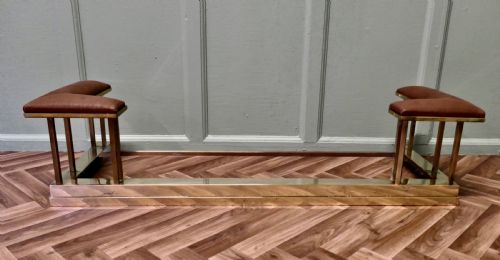
- A hearth fender featuring low upholstered seats at either end. These were traditionally used for sitting close to the fire.
- Extending fender
- A design featuring telescopic or sliding sections to adjust the width. This allowed the barrier to fit various fireplace openings.
- Fire irons
- Matching tools including pokers, tongs, and shovels used to tend the hearth. They frequently accompanied the kerb as a complete fireplace set.
Polished Brass Kerb: Frequently Asked Questions
How do I measure for a fender?
Measure the width and depth of your hearth stone where the kerb is to rest, ensuring you account for any projecting fireplace surrounds or hearth pedestals.
Check whether you need a fixed size or an extending model to achieve the correct fit against the fireplace opening.
Can these fenders be cleaned?
Polished brass can be maintained with appropriate metal cleaners to preserve its bright finish, though many prefer a mellow, aged patina.
Avoid abrasive materials that might scratch the surface or damage delicate pierced details.
What is a club fender?
A club fender incorporates leather-topped seats at the corners, allowing people to sit directly by the hearth.
They combine a sturdy metal frame with comfortable upholstered pads.
How do I date an antique fender?
Dating relies on stylistic clues such as Regency proportions, Victorian pierced motifs, Art Nouveau organic lines, or Edwardian simplicity.
Construction methods and the types of associated metals also provide clear indications of the period.