

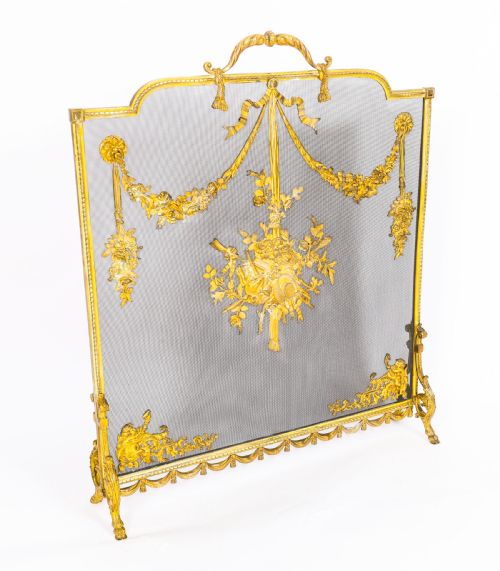
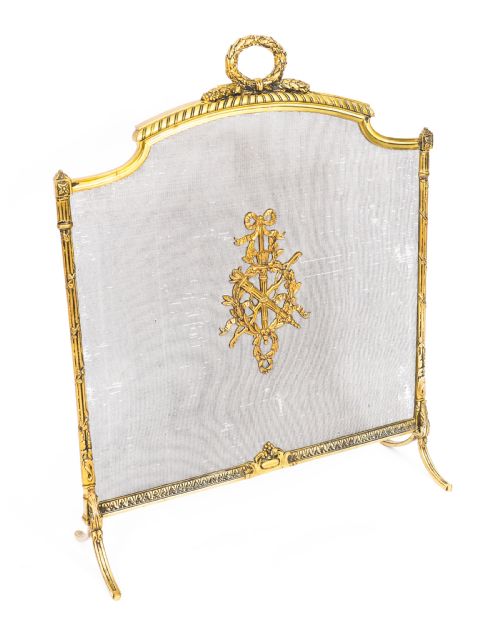


Bronze Hearth Guard
A bronze hearth guard provides a brilliant metal barrier before an open fire, keeping the room safe while framing the flames with period style.
Bronze Hearth Guard
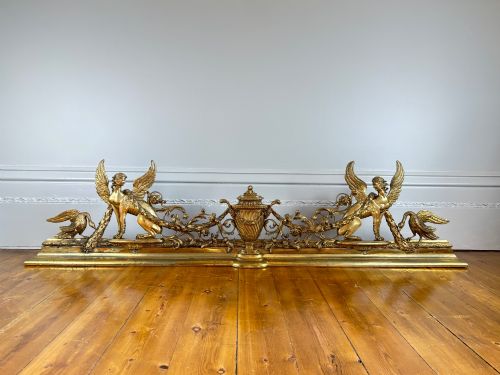
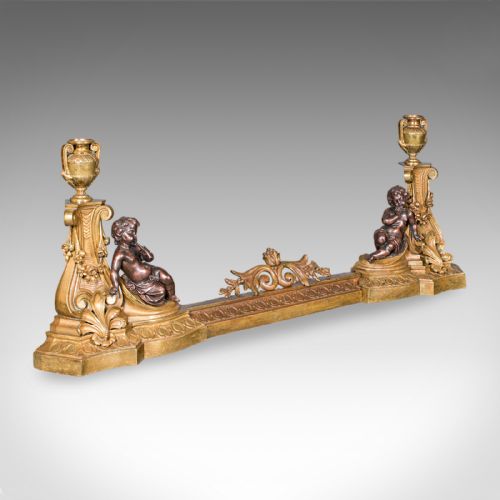
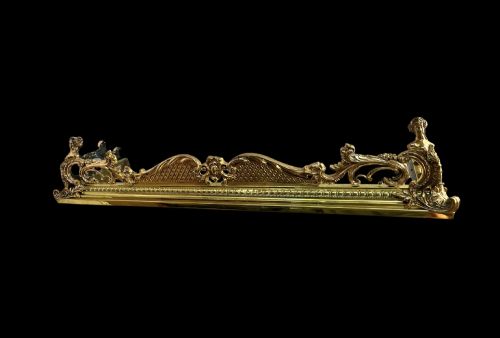
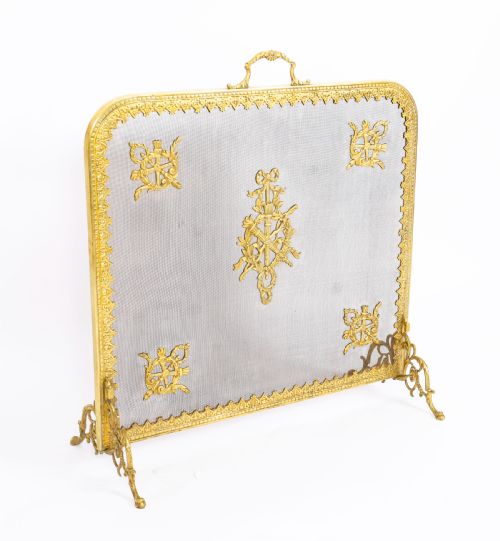
When you search for a bronze hearth guard, you are looking at substantial metalwork designed to protect a room from sparks and embers while ornamenting the fireplace. The selection spans the nineteenth century up to the early twentieth century, taking the form of fire screens, adjustable fenders, and kerbs.
The pieces you are most likely to encounter here draw heavily on French taste, including Louis XV, Louis XVI, and Empire Revival styles. These objects range from curved low guards to tall standing screens with intricate mounts and trophies.
Materials and construction
These guards are built from metals such as bronze, brass, iron, and polished steel, often enhanced with ormolu and gilt finishes. Many examples combine cast bronze mounts with iron or wire mesh to create a sturdy barrier.
Fenders and screens frequently feature adjustable components, allowing the metalwork to fit various hearth widths. Fine chasing and applied floral or musical trophies demonstrate the high level of metalworking skill employed in their creation.
Judging quality and execution
The difference between ordinary and exceptional pieces lies in the crispness of the casting and the depth of the chasing. Superior examples display sharply defined relief work on mounts and trophies rather than soft, smoothed details.
Materials also dictate the tier of the piece, with heavy gilt bronze and ormolu mounting marking out finer work compared to simpler brass and iron combinations.
E F Caldwell New York
The Bronze Hearth Guard Glossary
- Ormolu
- Gilt bronze produced by applying a finely ground high-carat gold mercury amalgam to a bronze object. It provides a rich golden surface that endures across the centuries.
- Chenet
- French term for a firedog or iron support placed horizontally in a hearth to hold logs. They frequently appear paired with fenders in period fireplace layouts.
- Fender
- A low metal guard placed around the hearth to contain coals and ash. Adjustable versions can be expanded to fit differing fireplace openings.
- Fire Screen
- A standing screen placed before the fireplace when not in use. They often incorporate glass, mesh, or solid metal panels decorated with classical motifs.
Bronze Hearth Guard: Frequently Asked Questions
What is a bronze hearth guard used for?
These guards serve a dual purpose in the domestic interior by containing sparks and preventing logs from rolling onto the floor. Beyond safety, they act as decorative centrepieces for the fireplace.
Period examples add a distinct architectural finish to a room, especially when matched with other brass and bronze fireside accessories.
How do I date a bronze hearth guard?
Dating relies on identifying the stylistic period, such as Victorian, Louis XV, or Empire Revival, along with construction methods. Nineteenth-century pieces often show hand-chased detailing and heavy cast components.
Examining the underlying iron, steel, or brass framework helps distinguish older handmade configurations from later reproductions.
Can I adjust the width of the fender?
Many period fenders were built with sliding sections to accommodate different hearth dimensions. These adjustable models allow you to alter the length securely.
Care should be taken when moving adjustable mechanisms on older metalwork to preserve the original joints and finish.
How do I care for bronze and ormolu?
Maintenance requires gentle dusting with a soft, dry cloth to prevent the buildup of grime on the metal surface. Avoid abrasive cleaners or metal polishes that can strip away historic gilding and patination.
Keeping the metal away from direct moisture helps preserve the original gilt bronze and ormolu finishes.