

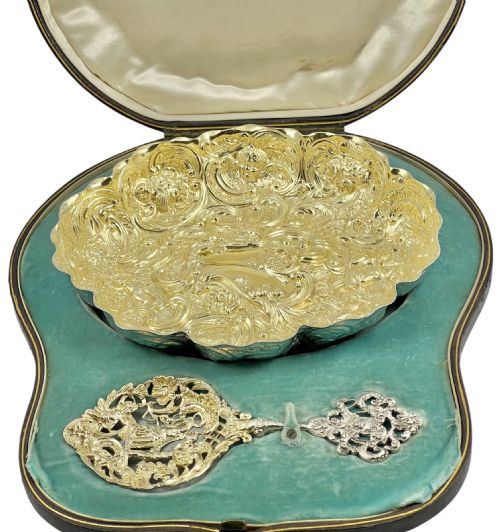


Cased Silver Sugar Set
A cased silver sugar set brings together matched spoons, tongs, bowls or jugs inside a fitted presentation box.
Cased Silver Sugar Set
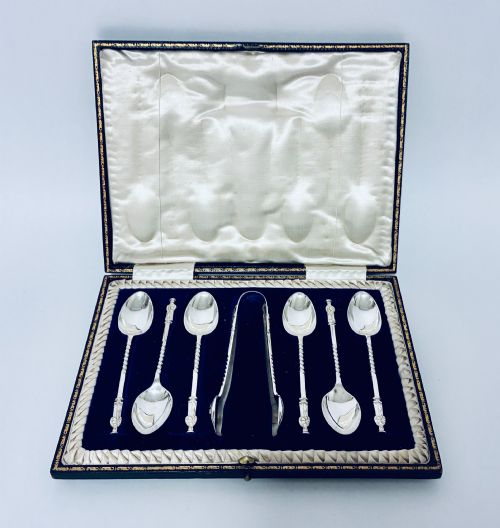
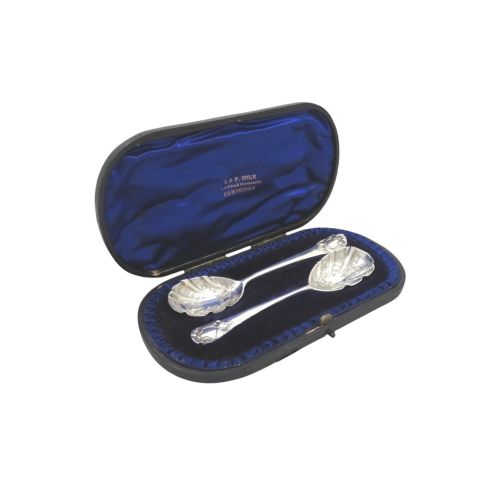
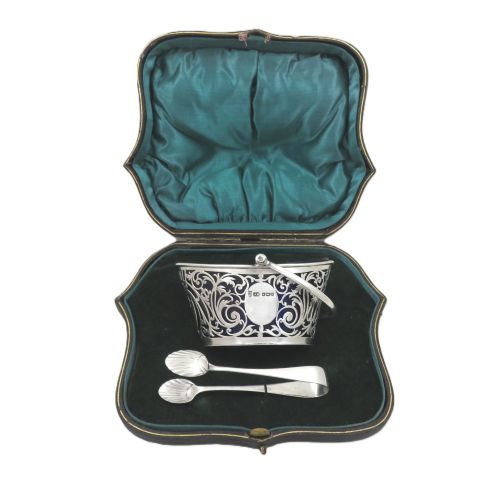
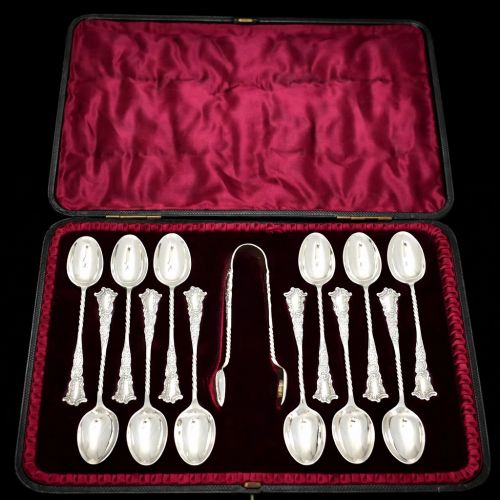
A cased silver sugar set is designed for serving sugar and preserves, frequently appearing across Victorian, Edwardian and Art Deco periods. These collections typically include teaspoons, sugar tongs, sifter spoons, berry spoons, or occasionally a sugar bowl and cream jug nestled together.
The objects originate from major British assay towns such as London, Birmingham, Sheffield, Chester and Exeter. Most examples seen on this page date from the nineteenth and early twentieth centuries, reflecting formal dining habits of those eras.
Sets range from simple tea spoon and tong combinations to larger strawberry and fruit serving arrangements complete with gilt interiors. Each grouping sits within a purpose-built housing that protected the contents when not in use on the table.
Materials and construction
Silversmiths utilised sterling silver and silver plate for the metal components, occasionally adding gold gilt to the bowl interiors for decorative contrast. The utensils are formed through traditional methods of hammering, casting and piercing.
The protective containers are constructed from materials like leather, leatherette or wood, then lined internally with velvet, satin or silk. Fitted slots inside hold each individual piece securely in place.
Listings feature sterling silver and silver plate sets spanning the Victorian, Edwardian and Art Deco eras, housed in velvet or satin-lined leatherette cases.
Factors determining quality
Quality rests upon the weight and integrity of the silver elements, alongside the precision of the fitted case interior. Complete sets retaining their original matching utensils and undamaged linings command greater interest.
The distinction between standard service items and superior examples lies in detailed craftsmanship, such as intricate pierced work on sugar baskets, apostle figures on spoon stems, or heavier gauge sterling silver.
Robert Stebbings·Harry Atkin·Robert Pringle and Sons·James Deakin and Sons·Aldwinckle and Slater
The Cased Silver Sugar Set Glossary
- Sterling silver
- An alloy consisting of 92.5 percent silver by mass, with the remainder composed of copper or other metals. This standard grade is stamped with hallmarks on British items.
- Silver-gilt
- Sterling silver that has been coated with a thin layer of gold on the surface. This technique provides a rich golden appearance to the interior of bowls and spoons.
- Sugar tongs
- Small hinged implements designed for lifting sugar lumps or loose crystals. They frequently accompany teaspoons within presentation cases.
- Leatherette
- A synthetic material mimicking the appearance of leather, commonly utilised to cover the exterior of protective presentation boxes. It offers durability and a neat finish.
- Hallmark
- A series of official marks stamped onto precious metal items in Britain. They indicate the maker, assay office, purity standard and year of manufacture.
Cased Silver Sugar Set: Frequently Asked Questions
What was a cased silver sugar set used for?
These sets served formal tea and dining rituals, providing the correct utensils for dispensing sugar lumps, loose grains or preserves. They were frequently given as wedding gifts or presentation pieces.
The fitted box allowed the collection to be stored safely in a sideboard or displayed during gatherings before being packed away securely.
How do I identify the date of a set?
Dating relies upon examining the hallmarks stamped into the silver components, which indicate the specific assay office and year letter. Stylistic clues such as Edwardian elegance or Art Deco geometry also help narrow down the period.
The exterior materials and interior lining fabrics of the case provide further contextual evidence for the era of manufacture.
Are all sets made of sterling silver?
While many examples utilise sterling silver marked with official assay stamps, others consist of silver-plated base metals. The listings include both solid silver and silver-plated variations.
Checking the hallmarks or looking for wear on plated items helps determine the exact metal composition of each piece.
How should I care for a cased set?
Silver components require occasional gentle cleaning with a suitable polish to remove tarnish without harming engraved details. The interior velvet or silk linings should be kept dry and free from moisture.
Storing the items inside their original fitted case protects them from dust and accidental surface scratches.