
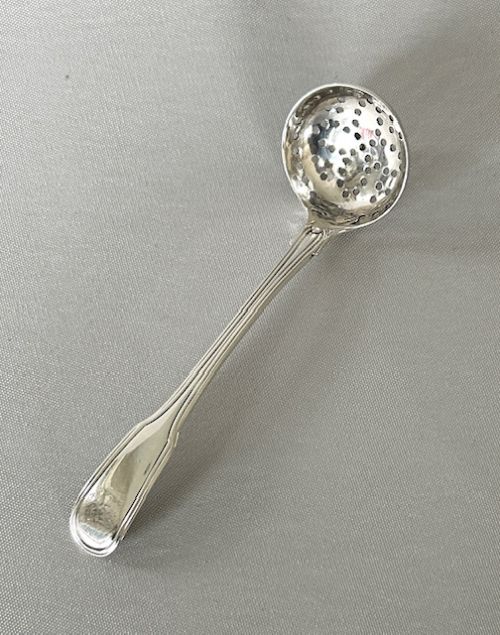
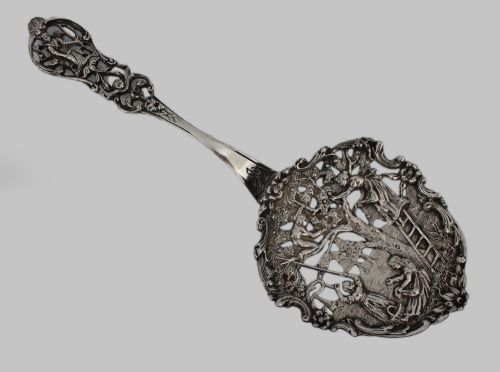
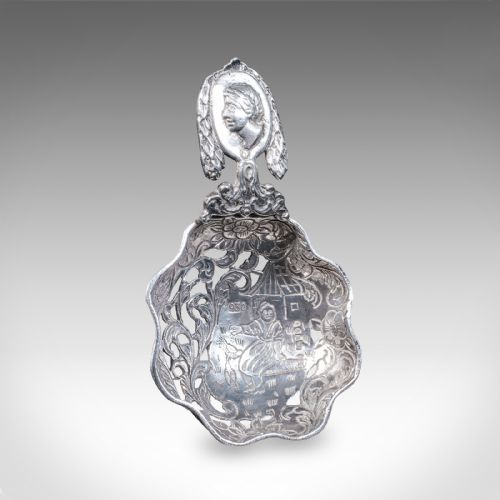


Pierced Silver Sifter Spoon
A pierced silver sifter spoon is a specialised serving implement designed to scatter sugar over food, combining functional bowl work with intricate openwork.
Pierced Silver Sifter Spoon
When you search for a pierced silver sifter spoon, you encounter tableware designed for dusting sugar onto desserts, fruit or pastry. The forms span the Georgian, Victorian and Regency periods, originating primarily from British silversmiths alongside continental imports.
The pieces on this page most commonly appear as sterling silver or silver plate utensils, occasionally accompanied by glass bowls or fitted cases. Styles range from plain Georgian and Regency designs to ornate Flemish Baroque and French Restoration patterns.
Object types closely related to the search include sugar caddy spoons, spice sifting spoons and fruit spoons. These serveware items reflect the changing dining customs of the eighteenth and nineteenth centuries.
Materials and construction
Silversmiths utilised sterling silver and silver plate for the bowls and handles, frequently applying gold gilt to the interior surfaces of the bowl. Piercing techniques created intricate patterns through carefully cut apertures designed to filter powdered sugar or spices.
Construction methods involved hammering and shaping sheet silver before piercing the design by hand or using early mechanical cutting tools. Associated items in the evidence incorporate cranberry glass, leather, velvet and silk for fitted presentation cases.
Some Victorian sifter spoons arrived paired with cranberry glass bowls, creating a striking contrast of ruby red glass and gleaming silver.
Assessing quality
Quality rests upon the crispness and precision of the pierced work within the bowl, where delicate apertures show the skill of the silversmith. Finer examples maintain structural integrity across the handle while presenting balanced proportions and clear hallmarks.
The standard of execution in the engraving and the preservation of any original gold gilt finish separate utilitarian production from superior examples. Presentation context, such as a dedicated leather and velvet lined case, further elevates the standing of a piece.
The Pierced Silver Sifter Spoon Glossary
- Hallmark
- Official marks stamped on precious metals indicating the standard of silver, the assay office, the maker and the year of production. These stamps provide a reliable method for dating British silver.
- Sterling silver
- An alloy of silver containing 92.5 percent pure silver and 7.5 percent other metals, usually copper, to increase durability. This standard has governed British silver production for centuries.
- Silver plate
- A base metal such as copper or Britannia metal coated with a thin layer of pure silver. Techniques such as Sheffield plating and electroplating made tableware accessible to a broader market.
- Gold gilt
- A thin layer of gold applied to the surface of silver objects, often used on the inside of sugar sifter bowls to protect the metal from corrosive substances. This treatment adds a rich warm tone to the interior.
- Caddy spoon
- A short-handled spoon specifically designed for measuring loose tea leaves from a caddy into a teapot. Many share similar manufacturing techniques and decorative piercing with sifter spoons.
Pierced Silver Sifter Spoon: Frequently Asked Questions
What is a pierced silver sifter spoon used for?
These spoons were designed to distribute powdered or granulated sugar over fruit, cakes and desserts during formal dining. The pierced bowl allowed excess sugar to remain in the vessel while a fine layer was scattered across the food.
They also functioned as spice sifting spoons in earlier Georgian settings before evolving into dedicated sugar casting implements during the Victorian era.
What is the difference between sterling and silver plate?
Sterling silver consists of solid metal meeting a strict legal purity standard, whereas silver plate involves a thin coating of silver bonded over a base metal core. Solid sterling items carry specific hallmarks denoting their metal content.
Plated pieces often show wear where the base metal beneath becomes visible through the silver layer over decades of use and cleaning.
How should I care for silver sifter spoons?
Maintenance requires gentle cleaning with specialist silver polish and a soft cloth to preserve the intricate pierced details without applying abrasive pressure. Avoid harsh chemical dips that can strip away patination and damage gold gilt interiors.
Storing pieces in lined cases or anti-tarnish cloth bags protects the delicate pierced bowls from bending and reduces the need for frequent polishing.