
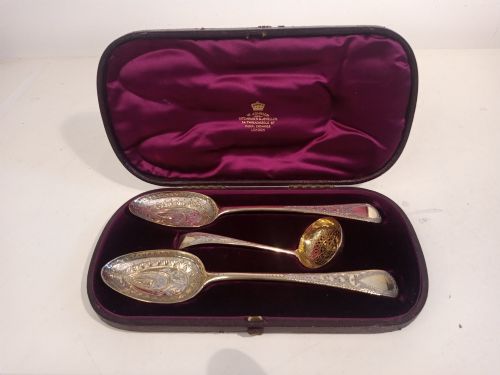


Sugar Sifter Ladle
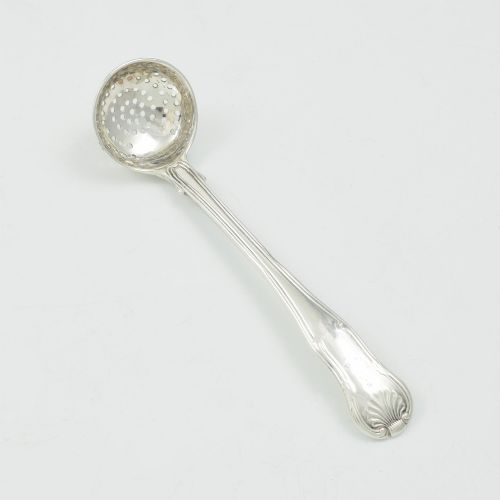
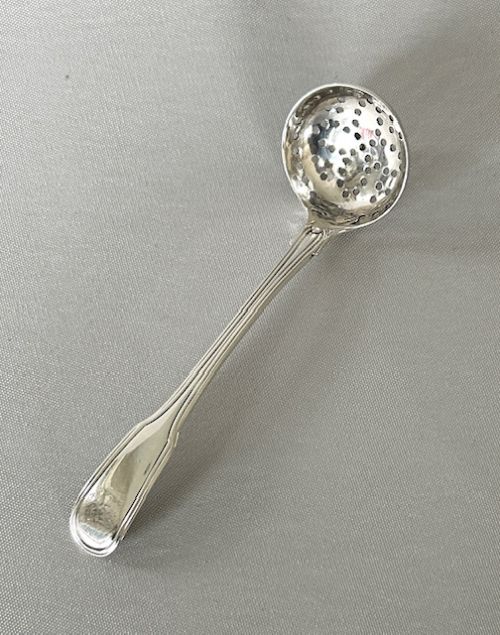
These sugar sifter ladle pieces are silver serving tools designed to dust sugar over food, bringing period craftsmanship directly to your table.
Sugar Sifter Ladle
When searching for a sugar sifter ladle, buyers encounter specialised serving pieces designed for casting sugar over food items. These implements emerge from periods spanning the Georgian era through the Victorian age and into the early twentieth century.
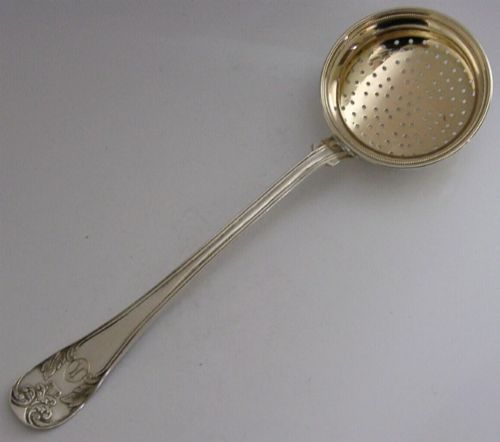
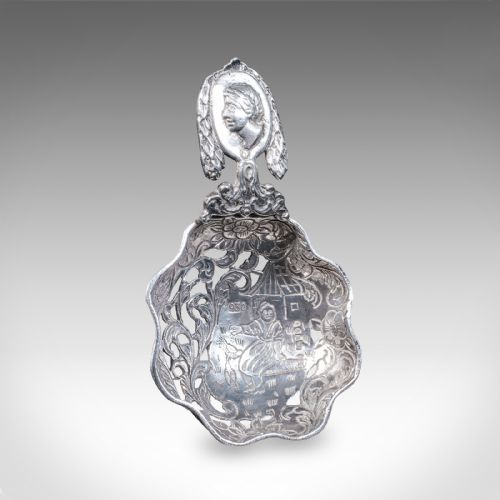
The most common forms on this page include sterling silver and silver gilt sifter spoons, often featuring pierced bowls for scattering sugar evenly. Alongside standalone sifter spoons, items range from berry spoons and spice sifter spoons to complete sugar bowls paired with matching ladles.
Geographic origins span British workshops in London, continental centres like France and Sweden, and Dutch silversmiths. These pieces function within broader categories of flatware, silverware, and serveware, reflecting formal dining traditions of past centuries.
Materials and construction methods
Silversmiths constructed these implements primarily from solid silver, sterling silver, and silver plate, occasionally applying a silver gilt finish to create a rich gold-toned surface over the silver base. Presentation boxes incorporate linings of silk and velvet to protect the polished metal.
Craftsmen shaped the metal through traditional smithing techniques, piercing intricate patterns into the bowls to form the straining mechanism. Handles reflect specific design movements including Georgian patterns, Regency styling, French Restoration, Swedish Art Nouveau, and Arts and Crafts aesthetics.
Listings feature sterling silver, silver gilt, and silver plate materials, styled across Georgian, Victorian, Regency, and Arts and Crafts periods.
Distinguishing quality in silver sifter ladles
The distinction between standard examples and finer pieces lies in the crispness of the pierced bowl pattern and the precision of the handle ornamentation. Master silversmiths executed detailed piercing and chased decoration with sharper definition, ensuring both decorative appeal and functional balance.
Weight and metal purity further separate top tier examples from ordinary production, with substantial solid silver and sterling construction offering greater durability. Complete sets housed in original velvet and silk lined boxes represent a higher level of historical preservation.
The Sugar Sifter Ladle Glossary
- Sterling Silver
- A standard alloy consisting of a high percentage of silver combined with small amounts of other metals to ensure strength. This material forms the primary body of most traditional sifter spoons.
- Silver Gilt
- Solid silver that has been coated with a thin layer of pure gold through chemical or electrochemical processes. This technique adds a warm golden sheen to the interior of the sifter bowl.
- Silver Plate
- A base metal foundation coated with a thin layer of real silver through electroplating or older immersion methods. Items made this way provide the appearance of solid silver at a different manufacturing scale.
- Spice Sifter Spoon
- A smaller variant of the standard sifter spoon specifically proportioned for dusting fine spices rather than coarse sugar. These frequently appear in Georgian collections.
- Import Hallmarks
- Official stamps applied by assay offices to foreign-made silver items entering a country to certify metal purity. These marks help verify the origin and period of imported pieces.
Sugar Sifter Ladle: Frequently Asked Questions
What is a sugar sifter ladle used for?
These implements were designed to sprinkle powdered or caster sugar over desserts, fruits, and pastries during formal dining. The pierced bowl allowed the sugar to fall in an even, decorative dusting.
Today, they serve both decorative and practical roles on the dining table, functioning effectively for modern desserts or as part of a traditional silverware display.
How do I care for antique silver sifter spoons?
Maintenance requires gentle washing in warm soapy water followed by thorough drying with a soft cloth. Avoid abrasive cleaners that can damage delicate engravings or remove silver gilt finishes.
Storage in tarnish-resistant cloth or velvet-lined boxes helps preserve the polished surface. Regular handling naturally prevents heavy tarnish buildup on active display pieces.
How do I identify Georgian sifter spoons?
Georgian pieces typically display distinct handle styles such as Onslow patterns, King's Hourglass designs, or feather edge borders. Assay marks and date letters stamped onto the metal provide exact production years from the Georgian reign.
Craftsmanship from this period often emphasises hand-wrought details and classic proportions that differ from later Victorian or Arts and Crafts interpretations.
Can I use silver gilt sifter ladles with food?
Silver and silver gilt are traditional materials for dining implements and remain suitable for food use. The gold wash on silver gilt items provides an extra layer of protection against certain food acids.
Proper cleaning after use ensures the metal remains safe and hygienic for serving sweet dishes at the table.