




Cased Silver Salts
Cased silver salts bring together fitted protective presentation boxes and small open containers designed to hold table salt.
Cased Silver Salts
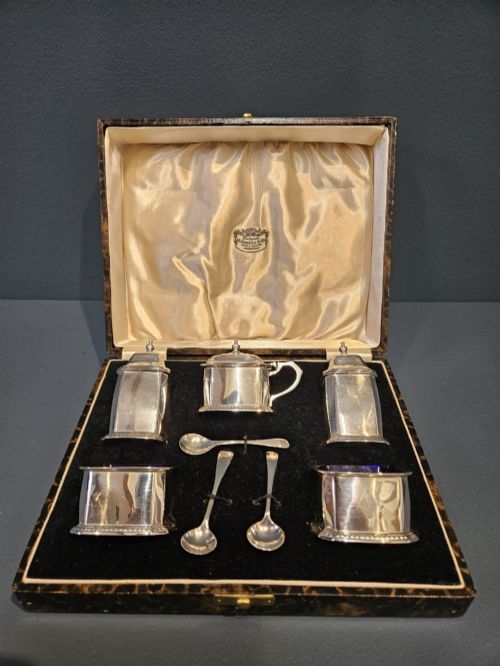
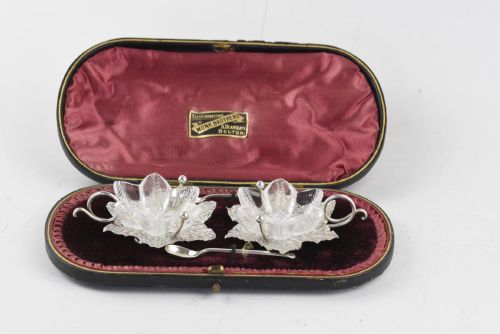
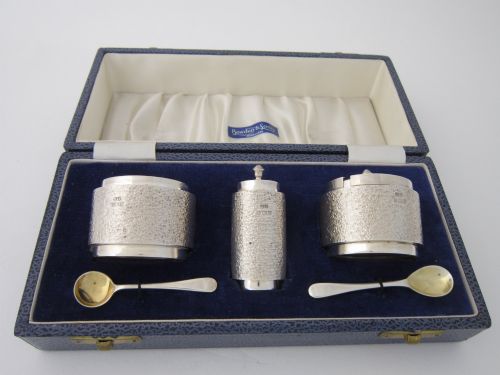
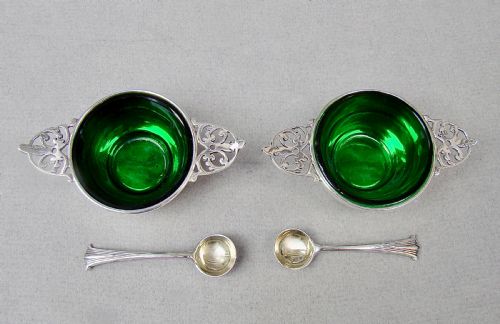
Cased silver salts are matching pairs or sets of small open salt cellars accompanied by small spoons, housed inside fitted protective boxes lined with materials such as velvet, silk, or satin. They appear across several eras, with Victorian, Edwardian, and Art Deco examples frequently appearing alongside Georgian and mid-century pieces.
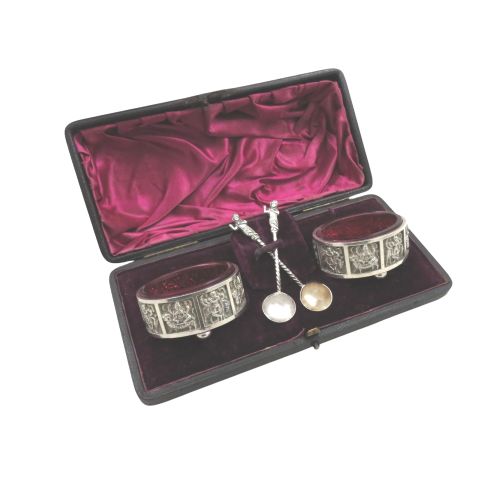
The contents within these fitted presentation cases extend beyond standard open salt cellars to include salt and pepper shakers, condiment sets, cruet sets, and novelty designs shaped as quaichs, birds, or Hindu deities. Many incorporate removable glass liners inside the sterling silver or silver-plated bowls to protect the metal from corrosion.
Materials and technique
Silversmiths utilised sterling silver and silver plate for the bodies of the salts, often forming them through casting, hammering, or pressing before applying hallmarks to indicate assay office, maker, and date. Glass liners, including cut glass and opaline glass, were blown and ground to fit precisely inside the metal frameworks.
Interiors of the presentation cases were lined with soft textiles such as velvet, silk, satin, or red Moroccan leather to cushion the silver components and spoons during transport and storage.
Some nineteenth-century silversmiths shaped tiny condiment containers as Hindu deities or birds, ready to perch beside your roast.
Quality differences
Quality rests upon the crispness of the silversmith's chasing and repoussé work, particularly on novelty forms such as birds or Hindu deities, where fine detail distinguishes superior pieces. The structural integrity of the original fitted case and the condition of its internal velvet or silk lining also influence the standing of an object.
The inclusion of matching original spoons and intact glass liners elevates a set, as replacements or missing components alter the completeness of the ensemble.
Horton & Allday·William Neale·Josiah Williams & Co·Nathaniel Mills·Bricks & Sons·Wilmot Manufacturing Co·Viners·David Andersen·W.G.Keight & Co·Spurrier & Co
The Cased Silver Salts Glossary
- Salt cellar
- A small open bowl designed to hold loose table salt before the invention of the shaker. They often rest on three feet or a pedestal base.
- Cruet set
- A matched collection of containers for holding condiments such as salt, pepper, mustard, and vinegar. They are frequently displayed together in a silver frame or a fitted presentation case.
- Vinaigrette
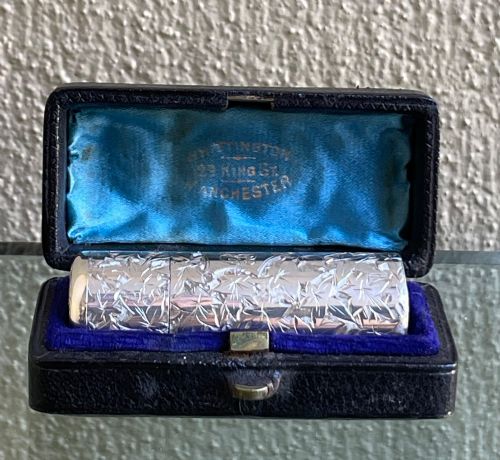
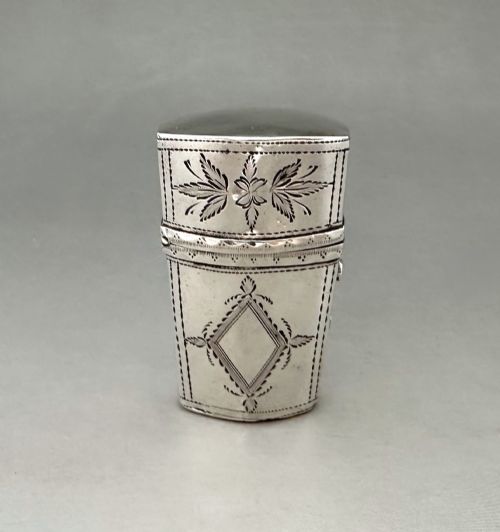
- A small ornamental hinged box containing a perforated internal grille. It held a sponge soaked in aromatic vinegar to revive the user.
- Hallmark
- An official stamp applied to precious metals indicating the standard of purity, the assay office, the maker's mark, and the year of manufacture.
- Glass liner
- A removable glass insert placed inside a silver salt cellar to prevent the corrosive properties of salt from damaging the metal underneath.
Cased Silver Salts: Frequently Asked Questions
What are cased silver salts?
Cased silver salts are sets of small open vessels designed for holding salt at the dining table, preserved inside their original fitted presentation boxes alongside matching spoons.
These sets were produced extensively during the Victorian, Edwardian, and Art Deco periods, combining practical dining ware with protective storage lined in velvet or silk.
How were cased silver salts used?
Before free-flowing table salt and shakers became common, guests used small spoons to take salt from the open silver cellars and place it onto the side of their plates.
The fitted cases allowed households to store the delicate silver bowls, glass liners, and miniature spoons safely between formal meals.
How do I identify the age of a set?
Age is determined by examining the hallmarks stamped onto the silver components, which indicate the specific assay office and year of manufacture.
Stylistic indicators such as the geometric lines of Art Deco pieces or the ornate repoussé work of Victorian sets also point towards their period of origin.
Why do some salts have glass liners?
Glass liners were inserted into silver salt cellars to prevent the sodium chloride from tarnishing and corroding the metal over time.
These removable inserts made cleaning easier and protected the structural integrity of the silver bowls.