




Silver Dressing Table Dishes
Silver dressing table dishes and boxes span the late nineteenth and early twentieth centuries, bringing vanity storage in sterling silver, cut glass and enamel.
Silver Dressing Table Dishes
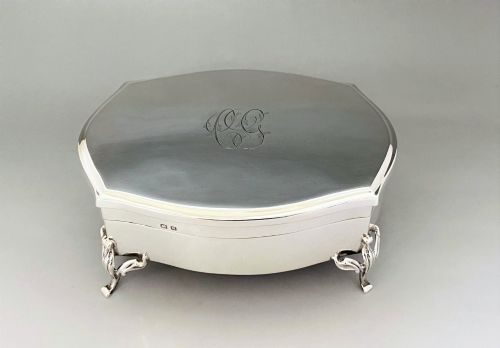
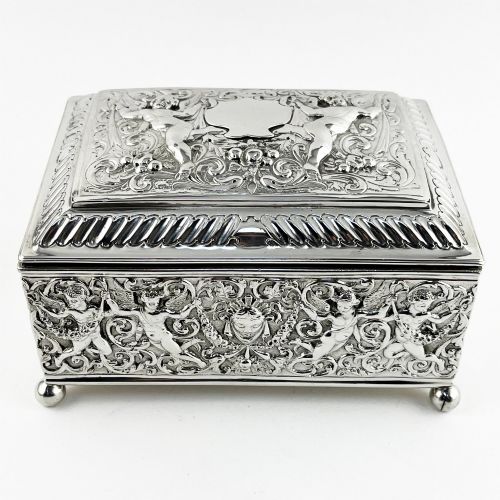
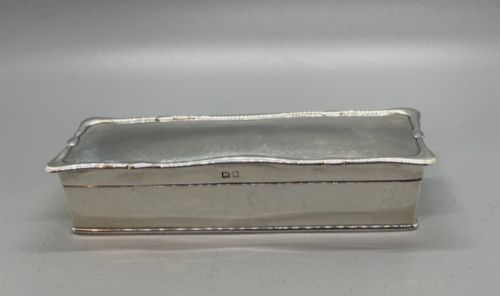
Silver dressing table dishes and related containers include trinket boxes, vanity jars, ring holders and trays designed for the boudoir. These items originate predominantly from the Victorian, Edwardian, George V and Art Deco periods, spanning the late nineteenth century through to the 1930s.
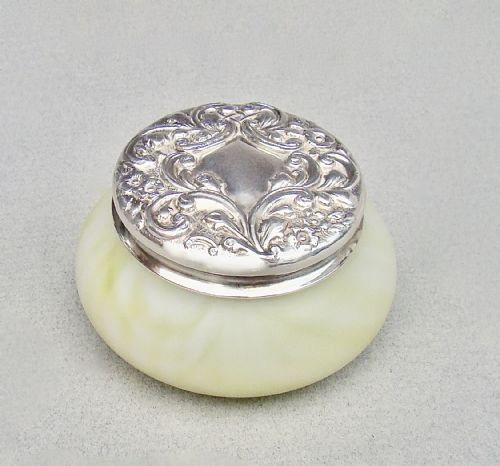
The pieces on this page are most commonly silver-lidded cut glass jars, solid sterling silver trinket boxes and embossed sterling silver trays. Makers utilised contrasting materials such as tortoiseshell, vitreous enamel and Kralik glass alongside standard silver components.
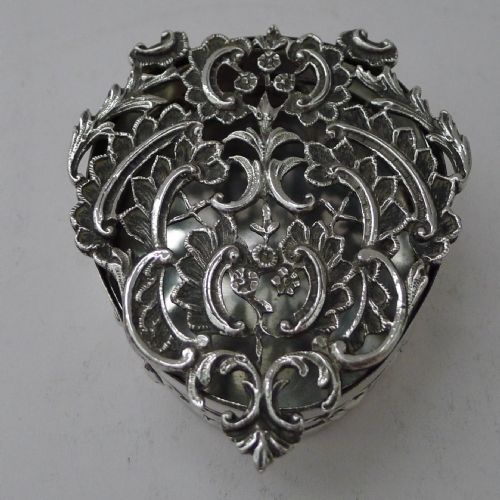
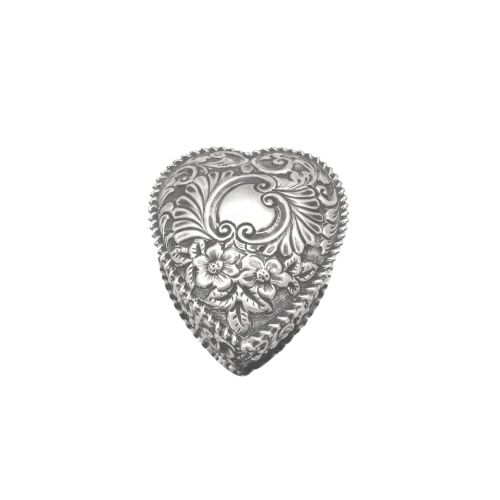
Forms range from small heart-shaped pill boxes and ring trees to large dressing table trays and figural castle-top boxes. English provincial assay offices, notably Birmingham and Chester, feature heavily alongside London hallmarks and continental imports.
How They Were Made
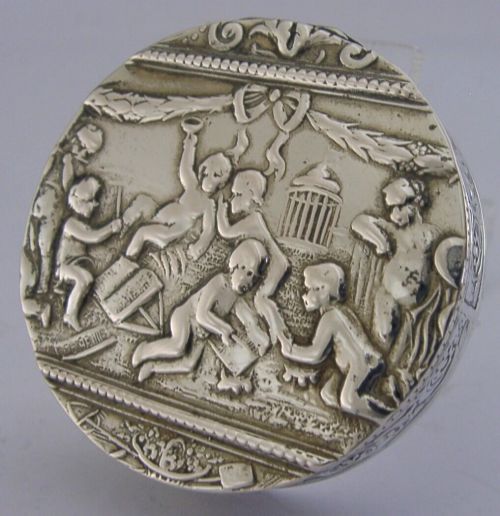
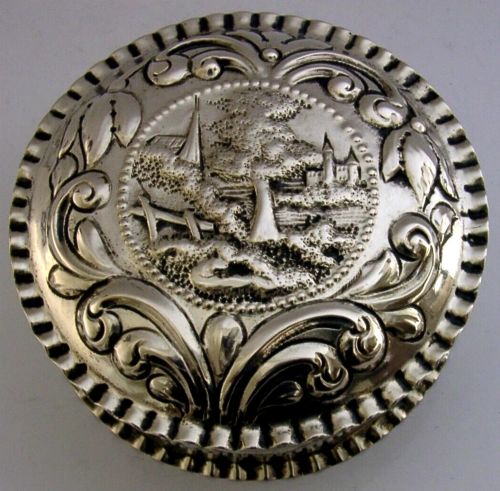
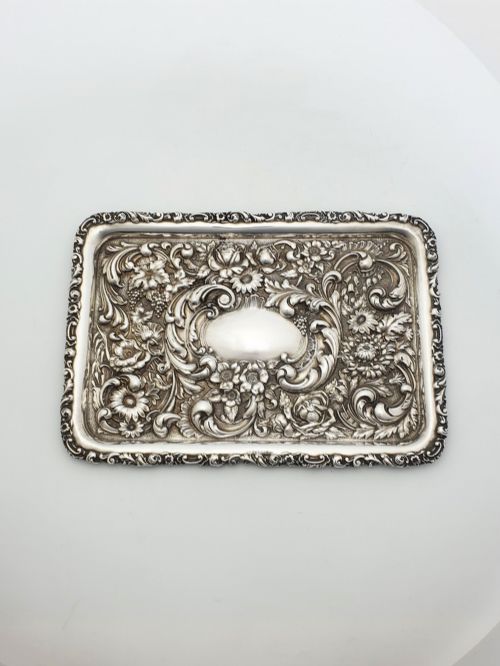
Silversmiths formed the boxes and trays using sterling silver, applying techniques such as repoussé and chasing to create raised floral motifs and figural scenes. Heavy gauge silver provided structural integrity for hinged boxes and large table pieces.
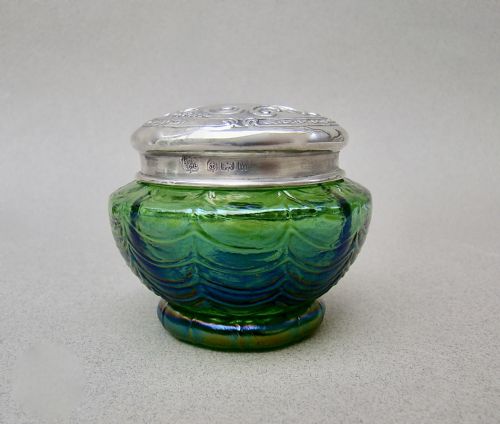
Glass bodies for vanity jars and trinket boxes were cut or moulded, often paired with hallmarked silver slip-in or hinged lids. Cut crystal and coloured glass varieties, including cranberry and satin glass, added visual depth beneath the silver mounts.
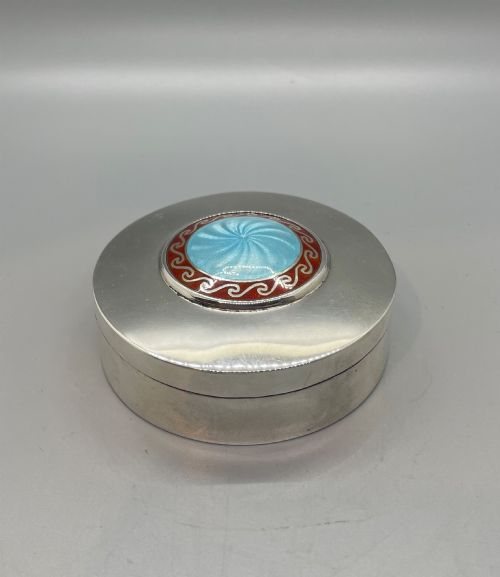
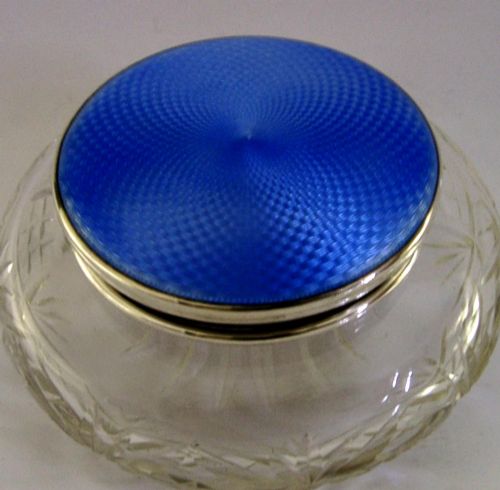
Surface ornamentation frequently incorporated guilloche, vitreous and porcelain enamel in shades of blue and pink, alongside inlaid tortoiseshell panels fixed directly into the silver lids.
What Varies in Quality
Quality rests upon the weight and gauge of the sterling silver used in the body, lid or rim, together with the crispness of repoussé chasing. Pieces displaying deep, hand-hammered relief work demonstrate superior craftsmanship compared to thin, pressed metal.
The integrity of secondary materials dictates overall standard, particularly the condition of vitreous enamel panels free from chipping, and the clarity of heavy cut glass bases. Makers known for high production standards, such as William Comyns, maintain stronger retention of detail across their decorative trays and boxes.
A. J. Pepper & Co·A. Bromet & Co·William Comyns·William Neale & Sons·Henry Williamson Ltd·Posen of Frankfurt and Berlin
The Silver Dressing Table Dishes Glossary
- Repoussé
- Metalworking technique where the silver is hammered from the reverse side to form a raised design on the front. This method creates tactile floral and figural ornamentation on dressing table trays.
- Guilloche
- Decorative engine-turned engraving beneath a translucent layer of enamel. It produces repeating geometric patterns commonly found on Edwardian and Art Deco boxes.
- Ring Tree
- Small boudoir stand featuring a central vertical stem mounted on a weighted base. Designed specifically for holding multiple rings on a dressing table.
- Castle Top
- Silver box lid cast or engraved with a detailed architectural scene of a specific English or continental building. These weighty presentation pieces date primarily around nineteen hundred.
- Vanity Jar
- Glass container fitted with a heavy sterling silver screw or push-fit lid. They stored cosmetics, pins or cotton wool on nineteenth and twentieth century dressing tables.
Silver Dressing Table Dishes: Frequently Asked Questions
What were silver dressing table dishes used for?
These dishes and boxes held personal items such as hairpins, rings, trinkets, powder and cosmetics on a Victorian or Edwardian dressing table. Trays kept daily jewellery organised while lidded jars protected delicate vanity items from dust.
Larger boxes served as receptacles for keepsakes and letters, remaining on display as decorative boudoir accessories.
How do I date an antique silver trinket box?
Dating relies primarily on the silver hallmarks stamped onto the metal, which indicate the assay office, date letter and sterling standard. Stylistic clues such as Art Nouveau sinuous lines or Art Deco geometric forms also point to specific decades.
Maker marks help narrow down the active years of the silversmith workshop responsible for the piece.
Are glass and silver boxes fragile?
Cut glass and crystal bodies require careful handling due to their weight and susceptibility to chips along the rim. The silver mounts provide protection, but enamel panels and tortoiseshell inserts need gentle treatment to prevent cracking.
Regular dusting with a soft cloth keeps the glass and silver bright without damaging delicate surface treatments.
How do I clean tarnished silver dressing table items?
Tarnishing is a natural process for sterling silver and requires a specialist non-abrasive silver cloth or gentle polish. Care must be taken to avoid applying cleaning agents directly onto enamel, glass, or tortoiseshell inserts.
Using mild soapy water on the glass components separately preserves the integrity of both the crystal and the adjacent metal.