


Cased Silver Salt Set
A cased silver salt set brings traditional dining elegance to the table, housing precious metals and glass safely within fitted boxes.
Cased Silver Salt Set
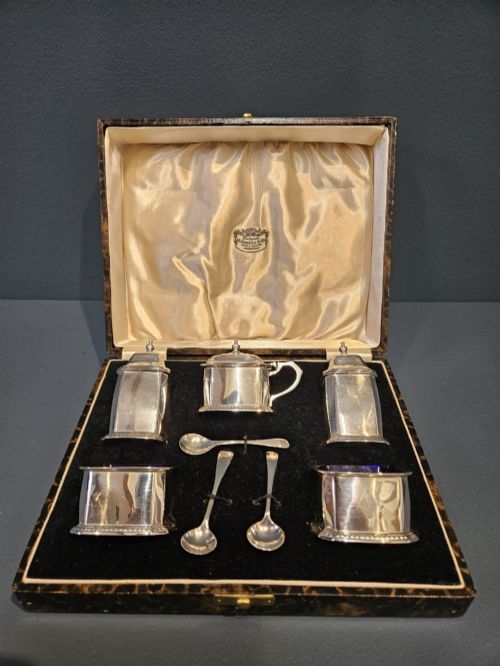
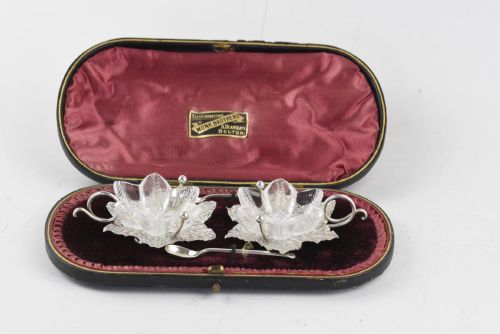
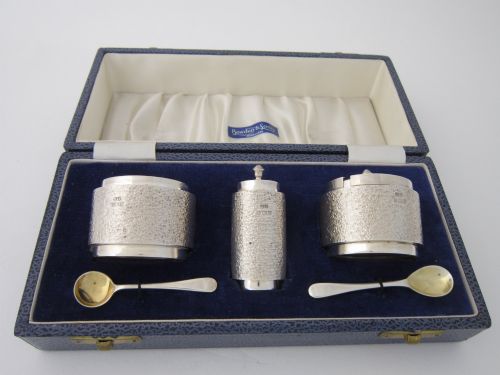
A cased silver salt set comprises small open salt cellars or shakers accompanied by matching spoons, presented together in a hinged box lined with materials such as silk, velvet, or satin. These matched assemblies appear across multiple eras, including the Victorian, Edwardian, and Art Deco periods, frequently fashioned from sterling silver or silver plate.
Buyers seeking a cased silver salt set most commonly encounter complete Victorian or twentieth-century configurations containing paired salt bowls with glass liners alongside miniature spoons. Formats range from simple pairs to larger condiment groupings featuring dishes, trays, and pepper shakers.
The exterior presentation boxes protect the delicate metalwork and interior linings, reflecting the formal dining customs of their respective eras. Sets span various aesthetic movements, demonstrating how silversmiths adapted functional tableware into decorative presentation items.
Materials and construction
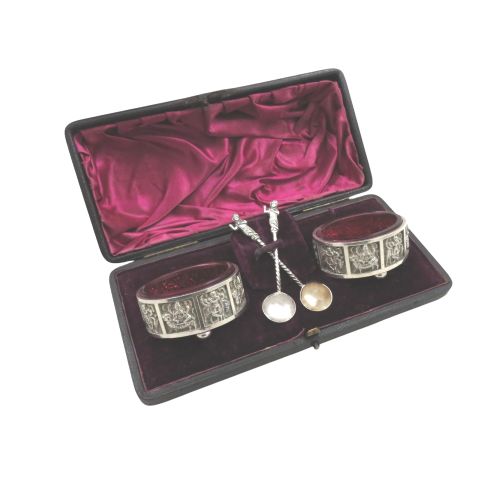
Silversmiths utilised sterling silver and silver plate to shape the salt cellars, often pairing the metal components with fitted glass liners to protect the interior from corrosive salt. Exterior cases combined rigid structures covered in leather with soft interior beds of silk, velvet, or satin designed to cradle each individual piece securely.
Manufacturing techniques involved traditional silversmithing processes such as casting, hammering, and engraving, particularly visible in detailed nineteenth-century motifs and later geometric Art Deco designs. Enamel work also appears on select twentieth-century European pieces, adding colour contrast to the silver framework.
Listings feature sterling silver and silver plate alongside interior linings of velvet, silk, and satin across Victorian, Edwardian, and Art Deco periods.
Markers of quality
Quality in these sets depends upon the crispness of the silversmith's workmanship, the weight of the solid sterling silver or plate, and the integrity of the fitted presentation case. Superior examples retain their original matching spoons and undamaged glass liners, showing precise fit within the lined compartments.
The distinction between standard production items and finer pieces rests in the complexity of the design, such as hand-engraved ornamentation, figural elements like Hindu deities or birds, and the quality of the textile lining inside the box.
William Neale·Wilmot Manufacturing Co·Viners·James Dixon & Sons
The Cased Silver Salt Set Glossary
- Salt cellar
- An open bowl designed to hold loose salt at the dining table before the widespread adoption of individual shakers. These vessels frequently require small spoons to dispense the contents.
- Cruet set
- A matched grouping of containers for condiments such as salt, pepper, mustard, and vinegar. They often sit together on a small stand or within a fitted presentation box.
- Hallmark
- Official stamps struck into precious metals to indicate the assay office, metal purity, and year of manufacture. English silver commonly displays these marks directly on the rim or base.
- Glass liner
- A removable glass insert placed inside an open silver salt cellar. This prevents the salt from coming into direct contact with the silver and causing chemical corrosion.
Cased Silver Salt Set: Frequently Asked Questions
What is included in a typical set?
A standard grouping generally includes two or four small open salt cellars accompanied by miniature spoons, all nestled inside a fitted presentation box.
Many configurations also incorporate matching glass liners and occasionally pepper shakers or mustard pots depending on the size of the original service.
How do I date these items?
Dating relies heavily on official hallmarks stamped into the silver, which record the specific assay office and year of production.
Stylistic indicators such as Victorian ornamentation, Edwardian restraint, or geometric Art Deco lines also help determine the era of manufacture.
How were salt sets used?
Historically, diners used the small spoons provided in the set to transfer salt from the open cellar onto the edge of their individual dinner plates.
This practice preceded modern table shakers, serving as both a functional dining accessory and a display of household refinement.
Are glass liners original?
Original glass liners fit snugly into the interior of the silver cellars without excessive movement or wobbling.
Because glass breaks easily over time, replacement liners appear frequently in older sets while still maintaining the utility of the piece.