



Silver Table Condiments Cased
Silver table condiments cased offer matching sets of salt cellars, mustard pots and pepper shakers housed in fitted presentation boxes.
Silver Table Condiments Cased
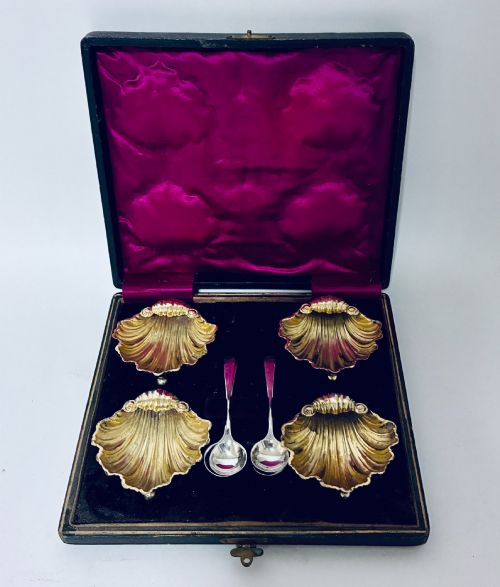
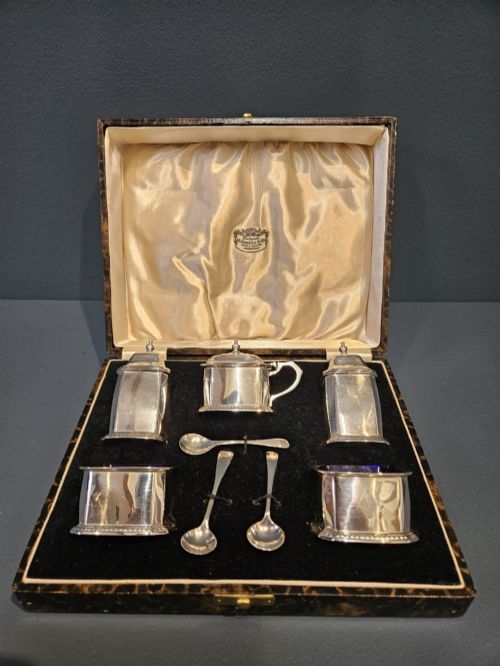
Silver table condiments cased comprise coordinated sets designed for formal dining, featuring containers for salt, pepper and mustard. These assemblies bring together matching spoons, liners and vessels within custom fitted boxes lined in fabrics such as velvet, satin or silk.
The most common examples encountered on this page date from the Victorian period through to the mid-twentieth century, encompassing George V, Edwardian and Art Deco designs. Makers from Birmingham, London and Sheffield produced these matching table sets in sterling silver and silver plate.
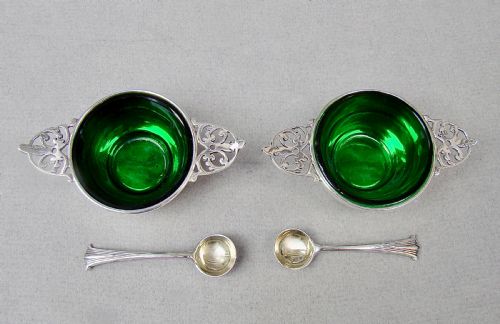
Forms range from conventional cruet sets to novelties like quaich salts and mother-of-pearl hors d'oeuvres forks. Buyers find complete matched sets nestled securely in velvet or silk compartments ready for table service or display.
Materials and construction
Silversmiths constructed these vessels primarily from solid sterling silver or silver plate, shaping bodies through stamping, casting or spinning. Interiors of open salt cellars and mustard pots typically hold fitted blue glass liners to protect the metal from corrosive contents.
Presentation cases were manufactured from sturdy timber frames covered in leatherette or cloth, then lined internally with plush velvet, smooth satin or delicate silk. Fitted compartments inside each box secure every individual salt cellar, pepper shaker and mustard spoon against movement.
Silver Table Condiments Cased Retail Price Guide 2026
Typical asking prices for silver table condiments cased among the pieces listed under this phrase on Sellingantiques today, from the lower quarter to the upper quarter. They describe what is for sale here now, not the wider market.
Some sets tuck tiny mother-of-pearl forks into satin slots, proving that even a pickled onion deserves a touch of luxury.
Evaluating craftsmanship and condition
Quality separates mass-produced commercial sets from bespoke silversmith output by the weight of the metal and the precision of the fitted case. Heavier gauge sterling silver and crisp hallmarks indicate higher production standards.
The integrity of the presentation box influences overall desirability. Original fitted linings of clean velvet, silk or satin and fully intact blue glass liners elevate the completeness of the set.
Josiah Williams & Co·Wilmot Manufacturing Co·Viners
The Silver Table Condiments Cased Glossary
- Cruet set
- A collection of small bottles, jars or shakers used for holding table condiments such as salt, pepper, mustard and vinegar. They usually rest on a matching stand or fit inside a dedicated storage box.
- Quaich
- A traditional Scottish two-handled drinking vessel adapted in these listings as a novelty salt cellar shape. It provides a shallow bowl with flat lug handles on opposite sides.
- Blue glass liner
- A removable cobalt blue glass insert placed inside open salt cellars and mustard pots. This protects the silver from chemical corrosion caused by salt and mustard.
- Hallmark
- A series of stamped official marks applied to precious metals indicating the standard of purity, the assay office, the maker and the year of manufacture.
- Hors d'oeuvres set
- A collection of small specialised forks or serving implements used for appetizers. These sets are often housed in dedicated presentation boxes with mother-of-pearl handles.
Silver Table Condiments Cased: Frequently Asked Questions
What is included in a cased condiment set?
These sets typically contain matching combinations of salt cellars, pepper shakers and mustard pots accompanied by small condiment spoons. Some configurations also incorporate blue glass liners and specialised hors d'oeuvres forks.
Everything fits securely inside a dedicated presentation box lined with velvet, satin or silk designed to protect the pieces when not in use on the dining table.
How do I date an English silver condiment set?
Dating relies primarily on the official hallmarks stamped into the sterling silver components. These assay marks indicate the specific year letter, town of testing and maker's mark.
Stylistic indicators such as Art Deco geometric lines or Victorian ornamentation also help narrow down the period of manufacture alongside the typography used on the fitted presentation box.
Are blue glass liners original to the set?
Original blue glass liners fit snugly into the silver framework of open salt cellars and mustard pots without rocking or catching. They serve to protect the sterling silver from the corrosive nature of salt and mustard.
Replacements are common due to breakage over decades of use, so matching the exact hue and shape to the period remains important for completeness.
How should I clean tarnished silver condiments?
Sterling silver benefits from gentle cleaning using a specialised microfibre cloth and a mild silver polish designed to remove tarnish without abrasive scratching. Avoid harsh liquid dips that can strip away antiqued details or damage surrounding fabric box linings.
Glass liners remove easily for separate washing in warm soapy water before being dried thoroughly and placed back into the silver framework.