
Carved Wooden Wall Panel
A carved wooden wall panel brings architectural depth and centuries of hand-carved texture straight into a modern interior.
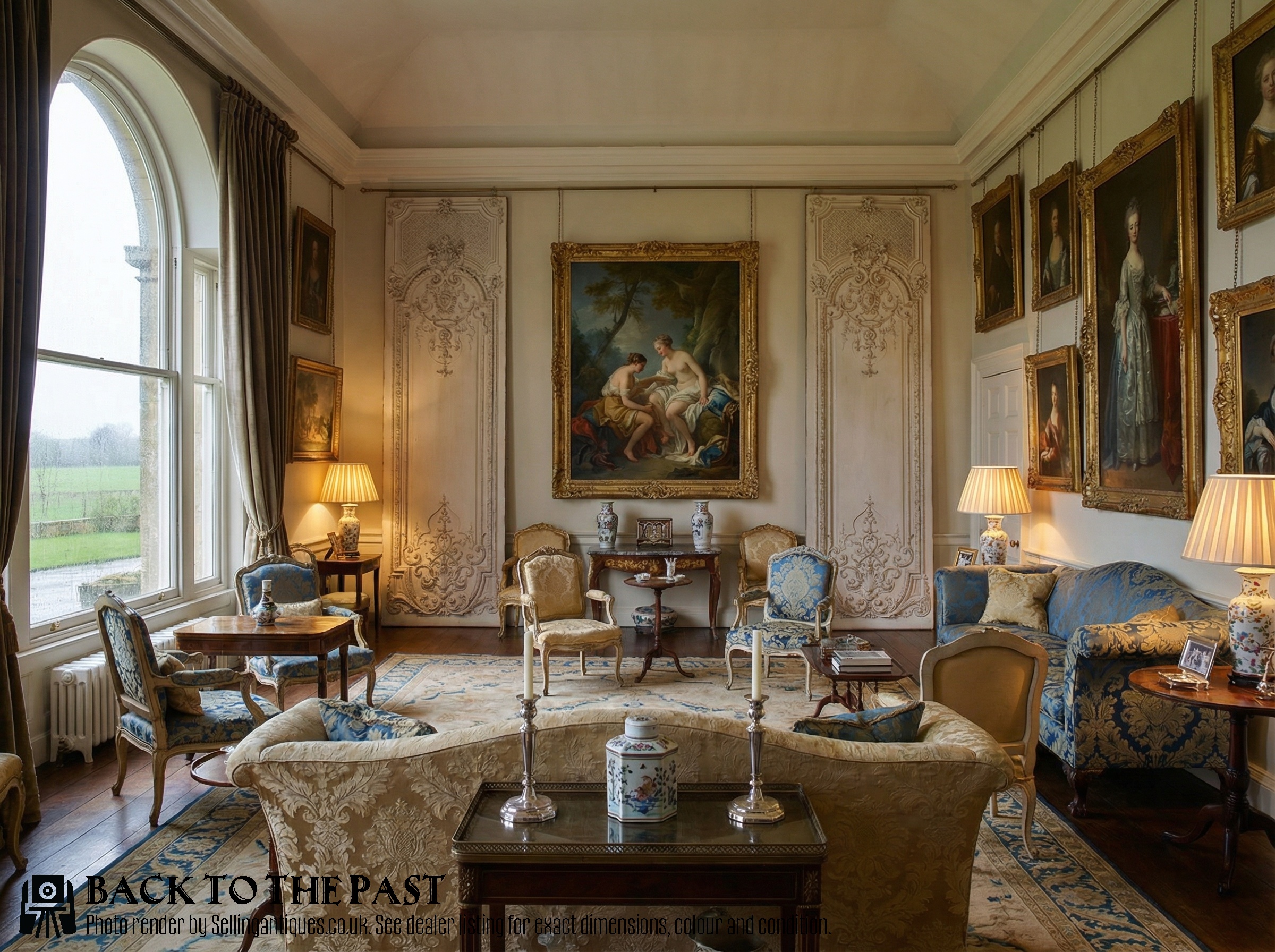
Carved Wooden Wall Panel
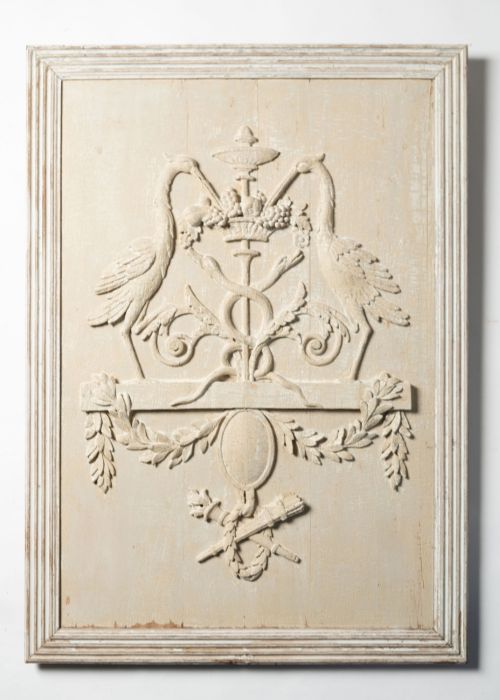
A carved wooden wall panel is a sculptural fragment or decorative plaque designed to be mounted directly onto a wall. When you search for this phrase, you encounter everything from ecclesiastical remnants to domestic overmantels.
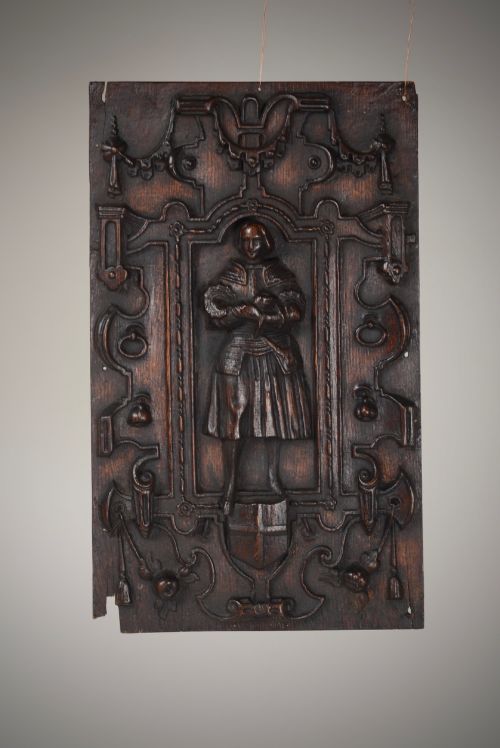
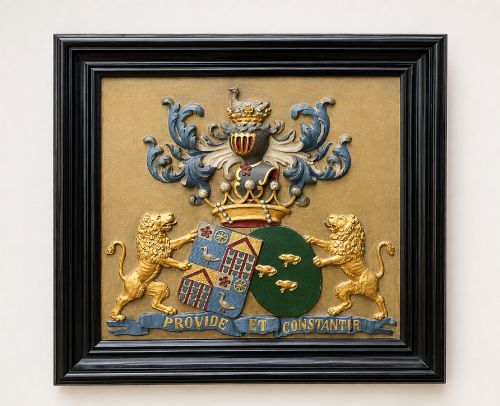
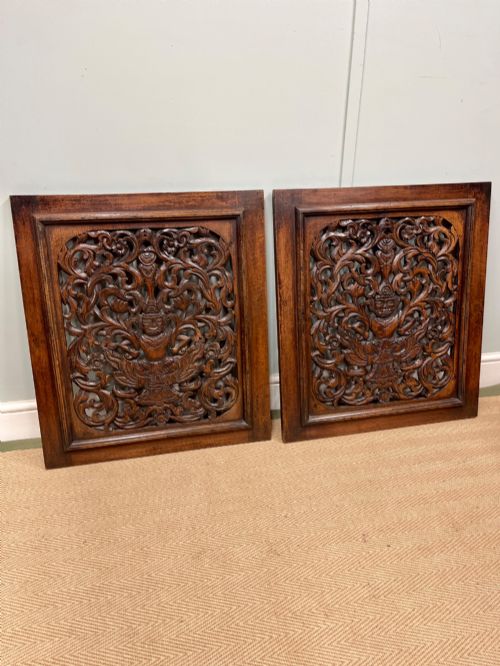
The pieces appearing on this page most frequently span the seventeenth through the nineteenth centuries, with oak and mixed timber acting as the primary medium. You will find square panels, heraldic plaques, and figural reliefs originating from European and Asian workshops.
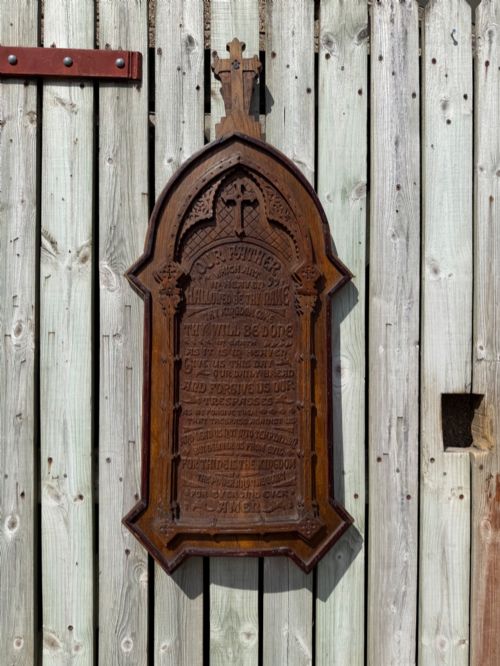
Many items begin life as architectural salvage, having been rescued from church altarpieces, historic doorframes, or dismantled furniture. These items retain the unmistakable tool marks and patination of their original setting.
Materials and Techniques
Makers predominantly relied on native hardwoods such as oak, walnut, chestnut, and mahogany, utilising hand gouges, chisels, and mallets to achieve deep relief. Grain direction dictated the depth of the carving, preventing splitting along structural fault lines.
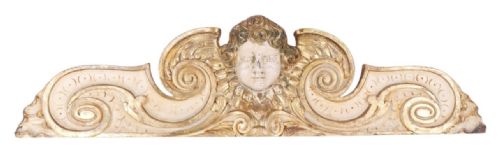
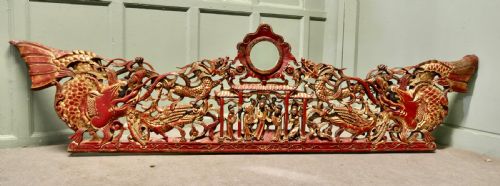
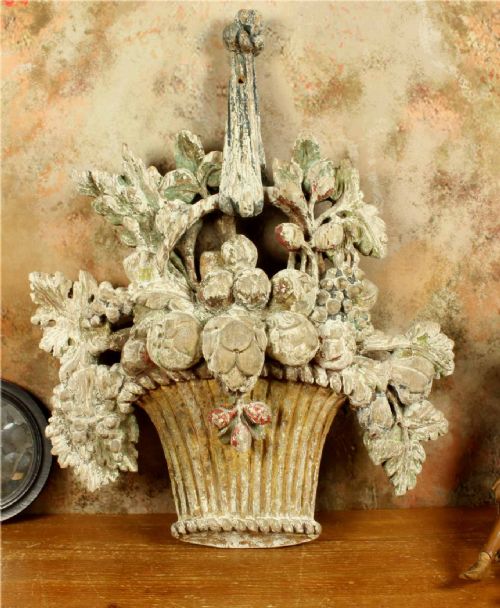
Selected surfaces incorporate gold leaf, gesso, polychrome paint, or lacquer to enhance the visual weight of the carving. These applied finishes often interact with the underlying timber as centuries of light and handling alter the surface.
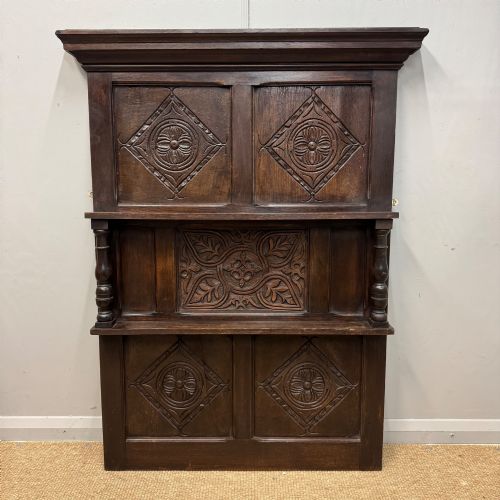
Joinery methods vary according to the period and region, ranging from pinned mortise and tenon frames on seventeenth-century oak to simpler applied mouldings on later Victorian iterations.
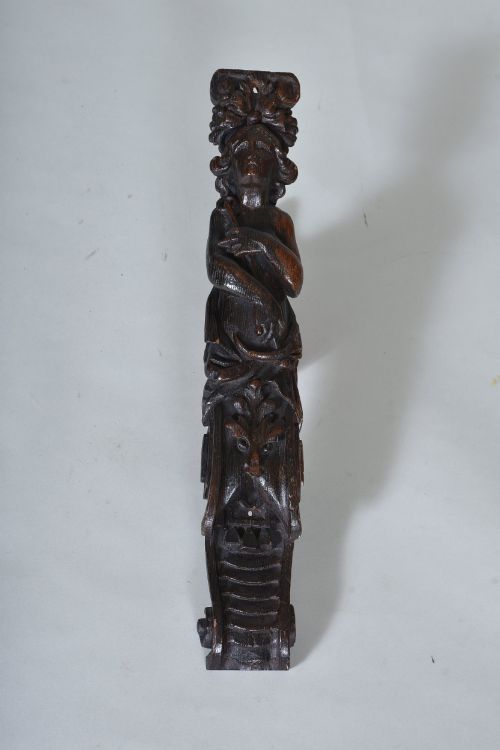
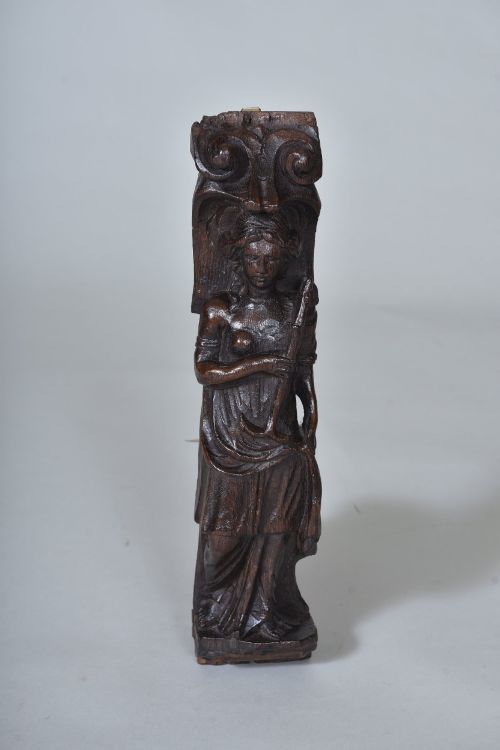
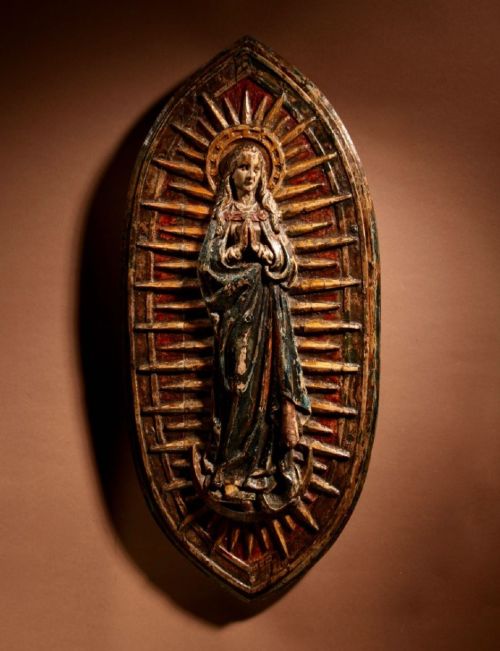
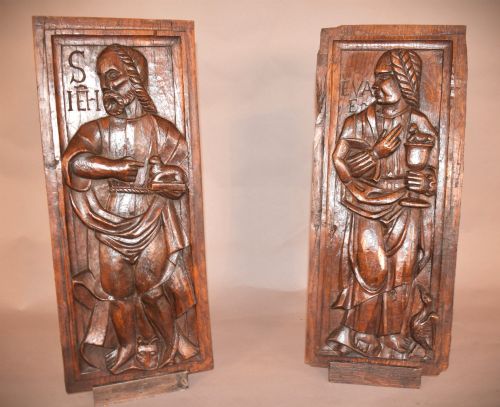
A sixteenth-century oak panel depicts the Virgin standing on the half moon with a snake, watching over the room.
Assessing Quality
Quality rests in the crispness and depth of the chisel work, distinguishing confident master carvers from routine regional artisans. Sharp undercut details and well-proportioned figural anatomy separate superior panels from rigid, flatly rendered examples.
The integrity of the timber surface matters immensely. Panels that retain their original unstripped patination, undisturbed by aggressive modern sanding, carry far more historical weight.
The Carved Wooden Wall Panel Glossary
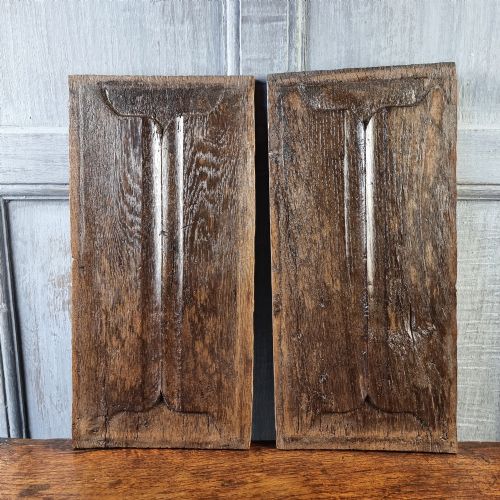
- Linenfold
- A style of wood panel carving popular in the Tudor period that imitates folded linen. It gives plain walls a textured, textile-like appearance.
- Overmantel
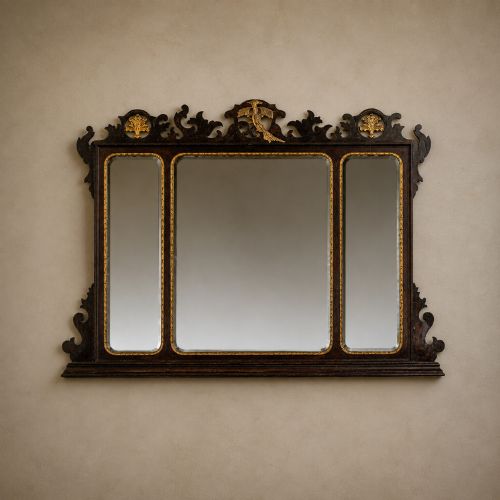
- A decorative panel, mirror, or painting placed directly above a fireplace mantelpiece. It often anchors the proportions of the chimney breast.
- Polychrome
- Decorated in multiple colours. This technique appears on historic religious carvings and decorative panels.
- Gesso
- A plaster-like mixture used as a base for paint or gold leaf on wood. It provides a smooth surface for gilding.
- Cart Fragment
- A remnant from a traditional painted and carved cart, often reused as decorative wall art. Sicilian examples frequently depict historical or religious scenes.
Carved Wooden Wall Panel: Frequently Asked Questions
How do I hang a heavy wooden panel?
Heavy carved wooden panels require secure wall fixings distributed across the structural framework rather than relying on a single central hook. French cleats provide a reliable method for keeping large plaques flush against the plaster.
Ensure you locate wall studs or utilise appropriate heavy-duty cavity anchors depending on your wall construction.
Are these panels from old buildings?
Many examples originate as architectural salvage from dismantled churches, historic houses, and old furniture. Items such as ceiling bosses, pelmets, and overdoors frequently enter circulation after structural renovations.
This provenance explains why individual pieces often show traces of ancient mounting brackets or historic paint layers.
How should I clean a historic wood carving?
Dust gently using a dry, soft-bristled brush to remove particulate matter from deep crevices without disturbing the wax finish. Avoid liquid cleaners, modern polishes, or silicone sprays, which soften aged timber and accumulate in the carved recesses.
Microfibre cloths can catch on splintered grain, so natural bristle brushes remain the safest choice.
How do I date an oak panel?
Dating relies on examining tool marks, joint construction, and the overall style of the carving. Seventeenth-century panels often display adze marks on the reverse and dense, dark oak with deep shrinkage cracks.
Later nineteenth-century revivals imitate earlier motifs but generally feature more uniform machine preparation and lighter timber colour.