





Brown Walnut Relief Carving
Brown walnut relief carving brings together rich timber and deep chisel work, offering warmth and historical depth for any wall.
Brown Walnut Relief Carving
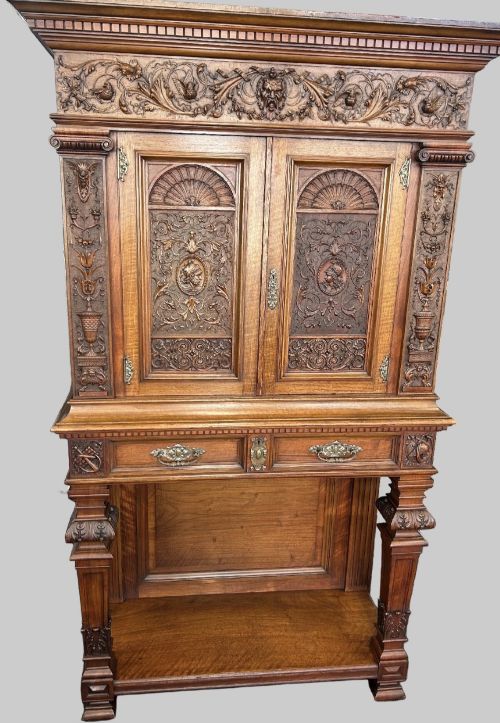
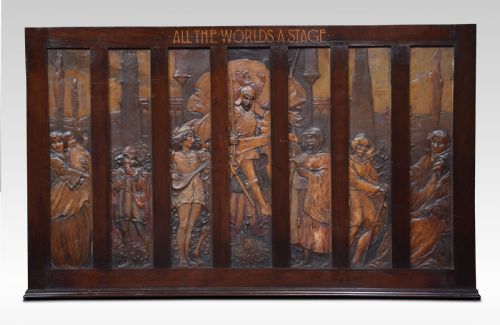
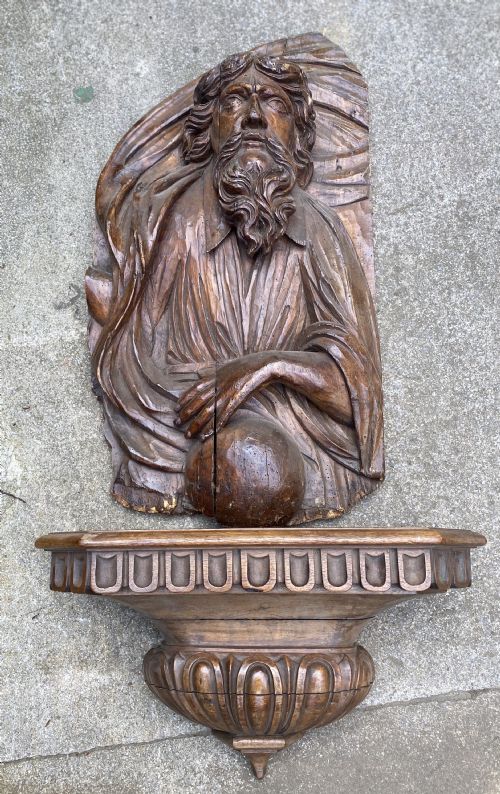
Brown walnut relief carving encompasses sculptural wall plaques, architectural panels, and framed scenes rendered in rich timber. These pieces range from seventeenth-century Italian figural carvings to nineteenth-century Black Forest animal panels and Anglo-Indian Kashmiri frames.
Buyers encounter diverse forms including large cabinets, decorative picture frames, small snuff boxes, and architectural fragments. The nineteenth century yields many items, alongside earlier seventeenth-century Continental works.
Stylistic influences span Renaissance Revival, Baroque, and Arts and Crafts traditions. The common thread remains the manipulation of walnut, burr walnut, and fruitwood to create dimensional pictorial scenes.
How they were made
Maker artisans carved directly into seasoned walnut and fruitwood stocks, utilising the natural grain variations to accentuate musculature, drapery, and foliage. Burr walnut is also utilised for its dense, mottled figuring, particularly on smaller portable objects.
Relief depth varies from shallow undercut foliage on Kashmiri frames to high pictorial projection on German hunting scenes and Italian figural plaques. Metal elements occasionally integrate into the construction of cabinets and wall pieces.
The site listings feature walnut, fruitwood, and burr walnut across seventeenth and nineteenth-century periods.
What varies in quality
Sculptural execution separates standard decorative panels from masterworks by named wood sculptors such as Valentino Panciera Bessarel. The crispness of the undercut leaves and the anatomical precision of figures dictate artistic success.
The choice of timber influences desirability, with burr walnut and dense, unblemished Italian walnut commanding attention. Preservation of the original warm brown surface patination without aggressive modern stripping is essential.
The Brown Walnut Relief Carving Glossary
- Relief carving
- A sculptural technique where figures or patterns project from a flat background. The depth of this projection defines the style.
- Burr walnut
- A specialised timber cut from a tree growth, featuring intricate swirling grain patterns. It provides exceptional visual texture on small boxes and panels.
- Renaissance Revival
- A nineteenth-century artistic movement reviving sixteenth-century classical motifs. Cabinets and panels often display architectural framing and heavy figural ornamentation.
- Black Forest carving
- A nineteenth-century style originating in Switzerland and Germany, known for naturalistic animals and forest scenes. These works utilise rich brown woods with deep, textured undercutting.
- Architectural carving
- Decorative woodwork originally integrated into buildings rather than made as standalone objects. Surviving elements frequently appear mounted as wall sculptures.
Brown Walnut Relief Carving: Frequently Asked Questions
What periods do these carvings come from?
The available pieces span multiple centuries, ranging from seventeenth-century Italian church and domestic woodwork to nineteenth-century Victorian and Arts and Crafts productions.
Maker dates and stylistic markers such as Renaissance Revival help place individual items within this broad chronological spectrum.
How were walnut relief panels used originally?
Many items functioned as architectural elements inset into larger wall paneling, cabinetry, or ecclesiastical furniture. Others served as standalone devotional plaques, portrait frames, or decorative furnishings for elite interiors.
Portable objects like snuff boxes kept intricate carving within daily personal use.
How do I hang a heavy carved panel?
Large wall plaques and framed reliefs require secure fixing directly into wall studs or masonry using appropriate weight-bearing hardware. Professional installation is advisable for substantial seventeenth-century wooden sculptures.
Ensure the weight distributes evenly across the hanging points provided on the back of the frame.
How should I care for antique walnut wood?
Maintain stable indoor humidity and avoid placing carved timber near direct heat sources or strong sunlight, which causes drying and splitting. Dust gently with a soft, dry brush to protect intricate undercuts.
Applying specialised wax polishes sparingly helps preserve the natural brown lustre of the wood.
What distinguishes Italian walnut carving?
Italian pieces often draw upon Renaissance and Baroque traditions, depicting classical figures, deities, and elaborate architectural scenes with high sculptural drama. The walnut used tends to possess a deep, warm brown tone.
Works by documented sculptors show exceptional mastery of human anatomy and expression.