
Carved Wooden Sideboard Table
These carved wooden sideboard table pieces offer robust utility and historic craftsmanship, bridging formal dining storage with grand architectural presence.
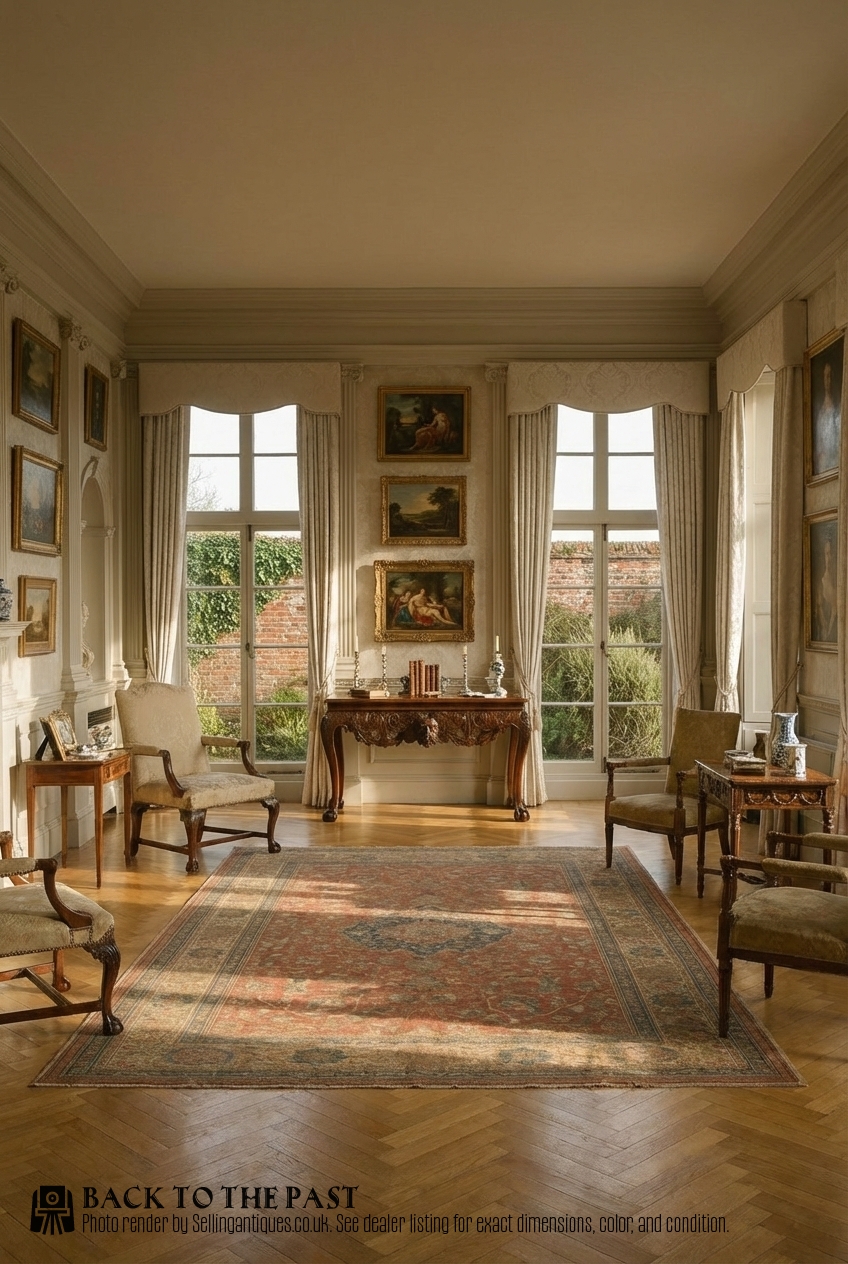
Carved Wooden Sideboard Table
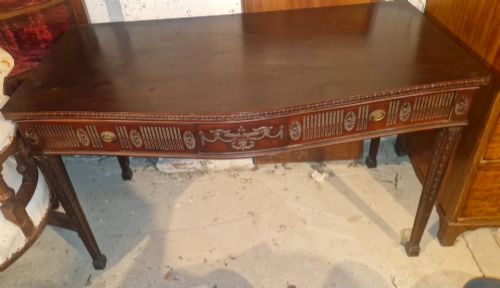
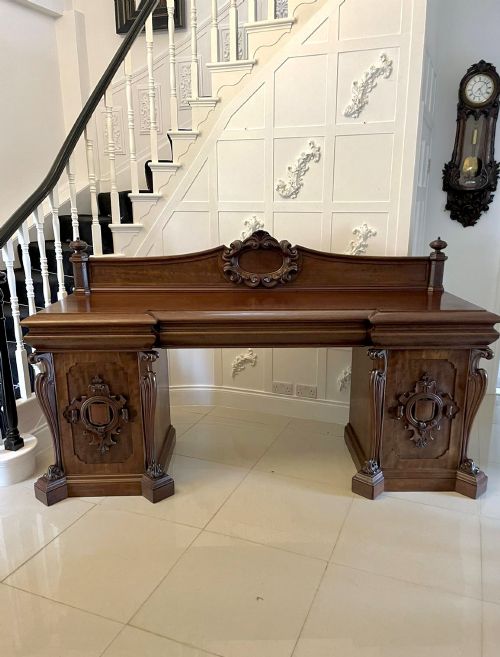
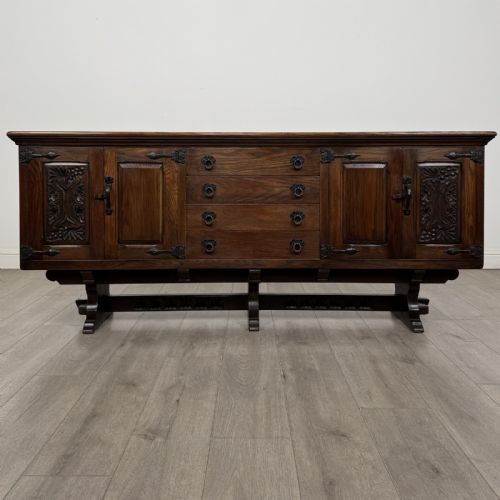
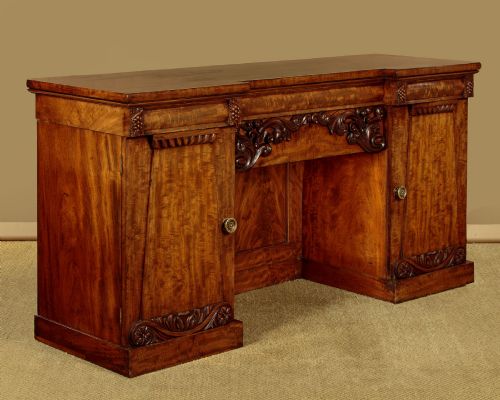
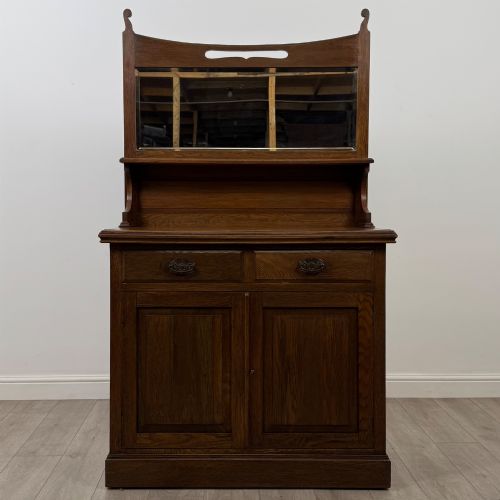
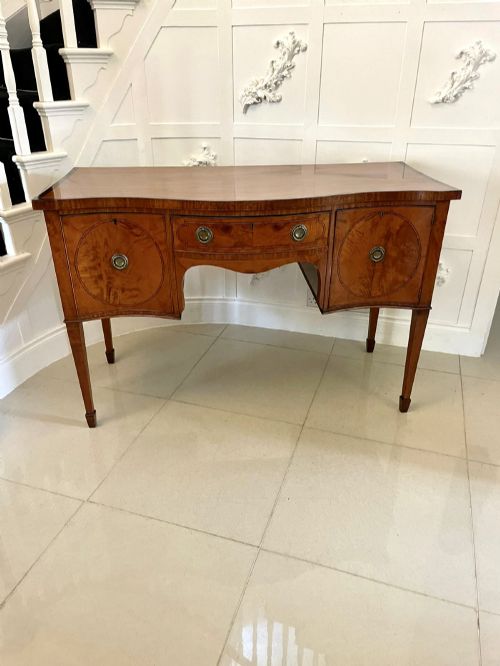
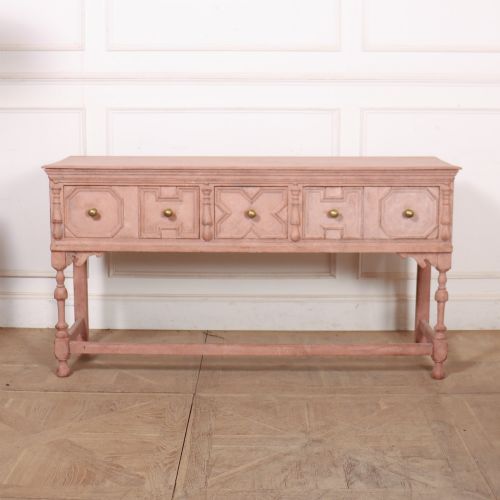
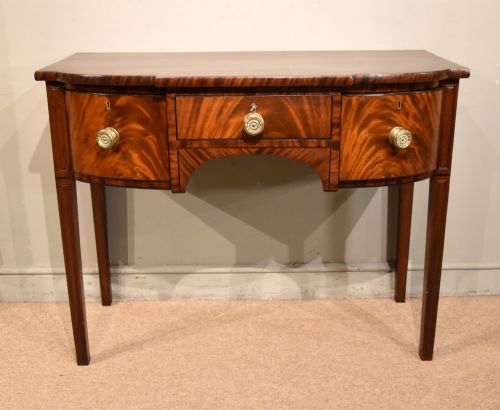
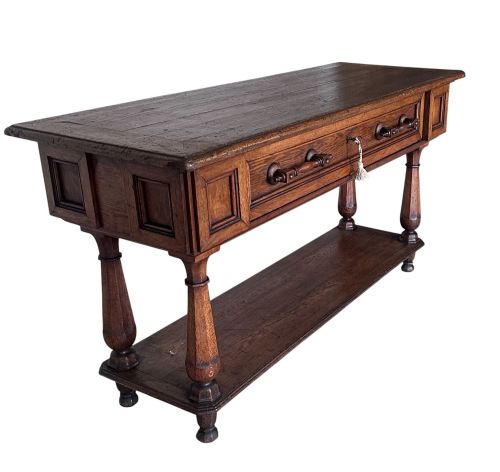
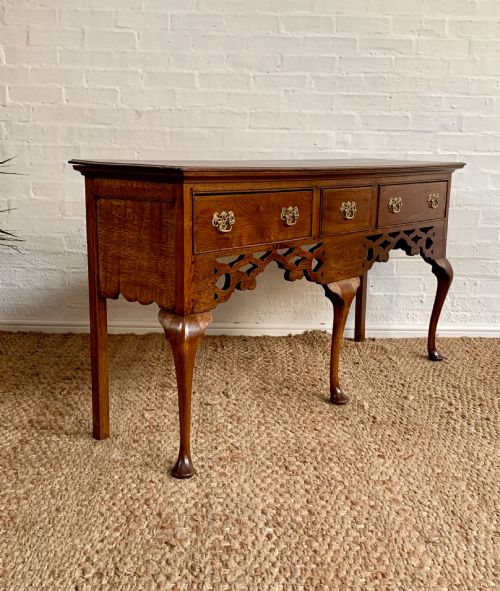
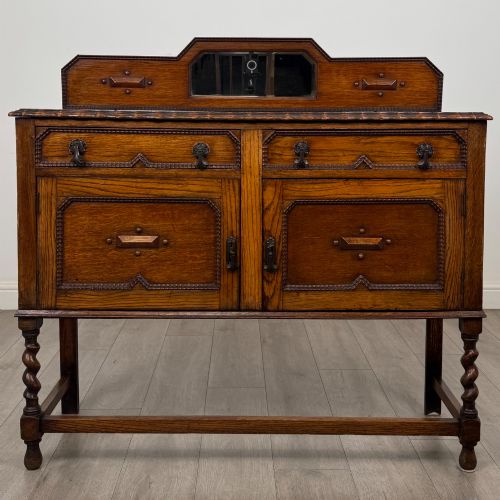
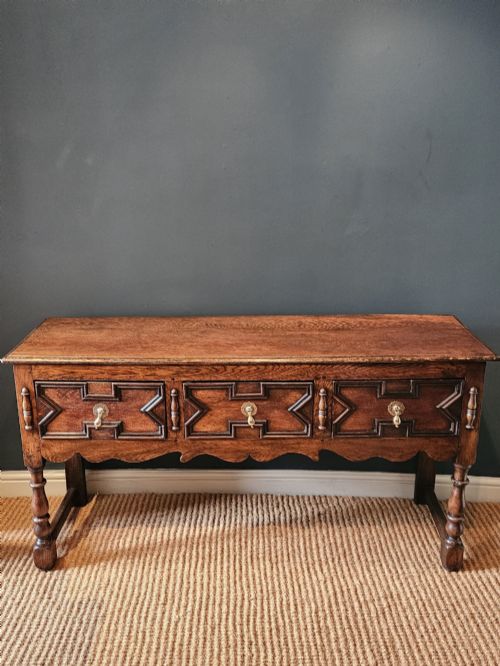
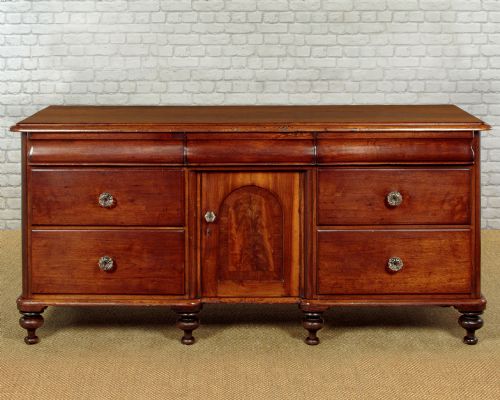
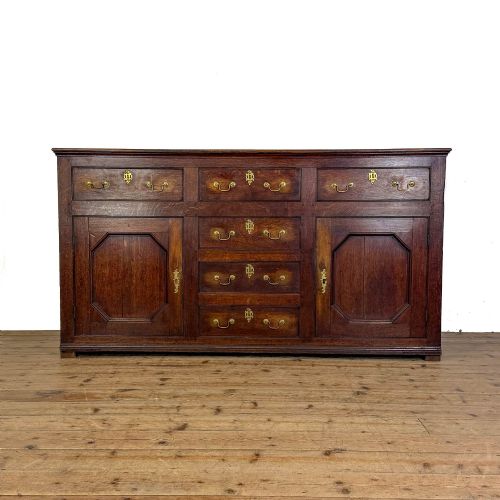
A carved wooden sideboard table represents a varied group of serving pieces, console tables, and dresser bases spanning several centuries. Buyers searching for a carved wooden sideboard table will encounter examples ranging from 17th Century oak to Victorian mahogany and Edwardian golden oak.
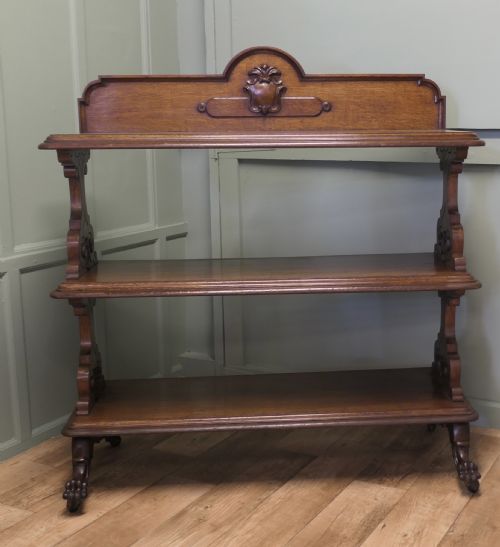
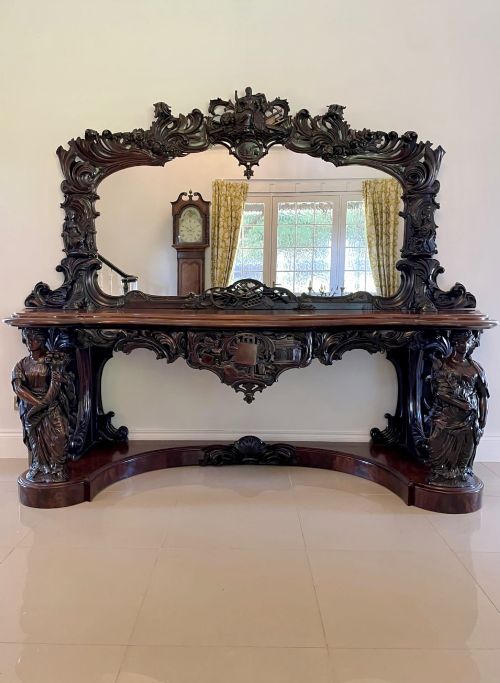
The selections on this page draw from British, French, Spanish, and Chinese traditions, encompassing styles such as Georgian, Regency, Victorian, and Edwardian. Forms span from simple serving tables and pot board dresser bases to elaborate mirror-back console tables and carved oak buffets.
Materials and Construction
These pieces rely heavily on solid timbers including oak, mahogany, walnut, and satinwood, frequently enhanced by wood inlay, glass, brass fittings, and iron hardware. Cabinetmakers utilised dense hardwoods to support deep drawers, tiered shelving, and heavy serving surfaces.
Surfaces exhibit detailed carving, geometric mouldings, linenfold panelling, and painted finishes alongside natural patinas developed on teak, elm, and bleached oak. Construction techniques span traditional joinery suited for heavy functional furniture like dresser bases and sideboard servers.
Several pieces include old kitchen pot boards that undoubtedly carried centuries of heavy stoneware.
Evaluating the Pieces
Quality rests in the depth and crispness of the hand-carving, the selection of timber grain, and the integrity of the original structure. Pieces featuring exhibition-quality mirrors, fine satinwood, or documented cabinetmaker attribution sit at the upper end of the range.
Simpler regional dresser bases and utilitarian serving tables demonstrate more robust, unpretentious construction with less decorative embellishment. The preservation of original surface patinas and period hardware distinguishes superior examples from heavily restored ones.
Gillows·M. D. Miller & Sons·Étienne Kohlmann
The Carved Wooden Sideboard Table Glossary
- Pot Board
- An open lower shelf on a dresser base traditionally used for storing pots and heavy kitchen utensils. This feature appears frequently on vernacular oak furniture.
- Dresser Base
- A low rectangular cabinet fitted with drawers above cupboards or an open pot board. These items served as functional preparation and serving surfaces in historic kitchens and dining rooms.
- Buffet
- A sideboard or serving table designed for displaying and serving food. Victorian and later iterations often include tiered shelving and elaborate carved decoration.
- Console Table
- A table fixed against a wall, sometimes supported by ornamental brackets or legs. Grand examples in the evidence include mirror backs.
- Aesthetic Movement
- A late 19th-century design style emphasising visual beauty over narrative subject matter. Furniture from this movement often utilises walnut and refined geometric forms.
Carved Wooden Sideboard Table: Frequently Asked Questions
What is a carved wooden sideboard table used for?
These pieces functioned historically for food preparation, serving meals, and displaying fine china or silver in dining rooms and kitchens. Today, they provide substantial storage and surface space in modern living areas.
Their sturdy construction and drawers accommodate linens, tableware, and household items while anchoring a room's decorative scheme.
How do I distinguish a Georgian piece from a Victorian one?
Georgian furniture, including pieces from the 18th century, generally favours restrained classical proportions, mahogany or oak timbers, and subtle string inlay. Victorian items from the 19th century frequently display heavier proportions, deeper relief carving, and darker walnut or mahogany finishes.
Examining the secondary woods inside drawers and the style of the hardware helps confirm the manufacturing period.
Where should I place a dresser base at home?
A dresser base fits naturally in a dining room as a serving station or in a hallway as a striking console surface. Their shallow depth allows them to sit against walls without obstructing walkways.
Pairing them with a mirror or artwork above enhances their architectural presence in the room.
Are oak and mahogany the only woods used?
While oak and mahogany dominate the inventory, pieces also utilise walnut, satinwood, teak, elm, and painted surfaces. Each timber brings distinct grain patterns and colour variations, from the golden tones of Edwardian oak to the rich warmth of Victorian mahogany.
Some examples incorporate decorative elements in brass, iron, and glass.