
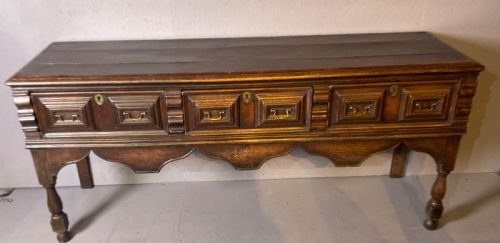


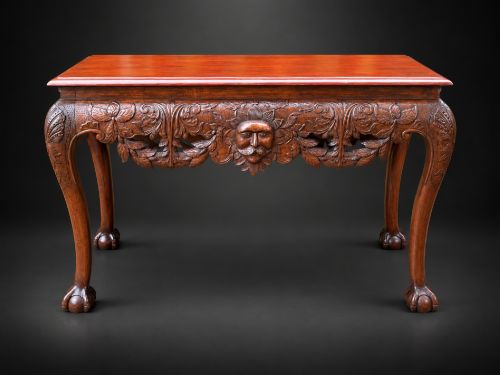


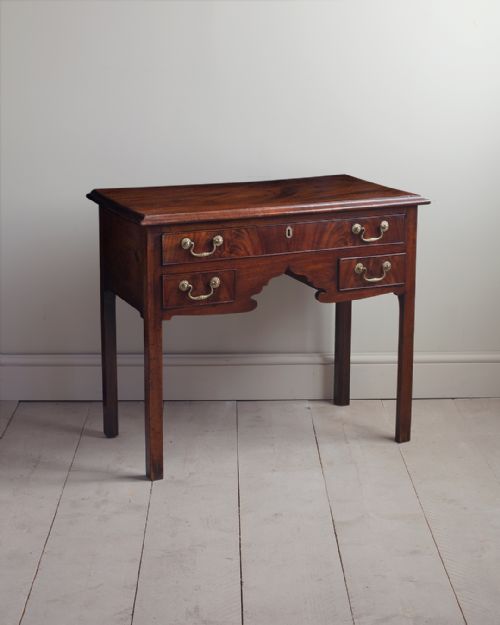

Carved Apron Server Table
These carved apron server table pieces offer enduring utility and regional character, grounding a dining space or hallway with solid timber construction.
Carved Apron Server Table
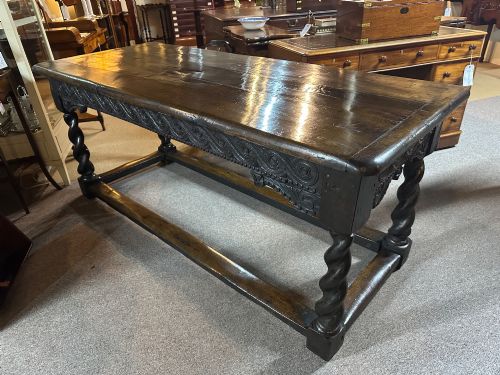
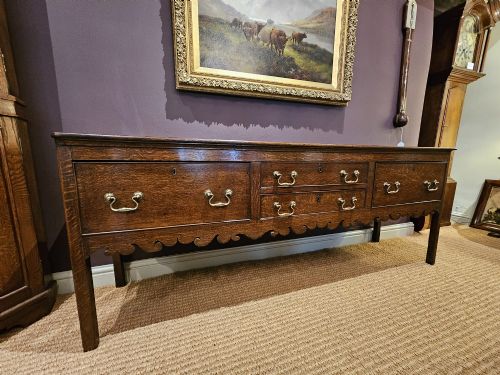
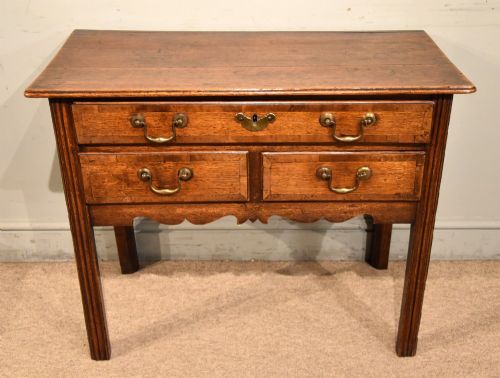
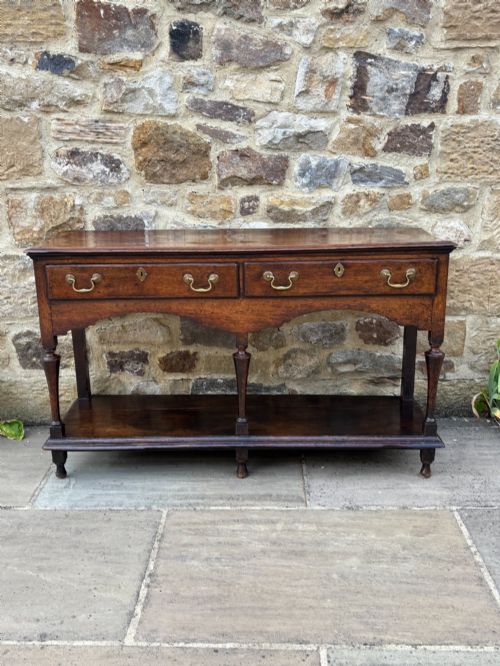
A carved apron server table combines surface utility with decorative timber work beneath the top board, frequently appearing as lowboys, serving tables, and dresser bases. Buyers searching this phrase encounter substantial oak and mahogany forms dating from the seventeenth century through the twentieth century, with Georgian examples featuring prominently.
The regional variety spans English and Welsh workshops, alongside Irish influenced consoles and Baroque painted pieces. Functionally serving as side tables or servers, these items range from compact lowboys with multiple drawers to longer serving dressers supported by cabriole legs or straight supports.
Materials and construction
Construction relies heavily on native timbers, predominantly oak and mahogany, supplemented by burr walnut, gesso, and giltwood on specific revival pieces. Cabinet makers joined solid boards using traditional pegged mortise and tenon joints, mounting drawers with hand-cut dovetails.
Surface decoration integrates hand carving along the frieze and apron, occasionally enhanced with paint, gold leaf, or marble tops. Timber finishing ranges from polished mahogany to bleached walnut and waxed oak.
Several tables show scars from centuries of carving joints by candlelight, leaving subtle irregularities that machine tools cannot replicate.
Assessing quality
Quality differentiates through the crispness of the hand carving along the apron and the selection of figured timber veneers like burr walnut. Superior examples display integration between the original structure and subsequent timber movement, maintaining structural integrity without heavy modern replacements.
Proportion and hardware contribute significantly to the grade of a piece, where original brass pulls and well-balanced cabriole legs distinguish finer workshop output from simpler utilitarian items.
The Carved Apron Server Table Glossary
- Lowboy
- A small table with one or more drawers and short legs, typically used as a dressing table or side table in eighteenth-century interiors. These compact pieces often feature shaped aprons.
- Dresser base
- The lower section of a kitchen or dining room dresser, constructed with drawers and cupboards beneath a serving surface. They frequently stand on cabriole or straight legs.
- Cabriole leg
- A furniture leg that curves out in a convex arc and tapers inward in a concave arc, terminating in a foot. This form derives from animal limbs and gained popularity during the Georgian period.
- Baroque
- A flamboyant style prevalent in the seventeenth and eighteenth centuries, characterised by dramatic ornamentation and rich carving. Pieces in this manner display dynamic movement along the apron and legs.
- Dovetail
- A joint formed by interlocking wedge-shaped fingers, utilised in drawer construction for tensile strength. Hand-cut versions indicate earlier periods of manufacture.
Carved Apron Server Table: Frequently Asked Questions
How do I date an oak server table?
Dating involves examining the construction methods, such as hand-cut dovetails in drawers and pegged joints in the frame. Timber shrinkage patterns and tool marks offer further evidence of age.
Stylistic markers like cabriole legs or seventeenth-century mouldings help narrow the period of origin alongside any documented provenance.
Where were these tables used?
These tables served primarily in dining rooms, kitchens, and hallways for food preparation, serving, and storage. Lowboys often functioned in bedrooms or parlours for personal grooming.
Their robust timber construction suited domestic service roles while providing aesthetic focus against interior walls.
How do I care for antique timber?
Maintain antique timber by applying traditional beeswax periodically and avoiding direct sunlight or sudden temperature shifts. This preserves the natural patina and prevents the wood from drying out.
Keep surfaces free of moisture by using coasters and dusting with a soft, dry cloth rather than modern chemical sprays.