


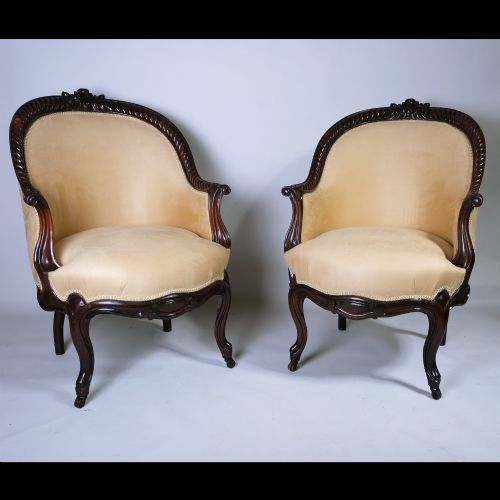
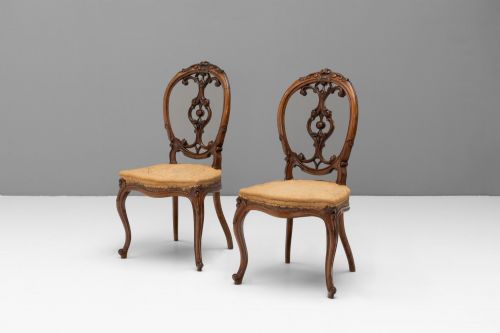
Carved Wooden Salon Chairs
Carved wooden salon chairs bring formal French influence and comfortable Victorian seating into reception spaces through ornate woodwork and rich upholstery.
Carved Wooden Salon Chairs
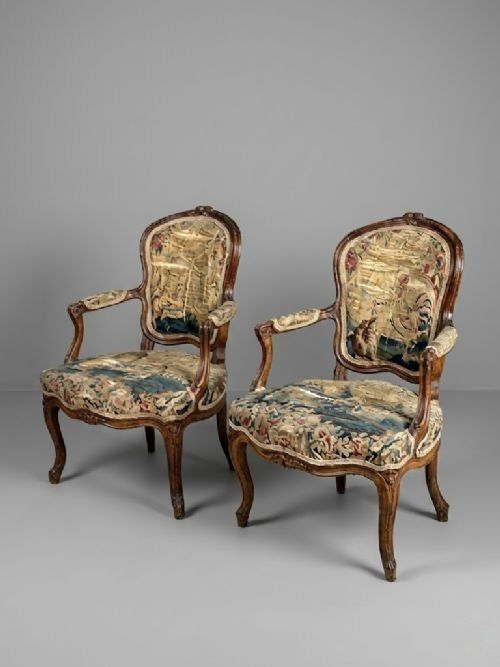
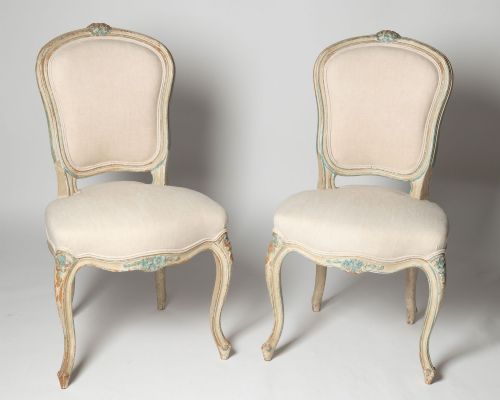
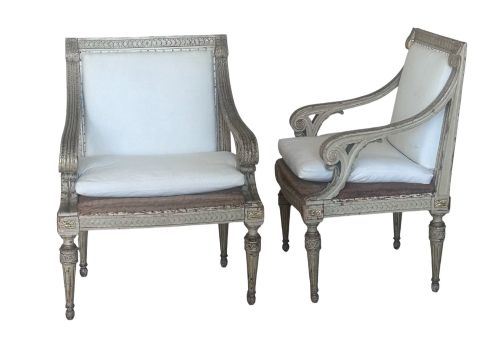
Carved wooden salon chairs encompass elegant seating designed for formal reception rooms, drawing upon Victorian, Edwardian, and eighteenth-century aesthetics. These pieces appear as individual salon chairs, paired armchairs, and larger suites featuring elaborate frames.
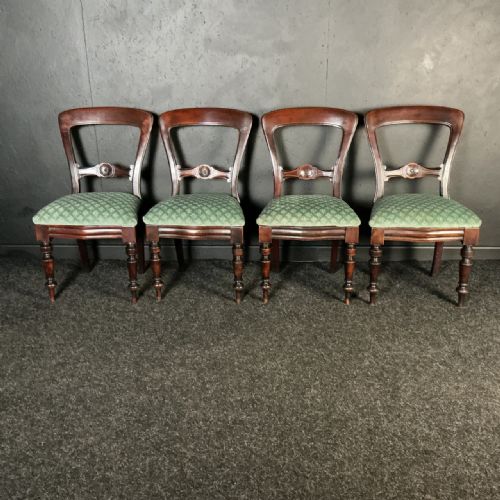
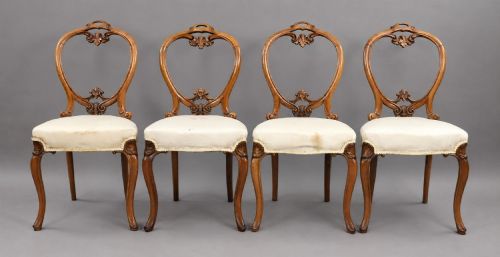
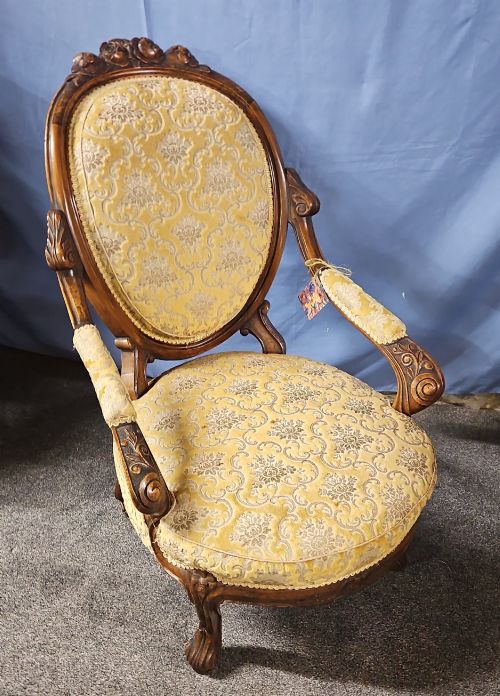
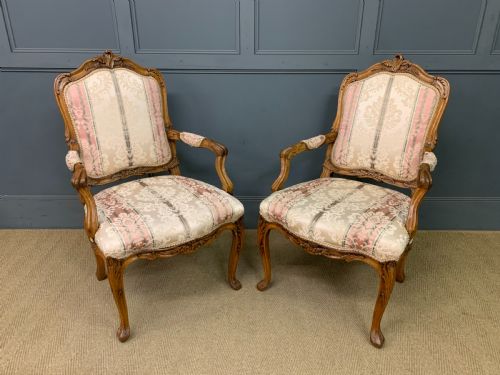
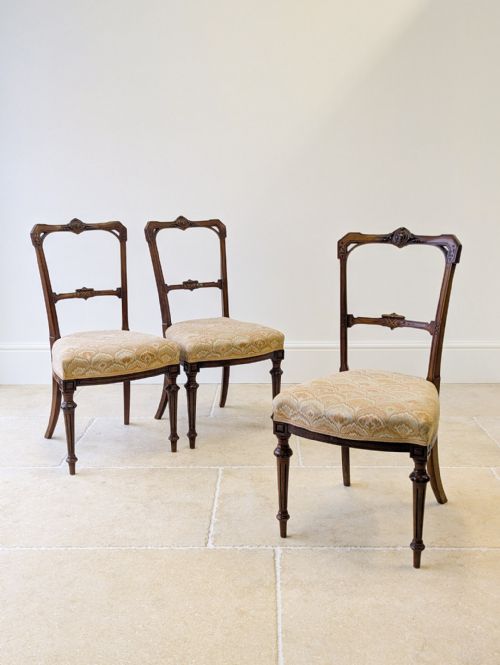
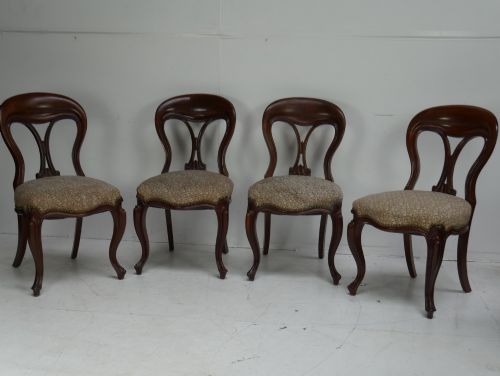
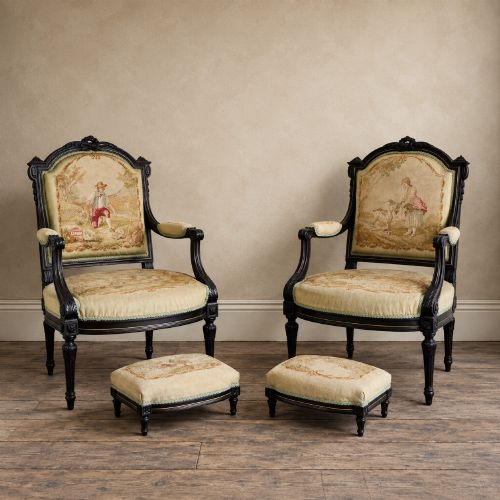
The selection leans heavily toward Victorian walnut and mahogany specimens alongside French revival styles. Buyers frequently encounter balloon back forms, open armchairs, and painted wood frames covered in velvet, fabric, or needlepoint tapestry.
Originating primarily from British and French workshops, these seats bridge decorative arts and practical domestic use. Their forms reflect historical revivals ranging from Rococo to Louis XVI and Neoclassical designs.
Materials and Construction
Cabinetmakers utilised dense hardwoods such as walnut, mahogany, beech, and rosewood to support deep hand-carving along the crest rails, frames, and cabriole legs. These timbers allowed artisans to execute intricate scrolls and floral motifs without compromising structural integrity.
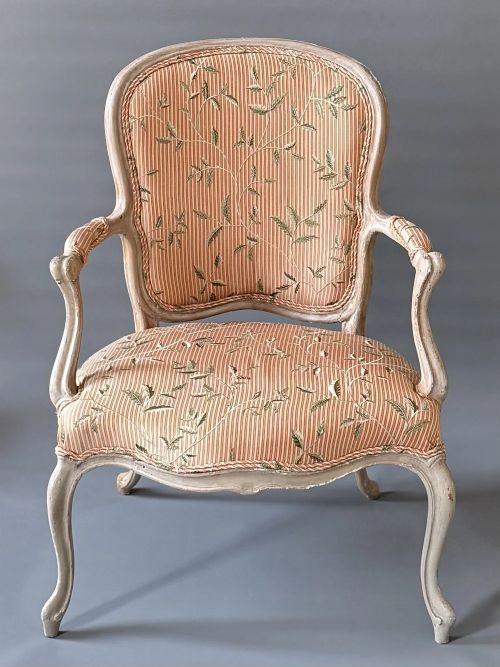
Upholstery techniques combined traditional stuffing with textiles including velvet, brass-tacked fabric, and needlepoint panels. Paint and gilding frequently finished the timber surfaces on French provincial and revival models.
Several pairs survive as his-and-her matching sofa chairs designed for Victorian parlor seating arrangements.
Assessing Quality and Execution
Quality rests upon the crispness of the hand-carving and the selection of timber grain. Superior examples exhibit deep, purposeful chisel work that maintains sharp definition along complex curves and foliage motifs.
The integration of the frame dictates longevity and visual harmony. Master craftsmen ensured tight joinery in the structural joints, allowing delicate open arms and carved balloon backs to withstand regular use.
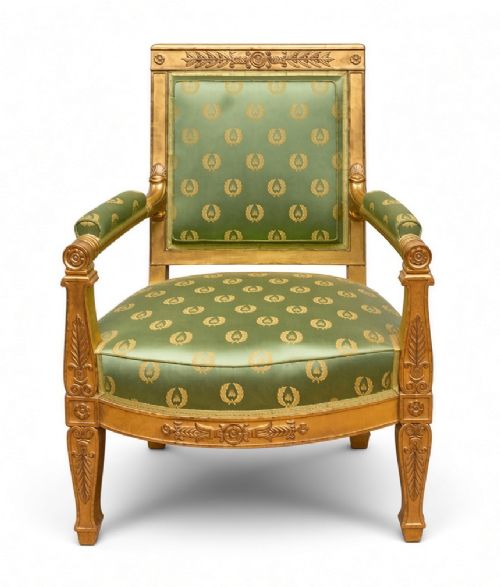
Jacob Desmalter
The Carved Wooden Salon Chairs Glossary
- Balloon Back
- A rounded, oval-shaped chair back resembling a balloon, highly characteristic of Victorian walnut seating. This ergonomic shape provides comfortable back support while displaying rich timber grain.
- Fauteuil
- An open-arm armchair with upholstered back and seat, originating in France. The wooden arms typically feature padded elbow rests.
- Goncalo Alves
- A dense exotic hardwood sometimes utilised for nineteenth-century chair frames. It exhibits distinct figuring that adds visual depth to carved components.
- Needlepoint
- Hand-stitched textile work often used to cover seat panels and backrests on nineteenth-century French chairs. These panels typically feature floral or pastoral scenes.
- Rococo Revival
- A nineteenth-century design movement resurrecting the asymmetric curves, C-scrolls, and naturalistic shell motifs of the eighteenth century. This style dominates many Victorian walnut salon chairs.
Carved Wooden Salon Chairs: Frequently Asked Questions
What distinguishes a salon chair from a dining chair?
Salon chairs are typically lower, wider, and more decorative, designed for conversational grouping in drawing rooms rather than formal dining tables. Their frames often feature more elaborate carving and upholstered armrests.
Dining chairs prioritise upright posture and uniform heights for table use. Salon chairs invite relaxed sitting and place greater emphasis on aesthetic upholstery and exposed carved wood.
How do I identify French revival styles?
French revival pieces incorporate stylistic elements from Louis XV and Louis XVI reigns, such as cabriole legs, fluted columns, and giltwood finishes. Makers reproduced these classical proportions during the nineteenth century.
Look for painted wood surfaces, neoclassical medallions, and floral crests. These details separate continental-inspired seating from standard British Victorian forms.
Are these chairs suitable for daily use?
Most antique salon chairs tolerate normal seating if the internal webbing and joints remain sound. Their sturdy walnut and mahogany frames were built to endure parlor gatherings.
However, delicate antique textiles or intricate open-carved arms require gentle handling. Owners often place them in low-traffic reading corners or reception spaces.
What timber types are most common?
Walnut and mahogany dominate the inventory, prized for their strength and rich grain patterns. Rosewood and beech also appear frequently in specific regional styles.
Victorian makers favored dark walnut for balloon back frames, while French workshops often utilised beech for painted or gilt armchairs.