
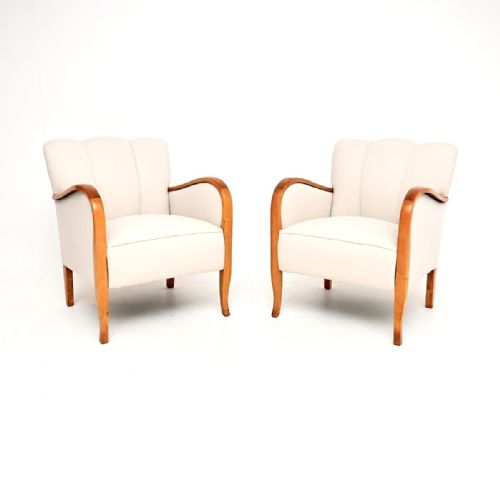
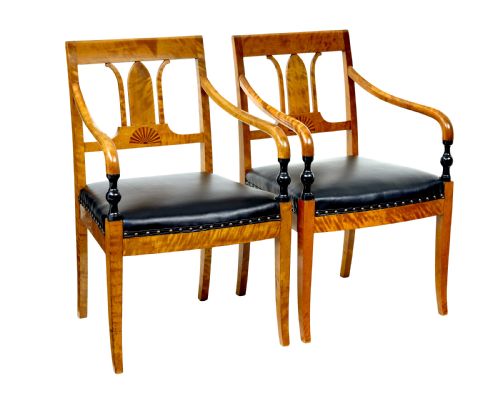
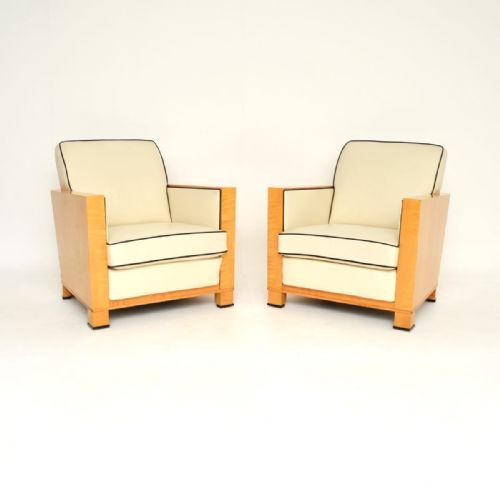
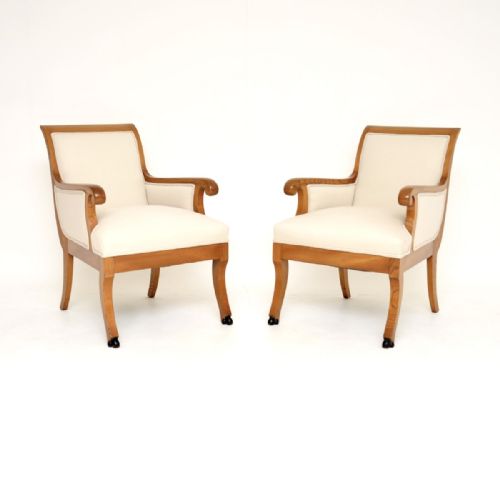
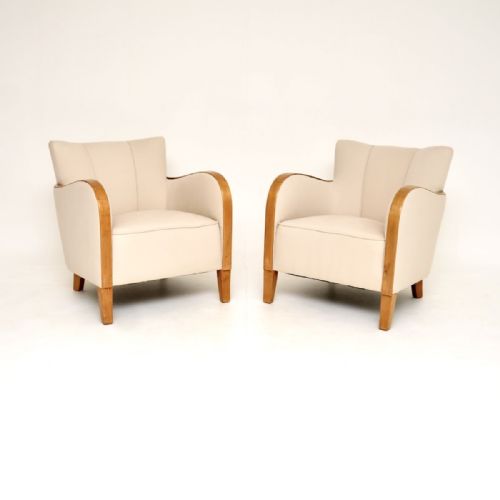

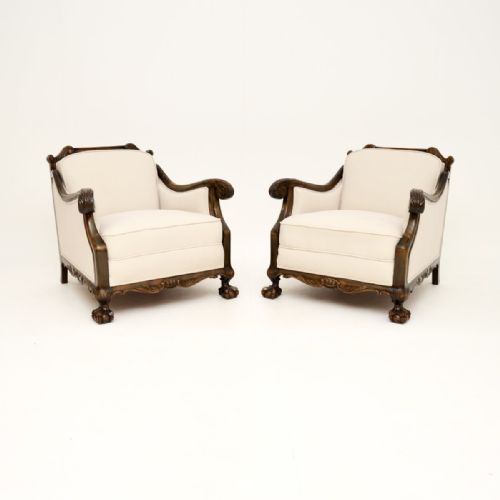
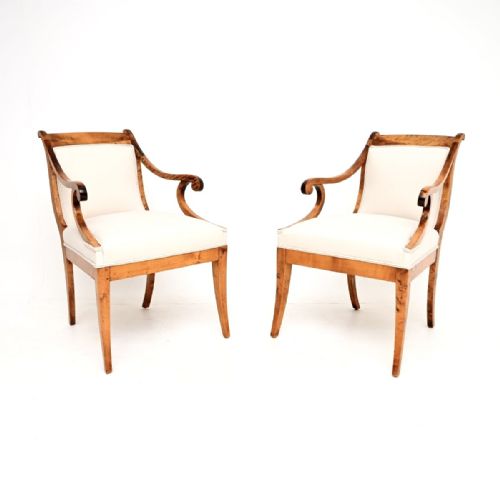


Pair Scandinavian Armchairs
Pair scandinavian armchairs bring architectural poise and robust comfort to a room, uniting functional seating with enduring design from the North.
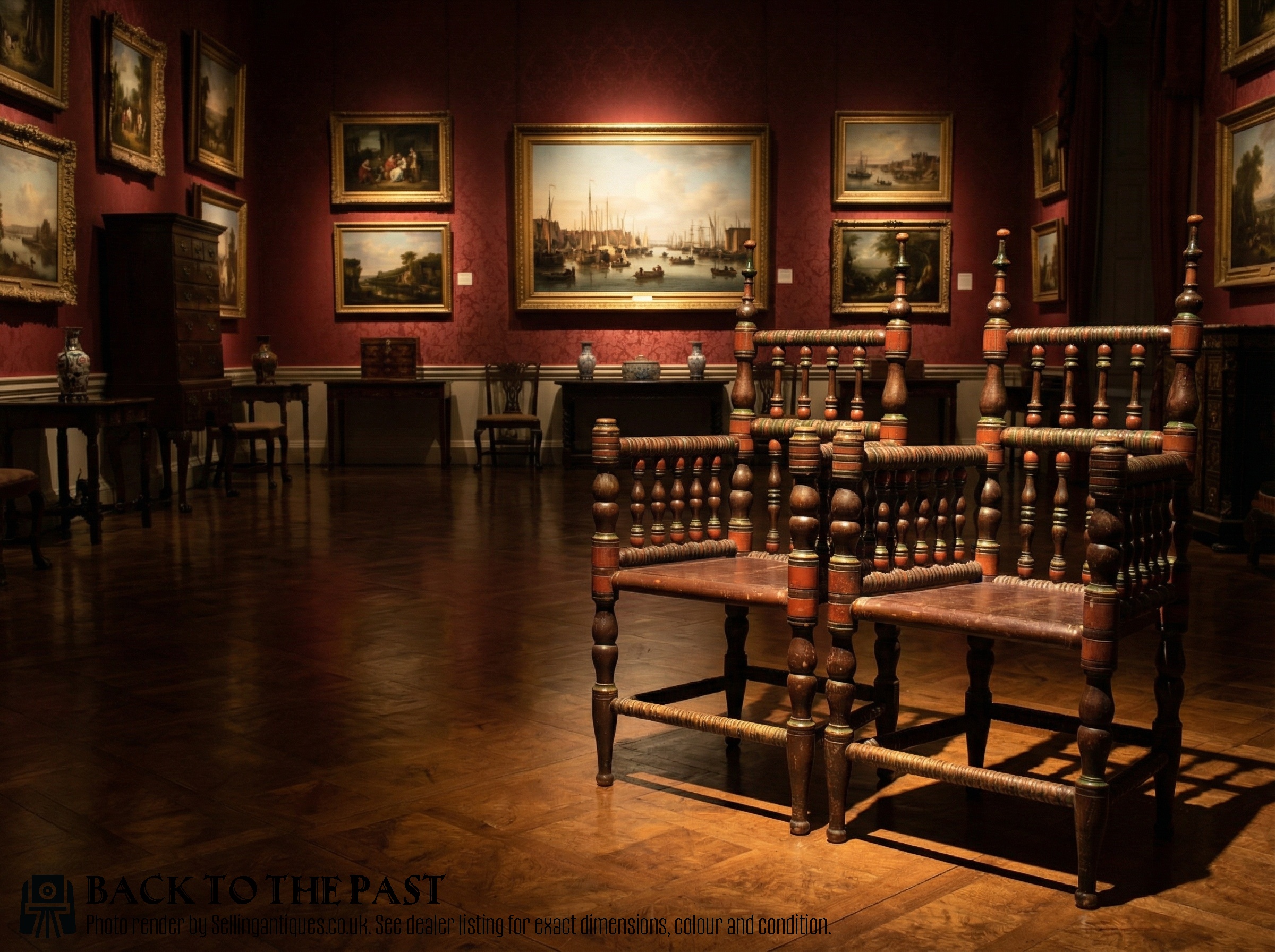
Pair Scandinavian Armchairs
When you search for pair scandinavian armchairs, you encounter matching seating that spans periods from the early nineteenth century through to the height of the nineteen thirties. The selection here leans strongly towards Swedish origins, encompassing styles such as Art Deco, Biedermeier, Neoclassical, and folk art traditions.
You meet forms ranging from geometric satin birch club seats to turned wooden frames and elm armchairs. These pieces reflect regional craftsmanship where symmetry and proportion guide the creation of twin seats for a parlour or study.
Materials and construction
Makers utilised native timbers like birch, satin birch, elm, and ebonised wood to build sturdy frames, often highlighting the natural grain of the wood. Upholstery relies on traditional textiles and leather, fitted tightly to support the structure of the seat.
Carpentry techniques combine turned elements, carved details, and painted finishes to achieve both ornate Neoclassical profiles and streamlined Art Deco silhouettes. The construction prioritises structural integrity alongside decorative surface grain.
Listings feature pieces spanning the nineteenth century, nineteen hundreds, and nineteen thirties, predominantly originating from Sweden.
Distinctions in quality
Quality rests in the crispness of the woodwork, whether in the carved details of an earlier frame or the sleek, veneered planes of a nineteen thirties Art Deco design. Superior examples display carefully chosen satin birch or elm grain that matches symmetrically across both chairs in the pair.
The integrity of the original timber and the retention of period upholstery materials or appropriate coverings elevate an item. Harmony between the twin frames determines the overall cohesion and visual success of the pair.
The Pair Scandinavian Armchairs Glossary
- Satin birch
- A timber prized for its lustrous, light-reflecting grain that was frequently utilised in high-end Swedish furniture production. It provides a pale, warm surface that defines many mid-century and earlier Scandinavian designs.
- Biedermeier
- A central European and Scandinavian style spanning the nineteenth century characterised by utilitarian comfort and clean lines without excessive ornamentation. It often showcases rich wood veneers.
- Ebonised wood
- Timber treated to resemble ebony, creating a dark, uniform finish that contrasts sharply with lighter elements. This technique highlights structural outlines on period frames.
- Neoclassical
- A revival style drawing on classical antiquity, notable in Scandinavian pieces through restrained symmetry and carved architectural motifs. It emphasises balance and classical proportion.
Pair Scandinavian Armchairs: Frequently Asked Questions
How do I style pair scandinavian armchairs?
Place them opposite a sofa or flank a fireplace to create a balanced seating arrangement in a living space. Their clean lines allow them to complement both contemporary and traditional interiors.
Allow enough surrounding floor space to let the timber frames and distinct silhouettes stand out without crowding the room.
Are these armchairs comfortable for daily use?
Many period examples offer supportive seating designed for relaxation, particularly the club and upholstered variants from the twentieth century. The ergonomics depend on the original padding and frame depth.
Consider how the seat height and back angle match your personal comfort requirements for everyday lounging.
How do I identify a Biedermeier armchair?
Biedermeier chairs typically feature smooth wood surfaces, often in birch, with understated curves and a focus on domestic comfort. They lack the heavy carving of earlier baroque styles.
Look for architectural restraint and rich grain patterns that emphasise the natural beauty of the timber.
Can I mix different wood finishes together?
Mixing woods works well if the scale and period of the furniture share a similar design language. Satin birch and ebonised details often bridge different tones in a room.
Keep the overall palette grounded by repeating one primary wood tone across other large items of furniture.